Solar panels over canals: what California is learning from Project Nexus
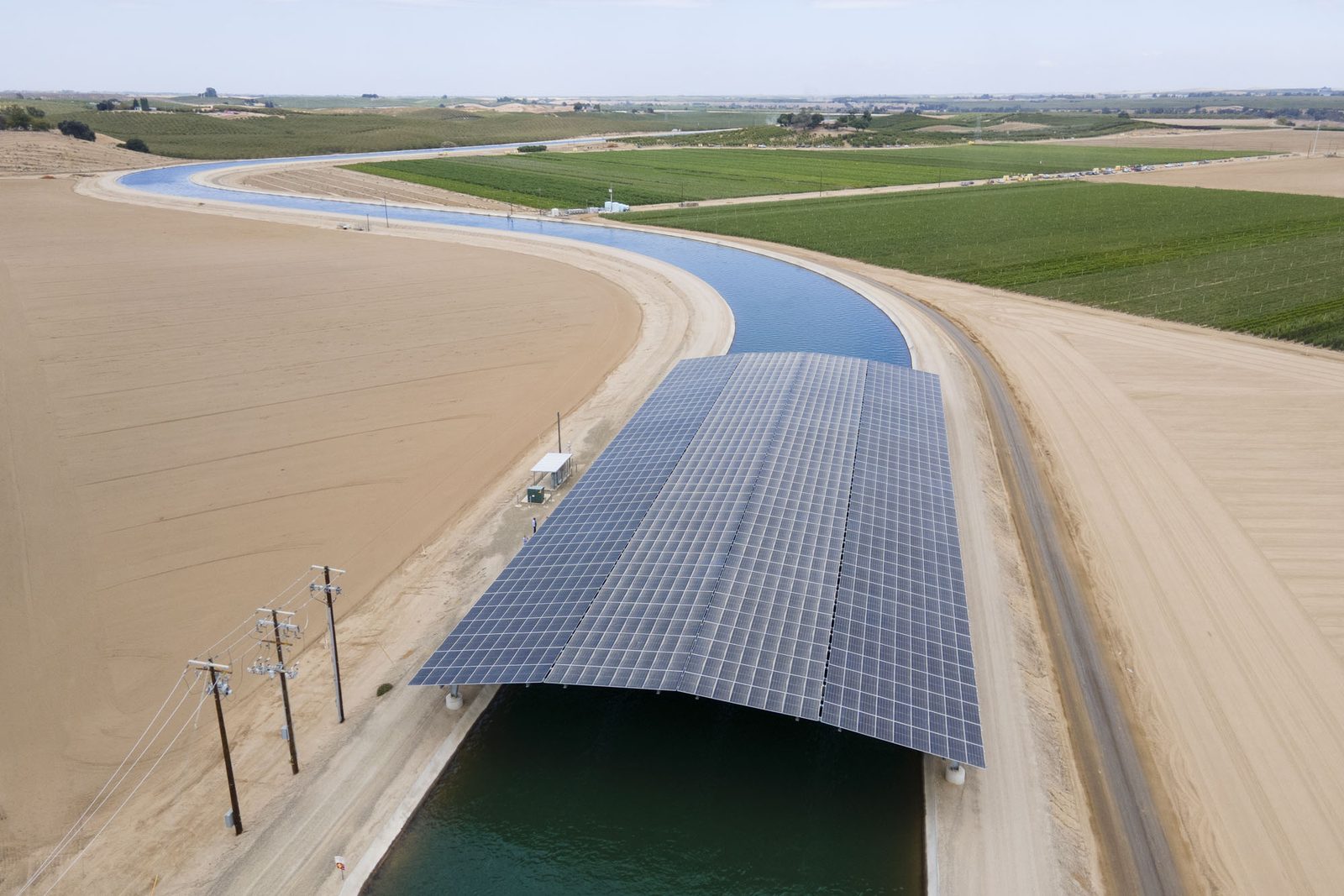
California's first pilot placing solar panels over working irrigation canals has finished a year of operation, saving water, generating power and cutting canal maintenance — with limits the state is still studying.
California's first pilot placing solar panels over working irrigation canals has completed a year of operation, pointing to water savings, power generation and better water quality.
An idea born on a highway drive
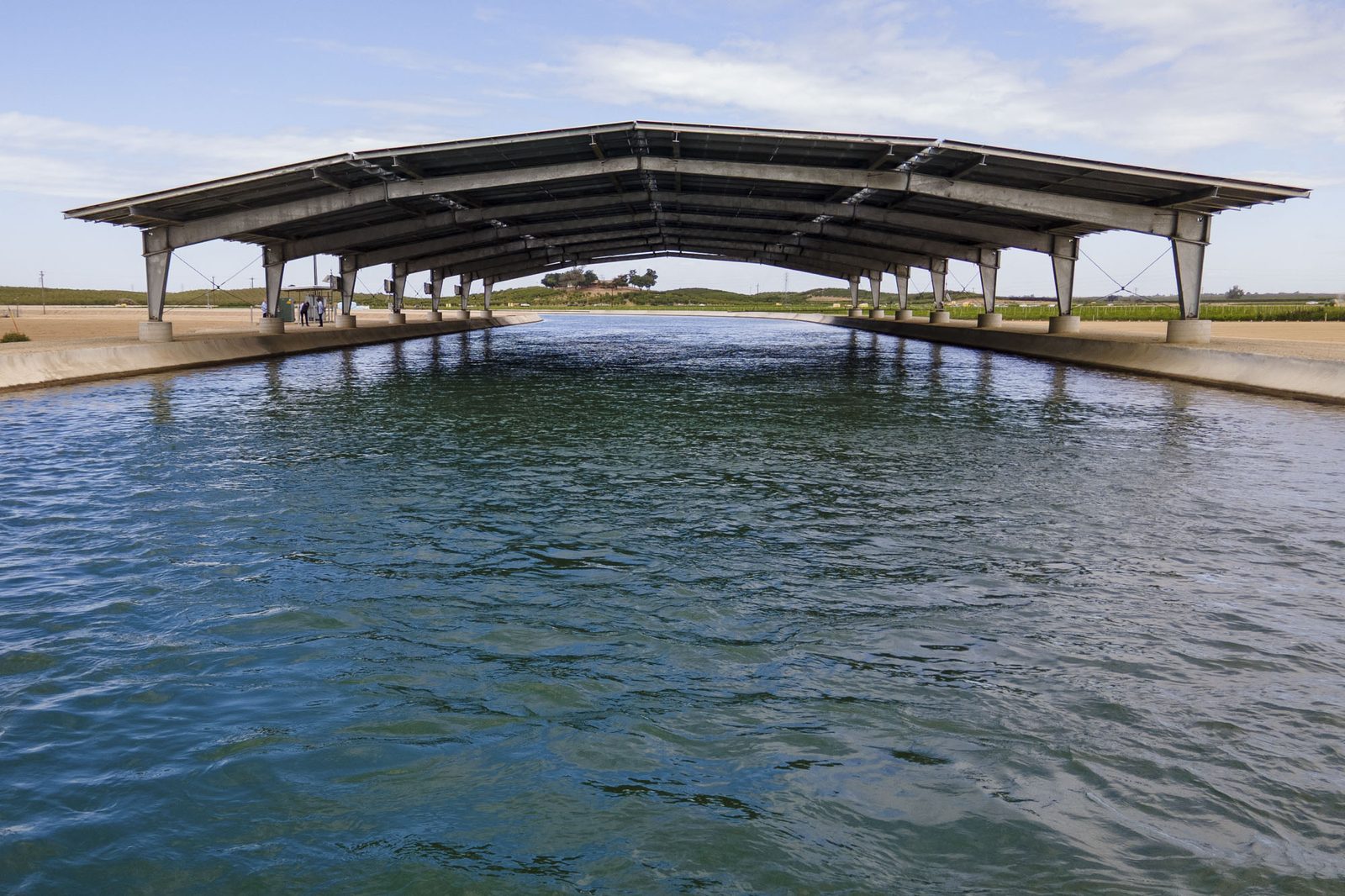
Driving from Los Angeles to San Francisco, Jordan Harris watched California's concrete canals evaporate under the sun. In France, tree-lined canals shelter water; he asked Robin Raj whether California could do the same. They founded Solar Aquagrid and proposed covering the state's roughly 4,000 miles of open canals with solar panels.
With the Turlock Irrigation District, UC Merced and the California Department of Water Resources they built Project Nexus in Hickman, testing three designs: a wide-span canopy, slanting panels and retractable panels. UC Davis researchers estimate California's water supply could shrink by up to 25% by 2050, partly because of climate-driven heat.
What the pilot is testing
UC Merced professor Roger Bales, who co-authored the 2021 study behind the pilot, calculates that panels over 100 miles of Turlock's narrow canals could save enough water for 2,700 households a year — and the same length of wide canals enough for 11,000. He estimates they could generate 330 to 1,400 megawatts per hundred miles — power for 77,000 to 304,000 households.
The pilot itself is modest: Turlock spokesperson Josh Weimer calls it a "proof of concept" producing 1.7 megawatts, versus 56 megawatts from the district's desert solar farm. A $20 million state grant covered it.
Co-benefits and hard limits
Shade cut algal and weed growth, reducing maintenance and improving water quality. Building on already-disturbed canal land also spares open space: permits take 621 days on average on undeveloped land versus 110 on developed land (Nature Conservancy).
Scaling is harder. Canals are managed by a mix of state, federal, municipal and district bodies that often own neither the land around them nor the transmission lines. Turlock — 139 years old, 250 miles of canals, nearly 5,000 farmers — had water and power expertise; Contra Costa County's urban canals run through backyards and parks, so it favours pipes.
The Department of Water Resources will wait for the pilot's final report later this year before deciding on more investment; as Harris put it, "if you don't have science behind it to justify the expense, you're not gonna scale."
SiTech — AI-powered web development
We build fast, modern websites and bring AI into real business workflows. Have a project or a question? We'd love to help.