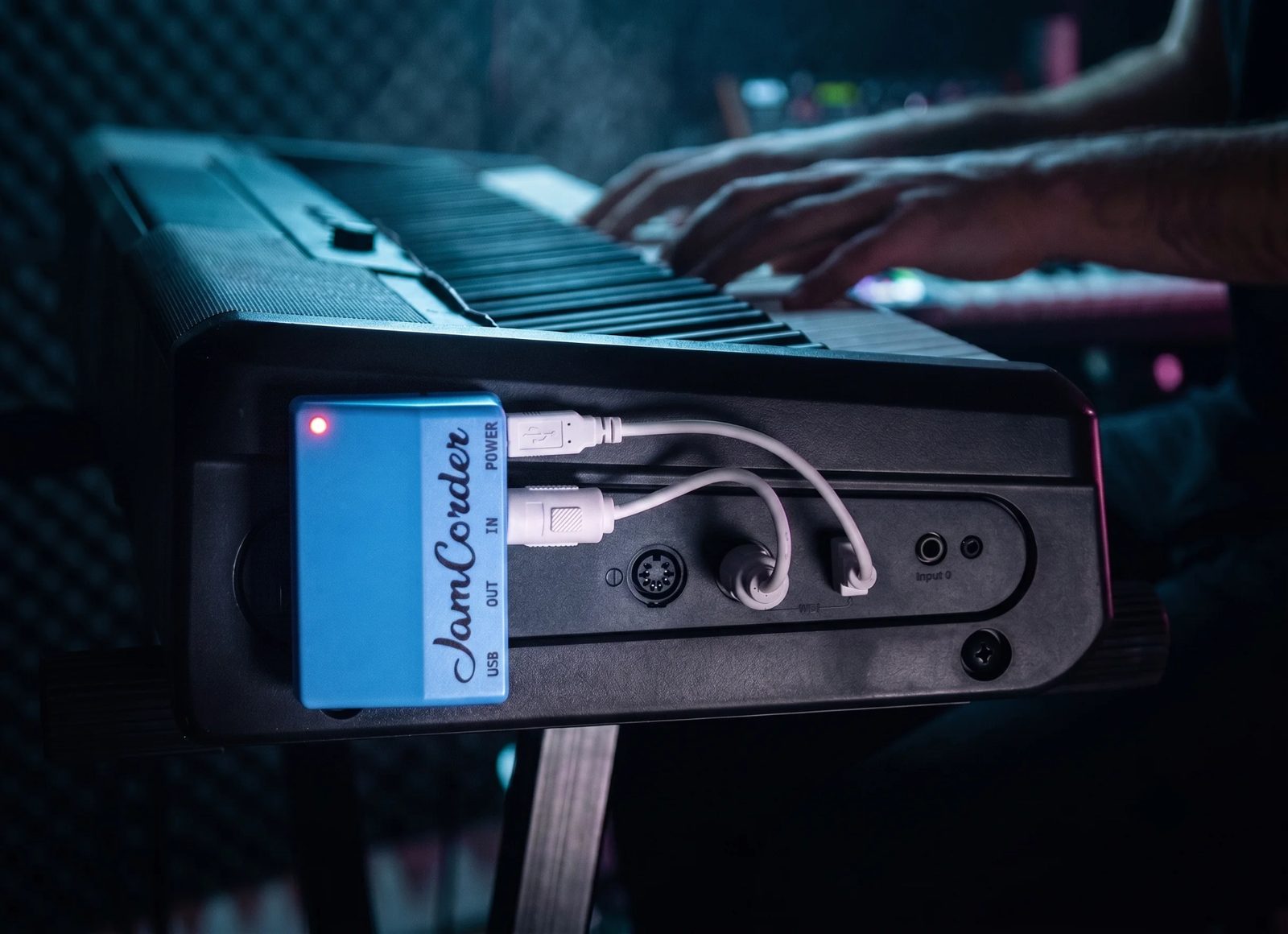
What selling 2,500 MIDI recorders taught one founder about hardware
After a career in software, Chip Weinberger built Jamcorder, a device that records piano playing automatically. Eighteen months and 2,500 units later, he says the hardware was the easy part.
Chip Weinberger launched Jamcorder a year and a half ago, completing two long-standing goals: building the piano recording device he had always wanted — one that captures everything he plays without any human involvement — and building hardware after a career in software. Around 2,500 units have been sold, and the product, in his view, stands on its own feet as a business.
The surprise: software was the hard part
Coming from software, Weinberger expected electronics design, plastics, manufacturing, fulfilment and component shortages to be the difficult part of the project, and he kept waiting for a scrapped production run or a sourcing crisis. It never happened, although tariffs came close. The hardest work, by a wide margin, was the software: roughly 200,000 lines of code spread across firmware, the app and manufacturing tooling, written over more than three years in a pre-LLM world.
A deliberately simple device
Jamcorder is intentionally simple. Assembly requires a single screw for a single printed circuit board, and the injection mould has generous draft and no slides. Weinberger cut features to keep it that way — low battery detection, ambient light detection, the power button and even USB-C. He is clear that 2,500 units is not a large volume and that a tenfold more complex product at far greater scale would be a different story, but the conclusion he draws is that hardware is as hard as you make it.
Practical lessons from medium-scale manufacturing
His recommendations for founders shipping hardware at a similar scale: keep the bill of materials simple and avoid single-manufacturer components; avoid complex assembly and calibration; work with a Chinese assembly house and suppliers, using Alibaba for sourcing; aim for at least 70 percent gross margin; keep the company lean, because scaling hardware is slower; plan an anti-counterfeit strategy; do final quality assurance in-house and hold finished inventory locally; request samples before every production run; write a step-by-step manufacturing and assembly guide with pictures; and keep packaging small so the product stays value-dense.
SiTech — AI-powered web development
We build fast, modern websites and bring AI into real business workflows. Have a project or a question? We'd love to help.