
Why it's important to unplug your PC during a power outage
A powered-off PC is not protected if it stays plugged in: the surge that arrives when electricity returns can damage the motherboard, RAM and SSD. Pulling the plug takes seconds.
Power outages rarely announce themselves. When the lights go out, most people reach for a flashlight rather than think about what is still plugged in. But a desktop PC left connected through a blackout can be damaged when power returns.
Even a machine that switched itself off is not safe. The computer stays physically connected to the building's wiring, and that connection is how the damage arrives. Motherboards, RAM and SSDs are especially exposed: their delicate circuits cannot absorb unexpected voltage spikes.
Turning the PC off is not enough
When electricity cuts out suddenly — through grid overload, equipment failure or a tripped breaker — voltage fluctuates sharply in the seconds before and after. The surge that arrives when power is restored is often more damaging than the outage itself. US household circuits run at 120 volts, and even a moderate spike above that level can permanently destroy sensitive components.
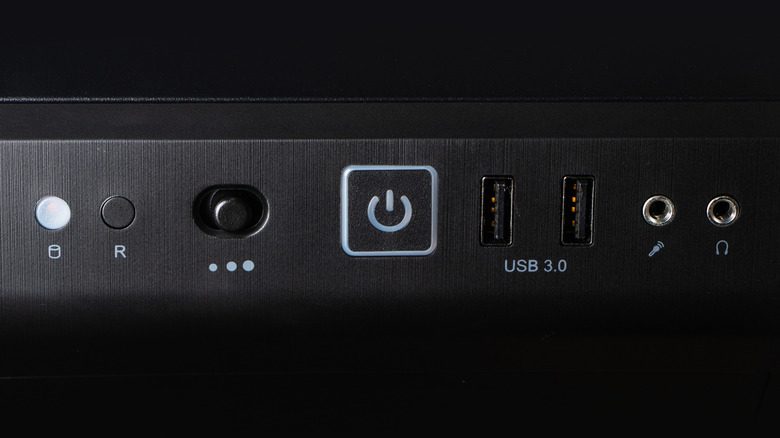
What a sudden shutdown damages
Surges are the most common cause: current jumps suddenly, typically after lightning or damage to nearby power lines, and a strike that misses the house can still reach it through the local transformer. If the PC was running when power failed, files being written at that moment may be corrupted, and an interruption during a system update can leave the machine unusable. On computers with hard disk drives, an abrupt shutdown can also damage the drives' mechanical heads.
How to protect your PC
If extreme weather is forecast, shut the system down and pull the plug. If the power is already out, unplugging is still worth doing. Do the same for the router, one of the devices most often destroyed in storms, and for other expensive equipment such as a television.

Switching off a desktop's power supply unit stops current entering the system, but cannot withstand an extreme event such as a lightning strike. A quality surge protector is better, absorbing spikes before they reach the hardware. Better still is an uninterruptible power supply, which adds a battery and rides out short outages, giving time to save work and shut down properly. For whole-home coverage, an electrician can install surge protection directly in the electrical panel.
When power returns, wait a few minutes before reconnecting anything, then plug the surge protector in first, followed by the PC and peripherals. Unplugging takes seconds and sharply lowers the risk of hardware damage and data loss.
SiTech — AI-powered web development
We build fast, modern websites and bring AI into real business workflows. Have a project or a question? We'd love to help.