Windows brings out the Rorschach test in everyone (2003)
In an August 25, 2003 post, Raymond Chen recounts how an unnamed government complained that Windows 95 depicted naked children: the baby on the box's anti-piracy hologram had no shirt.
In a post published on August 25, 2003 on The Old New Thing, Microsoft engineer Raymond Chen recalled how a detail on the Windows 95 packaging turned into an international dispute. His summary of the episode was blunt: no matter what you do, somebody will get offended.
The baby on the hologram
Every Windows 95 box carried an anti-piracy hologram on its side. The photographer chose his infant son as the model, since the human face is very hard to copy accurately. The baby sits next to a computer, and as you turn the hologram his arm rises and points at the monitor, which bursts into a Windows 95 logo. According to Chen, everybody loved it until the complaint arrived.
The complaint, and the rush replacement
A government, which Chen does not name for obvious reasons, objected that Windows 95 depicted naked children. The problem was the hologram: the baby was not wearing a shirt. Even though the baby was visible only from the waist up, the offended government assumed he was not wearing pants either. Microsoft had to produce a new hologram, in which the baby wears a shirt and overalls. Because it was a rush job, there was no time to reproduce the arm animation — which, Chen notes, makes the shirtless version a collector's item today.
Clouds, Red Moon Desert and Windows XP
Chen writes that if you hunt around the web you can find plenty of people who claim to have found subliminal messages in Windows 95; his favourite is the one who found images in the clouds bitmap. As he puts it, they are clouds — nature's Rorschach test. Windows XP had complaints of its own. The original wallpaper was Red Moon Desert, until people claimed it looked like a pair of buttocks. Later, one of the generic people used in the User Accounts control panel was said to look like Hitler, and one government claimed the cartoon character in the original Switch Users dialog looked like an obscene body part. All of them had to be changed.
What the story shows
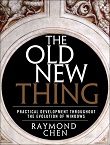
The episode is a compact illustration of the gap between the intent of a designer and the reading of a user: once enough people see something, the interpretation becomes a product requirement whether or not it was ever intended. Chen, who describes himself as having been involved in the evolution of Windows for more than 30 years, began The Old New Thing in 2003; the blog later spawned a book of the same name, published by Addison Wesley in 2007.
SiTech — AI-powered web development
We build fast, modern websites and bring AI into real business workflows. Have a project or a question? We'd love to help.