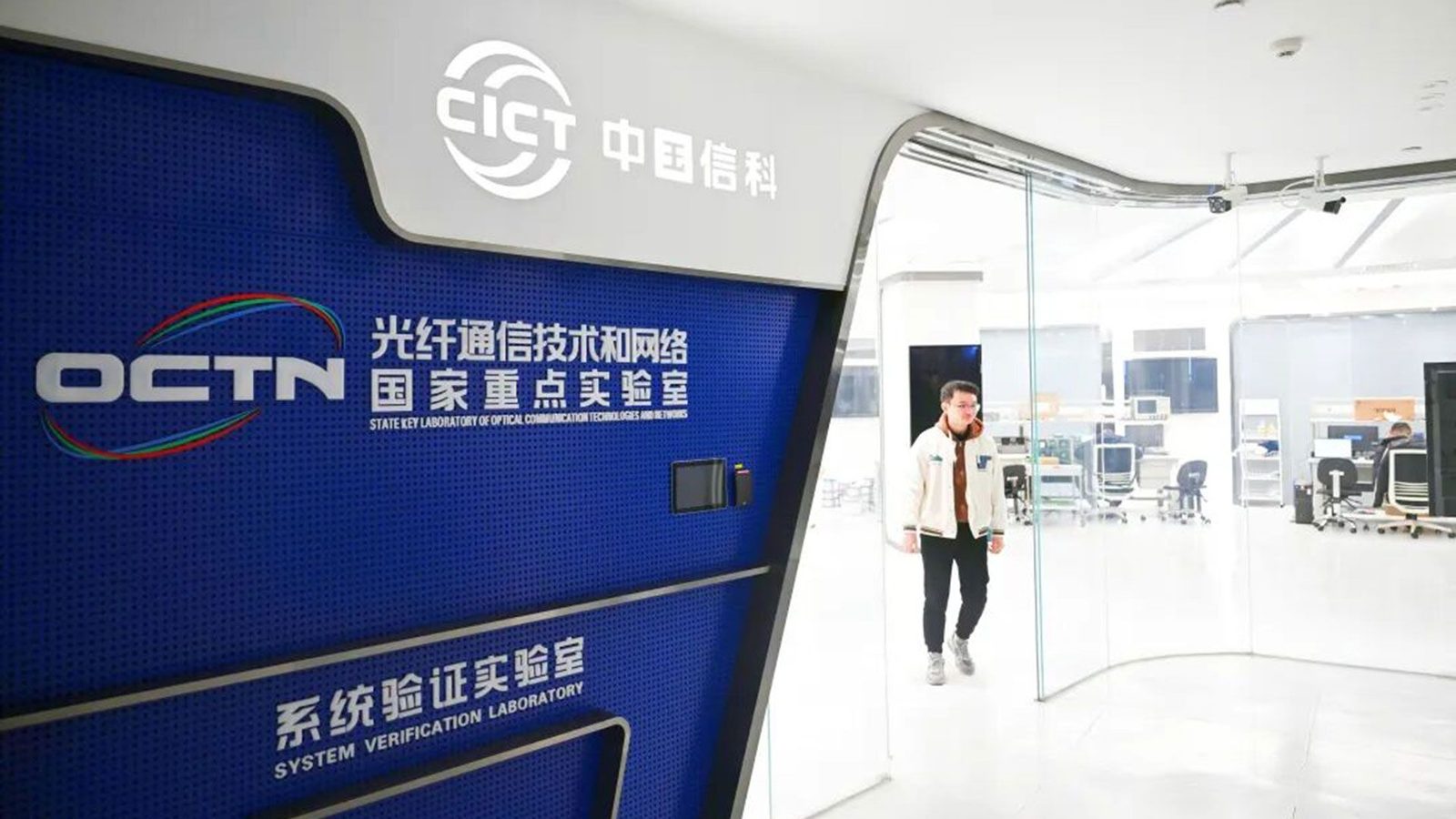
Chinese team claims 3.2 Pb/s real-time optical fiber transfer record
A Chinese research collaboration says it achieved a 3.2 petabit per second real-time transfer speed over 24-core optical fiber, beating a 2.5 petabit per second record and improving by almost 30 percent in one year.
A Chinese collaboration has claimed a new world record for real-time transfer speeds across a 24-core optical fiber cable, reaching 3.2 petabits per second. The team says the speed is equivalent to downloading more than 20,000 4K movies in one second and represents an improvement of almost 30 percent over its earlier record within a year.
Record and collaboration
The project brought together the National Key Laboratory of Optical Communication Technology and Network (China Information and Communication Technologies Group), Pengcheng Laboratory, and Fiberhome Fujikura Fiber Optic Technology Co., Ltd. The claim was reported by the Chinese government website for Hubei Province. The new 3.2 Pb/s result eclipses the 2.5 Pb/s record set by the same teams earlier this year, an almost 30 percent uplift.
Practical comparisons
If successfully rolled out, the speeds could mean 3.2 million households simultaneously enjoying gigabit broadband. The speed is also roughly 3.2 million times faster than a typical one-gigabit internet connection. Both comparisons may be more useful than the movie-download figure for one person.
Technology and hurdles
In technical terms, the test proved the success of spatial division multiplexing and S+C+L multi-band transmission technology. Researchers faced crosstalk interference and varying specification requirements across the S+C+L transmission bands. The record was achieved using commercially compliant hardware architectures in real-time.
Lab context
The result could be practical and deployable in the real world in the not-too-distant future, with enough will and effort. By contrast, pure academic lab optical fiber transmission milestones have reached up to 5.29 Pb/s across similar 24-core telecommunications fiber, but those results often rely on advanced or experimental signal processing and laboratory equipment.
Sources: Tom's Hardware
SiTech — AI-powered web development
We build fast, modern websites and bring AI into real business workflows. Have a project or a question? We'd love to help.