Blog
Articles about web development, AI, and technology
60 articles · 14 tags · 11 connections
Drag · tap a tag to filter articles
25 articles · Page 1 of 1
•SiTech AI Team
Cloudflare adds personal agent analytics and access policies
Cloudflare announced new analytics and granular access policies to help site owners understand how personal agents access their sites on behalf of humans and set access terms for that traffic.

•SiTech AI Team
How Aviator reviews 4x more AI code without reading every line
At Aviator, nine engineers merged 4x more pull requests by verifying intent, acceptance criteria, invariants, decisions, and evidence instead of raw diffs. Median merge time fell from 2.1 days to 3.4 hours and reverts dropped 40%.

•SiTech AI Team
OpenAI lands about $11 billion in new funding at a $1.25 trillion valuation
OpenAI has received roughly $11 billion in new funding, the first tranche of a round valuing it at $1.25 trillion, as it seeks more capital from wealthy investors amid pressure on AI valuations.

•SiTech AI Team
Thinking Machines' Inkling 2 Small drops 316 F-bombs across benchmark runs
Vals AI researchers found profanity in 50 of 2,655 benchmark runs by Thinking Machines' Inkling 2 Small, including 316 instances of "fuck" or variations, though most failed runs had no expletives.

•SiTech AI Team
AI agents are turning software engineers into process engineers
As AI agents automate coding, software engineers are shifting from writing code to designing the automated pipelines and human gates that move work from idea to release.

•SiTech AI Team
AI auditors catch most agent misbehavior but flood reviewers with false alarms, study says
A study by Anthropic Institute researcher Andy Hall finds AI auditors can detect many cases of AI agent misbehavior, but pushing detection higher sharply increases false alarms that could overwhelm human reviewers.
•SiTech AI Team
Open and closed AI models narrow cyber capability gap, Vals AI finds
Vals AI says AI agents can independently break into realistic simulated corporate networks, with an open-weight model close behind a restricted closed model at far lower cost.
•SiTech AI Team
Fireworks AI VP says on-prem AI can waste GPU spend as managed inference grows
Fireworks AI supports on-prem AI but VP Rob Ferguson says economics favor managed inference, citing idle GPU costs, model routing, caching, data value and speed.
•SiTech AI Team
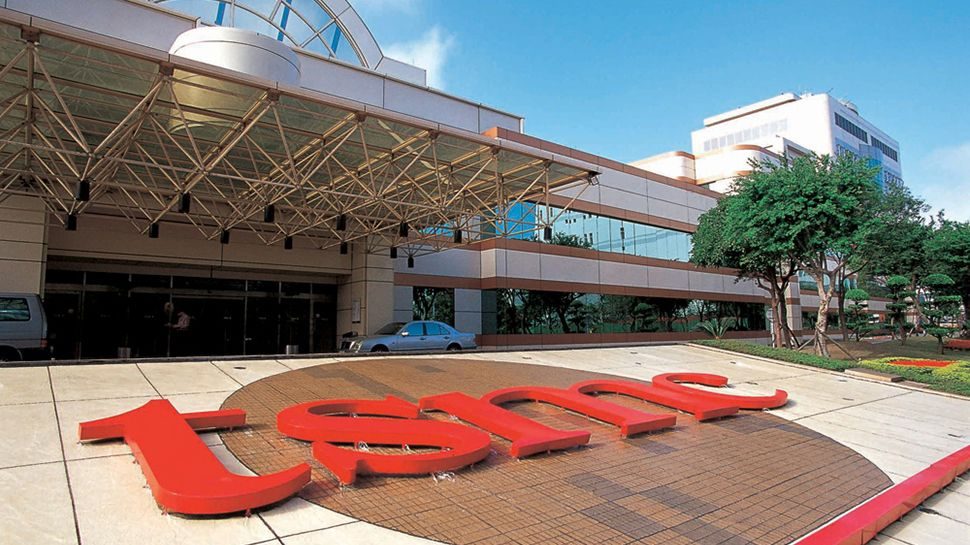
TSMC denies exploring 3D DRAM at Nvidia's request
A report said TSMC is preparing 3D DRAM plans at Nvidia's request, but TSMC says it is a pure-play logic foundry. The technology is years away and could carry major risks.

•SiTech AI Team
Google AI Detects High Blood Pressure Signs From Smartwatch Sensors
Google Research says an AI model can spot signs of hypertension using a regular smartwatch's pulse and motion sensors, with no blood pressure cuff needed for calibration, according to a Google blog post.

•SiTech AI Team
Benchmark finds nine AI agents fail expert bar on open national lab research questions
A Carnegie Mellon-led benchmark called Into the Unknown tested nine AI agents on 15 open research tasks from US Department of Energy national labs. None of the 135 submissions met all expert requirements.

•SiTech AI Team
Apps for Caregivers Get a Dose of AI, but That Might Not Be Enough
Caregiver apps now use AI to track medications, coordinate care, store records and prepare for appointments, but experts warn about privacy, upkeep and the limits of the technology.

•SiTech AI Team
Nous Research fine-tunes Qwen3.8-27B to cut Chinese state propaganda
Nous Research fine-tuned Alibaba's Qwen3.8-27B into Arete-27B, cutting propaganda answers from 22 percent to under one percent while keeping general capabilities intact and releasing the model under Apache 2.0.

•SiTech AI Team
Anthropic details Claude agent memory, salience, and dreaming
Anthropic explains how Claude's agent memory works across sessions, covering memory notes, salience judgment, dreaming, wiki building, and evaluations on database and Pokémon tasks.

•SiTech AI Team
Crusoe sells unfinished Wyoming data center project to Google
Crusoe has sold an unfinished southeastern Wyoming data center project to Google, which plans to invest $17 billion in the campus while Crusoe continues work for other major tech customers.

•SiTech AI Team
OpenAI Reportedly Raises $11 Billion at $1.25 Trillion Valuation
OpenAI has reportedly raised $11 billion so far in a new funding round that values the AI lab at $1.25 trillion, Bloomberg reported. The round may total about $20 billion and comes as AI market sentiment remains unsettled.
•SiTech AI Team
CesiumAstro Raises $730M Series D to Build Synchronicity Constellation
CesiumAstro secured $730 million in Series D funding at a valuation above $4.5 billion to shift from payload supplier to constellation operator and build its 737-satellite Synchronicity network.

•SiTech AI Team
Anthropic IPO valuation doubts rise after tech selloff and midterm slump
Following a tech selloff and post-midterm market slump, some Anthropic investors now see a $1.5 trillion IPO valuation as a stretch, with $1 trillion to $1.25 trillion viewed as more likely.

•SiTech AI Team
Free Chinese AI Models Are Getting Scary Good at Hacking
New Vals research says open-weight AI models, including DeepSeek, are nearly matching closed models at complex hacking tasks in simulated networks, while costing far less to run and raising security concerns.

•SiTech AI Team
Microsoft winds down Oracle AI computing deal as it reassesses cloud contracts
Bloomberg reports Microsoft is winding down a 2023 deal to rent Oracle servers running older Nvidia chips, after declining to renew, while reassessing more than $80B in outside cloud contracts.

•SiTech AI Team
Three Foreign Nationals Charged in Alleged $129M AI Impersonation Fraud Scheme
Federal prosecutors say three foreign nationals used AI to impersonate corporate executives and attorneys in a scheme that allegedly stole more than $129 million from companies worldwide.

•SiTech AI Team
Hundreds of Artex AI hacking tools found publicly exposed to the web
Security researchers found more than 800 publicly accessible deployments of the Chinese-made AI hacking tool Artex, exposing attack tools and raising risks of misuse by outsiders.
•SiTech AI Team
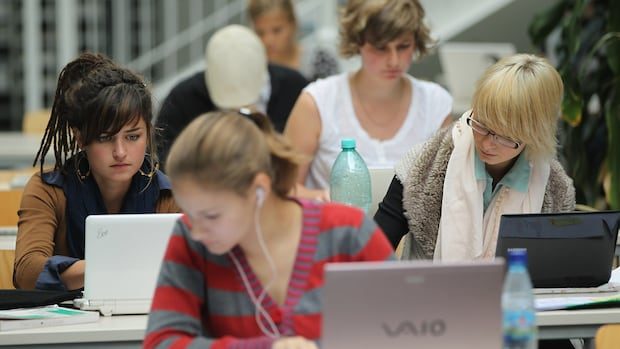
AI bots swarm university libraries, threaten public access
Academic library websites are slowing or crashing under data-scraping bots used to feed AI models, with one school reporting more than 11,000 searches for Finnish music in one day.
•SiTech AI Team
Ramp data shows AI spending stalling as Anthropic nears IPO
Ramp says company AI spending flatlined over late summer while token volumes rose, as price cuts and thriftier customers pressure OpenAI and Anthropic ahead of Anthropic's IPO.

•SiTech AI Team
METR finds Anthropic may have crossed AI acceleration warning threshold in July
METR's audit of Anthropic found model progress has roughly doubled, with about 80 percent of the speedup tied to AI used in internal research. Anthropic redacted much of the most informative evidence.