Q.ANT Bets on Photonic Chips to Cut AI Energy Use
Q.ANT is developing photonic processors that use light instead of electrons for parts of AI workloads, aiming to cut energy use and cooling needs while working alongside GPUs. The company has begun a pilot with cloud provider IONOS.
German startup Q.ANT is developing photonic processors that use light instead of electrons to run parts of AI workloads, aiming to reduce energy use and cooling needs. The company says its chips are meant to work alongside GPUs, not replace them, and it has begun a pilot deployment with cloud company IONOS. More than 30 engineering teams are now building AI models optimized for photonic computing, according to founder and CEO Michael Förtsch.
Why AI Needs New Hardware
As artificial intelligence becomes more sophisticated, the cost of the energy required to run it is ballooning. AI labs and cloud providers are trying to build data centers in places with cheap renewable energy, such as Scandinavia, but logistical challenges, component scarcity, and anti-data center protests are getting in the way. Startups including Q.ANT are developing photonic processors meant to minimize the energy AI models consume. Regular GPUs shuffle electrons, while photonic processors use waves of light. Because light does not generate heat as it travels and allows more data to be processed at once, photonic processors supposedly consume less energy and need minimal cooling, one of the largest data center costs. The aim is not to replace GPUs, but to run them side by side. GPUs excel at linear math, while photonic processors are best suited to complex, nonlinear calculations. Few photonic processors are in data centers today, but Q.ANT recently rolled out chips to IONOS facilities as part of a pilot program.
How Light Performs Math
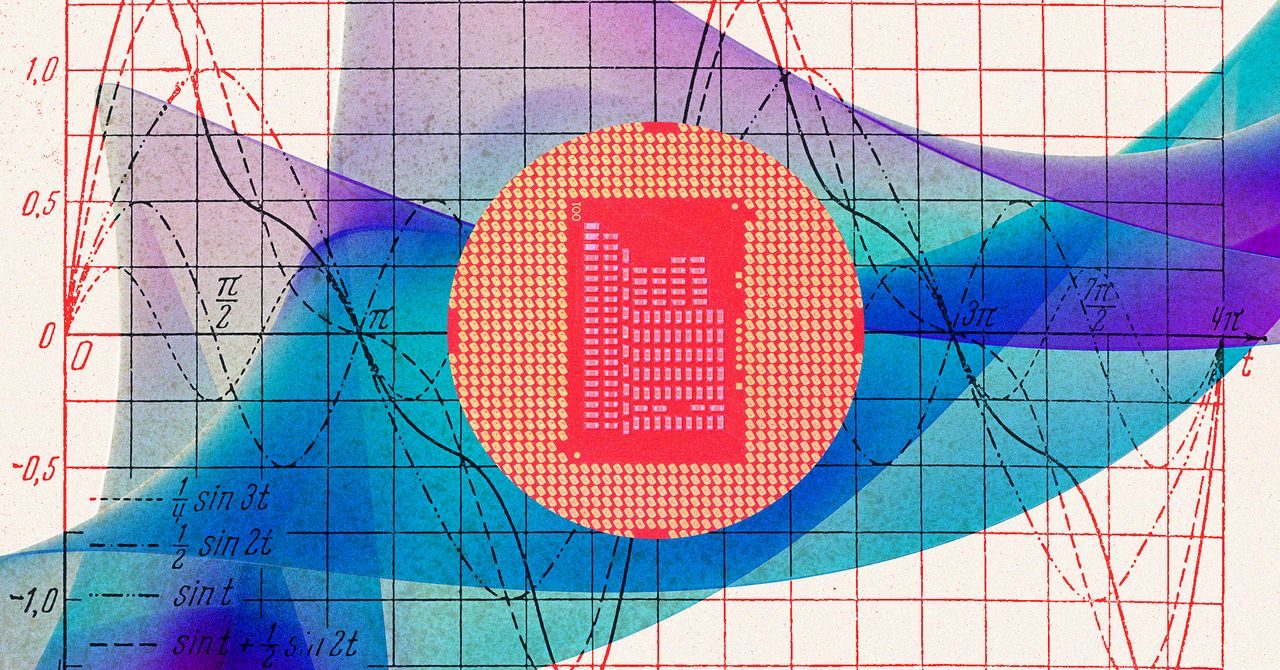
Förtsch says the cost driver today is memory access, and less data needed for a job means a more efficient system. Q.ANT executes complicated math in a single step where regular chips need thousands, saving memory access points. Light is a wave, which can be described as a sine function. Modeling a round shape with only linear functions needs infinite points and lines, but a sine function can describe a circle with two points. Förtsch calls the Nvidia H200 GPU a masterpiece, but says light has strengths where GPUs are weak and vice versa. Linear math should go to GPUs; nonlinear and complex work should go to photonic processors. Q.ANT expects to be stronger in pictures and videos, including image recognition, segmentation, and generation, and in robotics and physical AI.
Efficiency, Adoption and Supply
Under simulation, photonic computing with CPUs and GPUs can deliver more AI at a fraction of the energy, around four or five times reduction, though real hardware has not yet demonstrated it. There is no need to learn a different language than C++ or Python, and preexisting code can run, but GPU-optimized code may need adaptations. Building credibility will take time; Q.ANT is using proof of concept systems in data centers to validate robustness. If it received an order for 100,000 chips, Q.ANT says it is ready, but suppliers may not be. Producing its chips needs only 90 nanometer node technology from the 2000s, letting foundries use existing lines for higher-priced chips without massive upfront investment. Q.ANT processors are GPU-agnostic and complete, rather than replace, GPU functions. Förtsch says Q.ANT would not shy from challenging GPUs in five years if the opportunity arises, but future workloads are unknown. The core message is to fight energy cost in the AI stack through data-optimized models that maintain quality at a fraction of the energy and operating cost.
Sources: Wired
SiTech — AI-powered web development
We build fast, modern websites and bring AI into real business workflows. Have a project or a question? We'd love to help.