Wuhan court makes AI production costs a factor in copyright damages
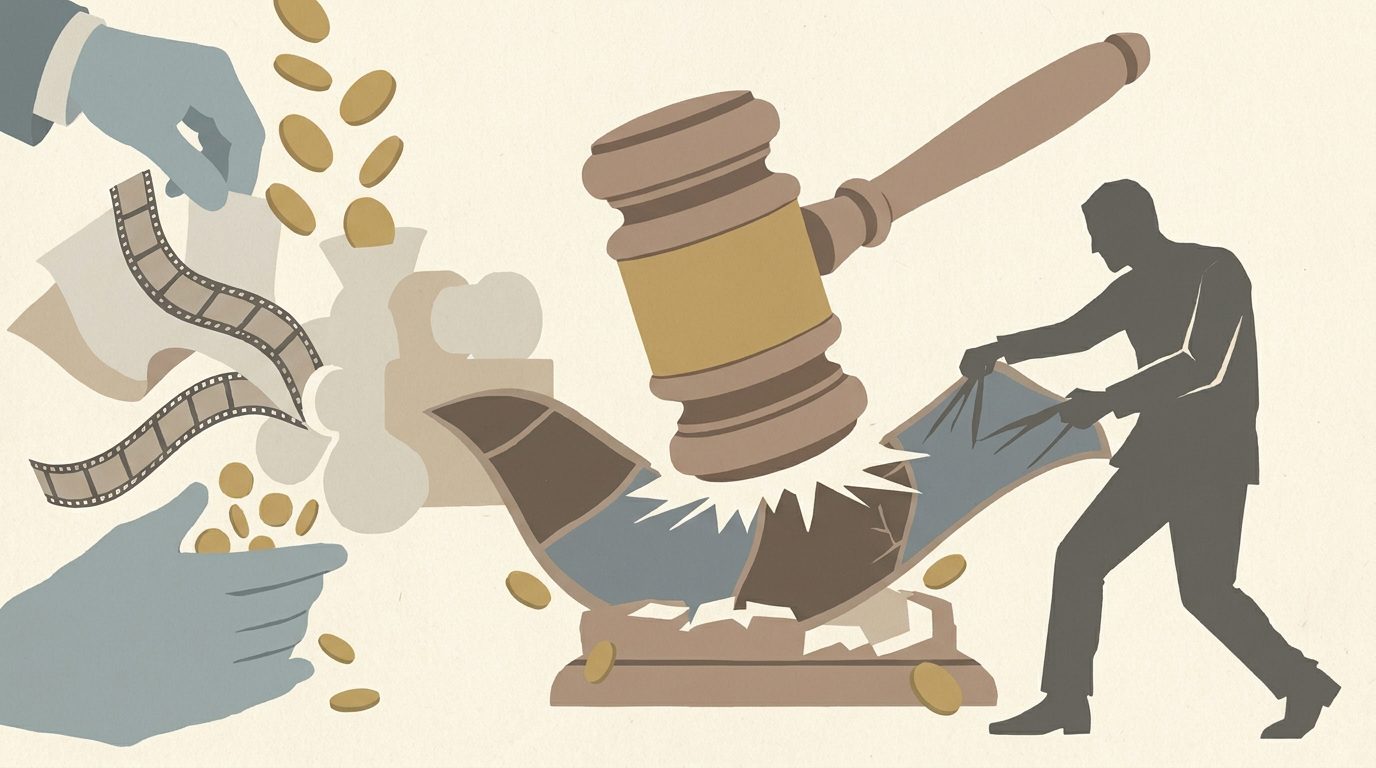
A court in Wuhan has included token usage and AI tool licensing fees in the damages calculation for an AI-generated short drama, the first such ruling in a copyright case. The plaintiff was awarded 20,000 RMB.
A court in Wuhan, China, has for the first time counted the cost of producing content with AI, including token usage and software licensing fees, in the damages calculation of a copyright infringement case. The dispute concerns an AI-generated short drama and was reported by the National Law Review.
What the court decided
According to the report, a company used AI tools in early 2026 to produce a one-hour short drama and published it on platforms including WeChat. One day later a second company copied the work, gave it a new title and inserted its own advertising.
The court treated the drama as a protectable audiovisual work. Its reasoning was that employees of the original producer had made creative decisions at every stage: writing the script, designing the prompts, selecting the best AI outputs and carrying out the final edit. In the court's view the AI was a tool, not the author.
A new cost factor alongside the old ones
Alongside conventional criteria such as the runtime of the work, the reach of its distribution and the duration of the infringement, the court also weighed what it cost to generate the material in the first place. Token consumption and the licensing fees for the AI tools used became part of the damages analysis, which the report describes as a first.
The plaintiff was awarded 20,000 RMB, roughly 2,900 US dollars.
Why it matters
The decision builds on earlier Chinese practice. In 2023 a Beijing court granted copyright protection to an AI-generated image, opening the way for similar claims. The Wuhan case goes further by recognising production costs as an element of compensation, which lets AI-heavy studios account for expenses that traditional copyright calculations were not designed to capture.
The court also recommended that creators keep records of their process, including scripts, prompt drafts and project files, since such documentation is what distinguishes a work from purely machine-generated output.
SiTech — AI-powered web development
We build fast, modern websites and bring AI into real business workflows. Have a project or a question? We'd love to help.