Rivian Plans to Open Its Cars to Third-Party AI Agents
Rivian CEO RJ Scaringe said at TechCrunch Disrupt that the EV maker's cars will eventually run AI agents built by other companies, including Anthropic, as the company looks beyond its own in-car assistant.
Rivian Eyes Third-Party AI Agents
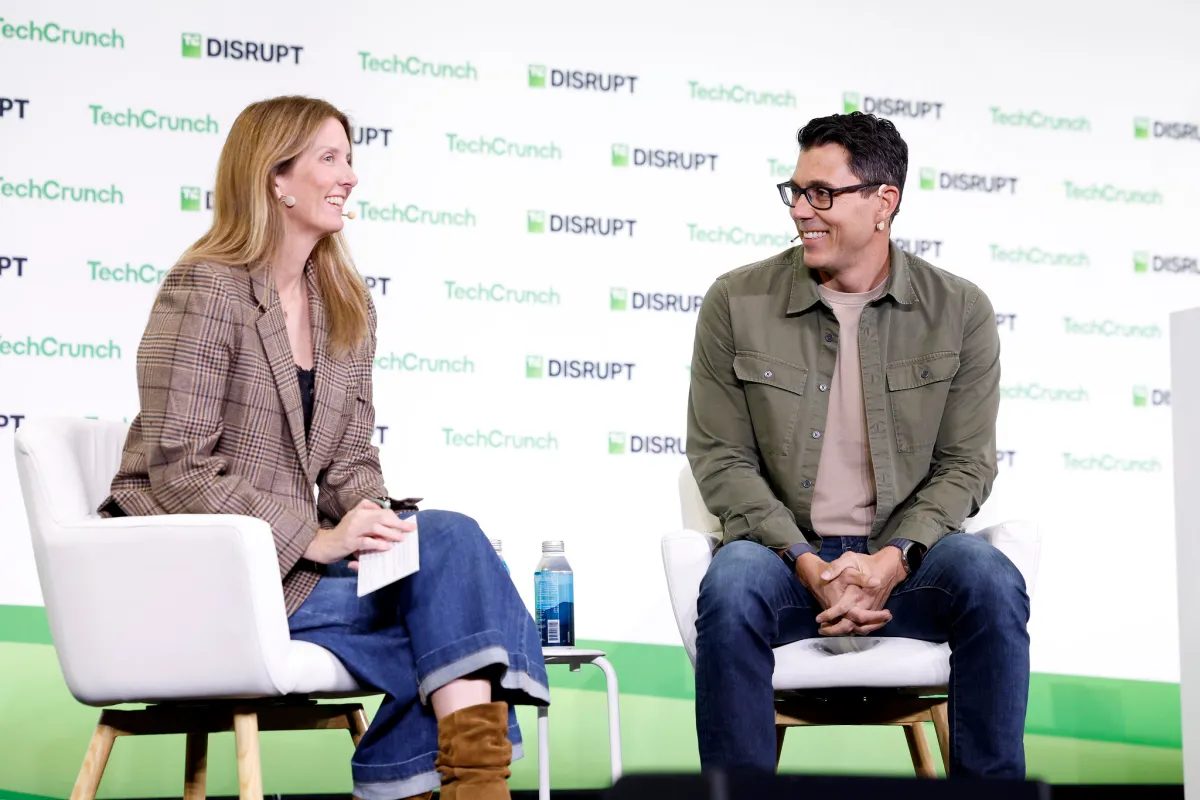
Rivian recently rolled out an AI assistant that lets drivers and passengers interact with the company's electric vehicles simply by talking to them. But the carmaker's founder and CEO, RJ Scaringe, said at TechCrunch Disrupt this week that Rivian's cars will eventually be able to run AI agents made by other companies, such as Anthropic. "That's where it becomes magical," Scaringe said onstage.
Scaringe did not say when Rivian would implement this, and the company declined to offer more details, pointing instead to the "AI & Autonomy Day" event it is hosting in December.
A Homegrown Agentic Framework
Rivian has developed its in-car software from the ground up rather than relying on Apple CarPlay or Android Auto, and it has built many of its own applications, such as navigation, while integrating popular in-car apps like Apple Music. According to Rivian, the company has created its own in-house agentic framework that understands what action a person wants to take when they talk to the vehicle and routes it to the right part of the car's software.
Most of the time that involves familiar requests, like asking the car to turn down the temperature, activate the seat warmers, or summarize the news. "Think of it as like a traffic light," Scaringe said. "So if you ask the vehicle something, it decides what model it's going to use. It can use a local model that's running on the edge and the vehicle. If it's a more complex question, it can go up to the cloud. And then even for that, we have different models that we use."
As of May of this year, the agent could access external apps like Google Calendar.
Safety Limits and Integration Work
Scaringe said the next step would be to add products from frontier AI companies, though making them work in the car will not be easy. "There's a lot of plumbing behind the scenes we have to do to make sure that that works, and it's not just within Rivian. That's also a lot of coordination with the labs to make sure they enable that plumbing," he said.
Because the software sits near safety-critical systems, Rivian has to be extremely careful. "You wouldn't want an agent to determine, 'hey, it's time to apply the brakes, or time to steer the vehicle.' So anything that's vehicle-level controls are not being handed to an agent," he said.
Context Across Devices
Instead, Scaringe expects the implementation to look like an extension of how people currently use agentic apps, which would require Rivian to connect the vehicle to the context that assistants collect on their users. As an example, he said a driver could ask the Rivian assistant to turn on the ventilated seats and then say, "We were talking yesterday about this meal. I'm planning to have guests over on Friday. Can you help me think through what we're going to make?" The car could then pull the driver's context from a conversation they had with the assistant on another device.
Rivian would not be the first American car company to add AI agents to its software. Earlier this year, Tesla added a feature that lets users talk to both SpaceX's Grok chatbot and its Grok Bot assistant.
Sources: TechCrunch
SiTech — AI-powered web development
We build fast, modern websites and bring AI into real business workflows. Have a project or a question? We'd love to help.