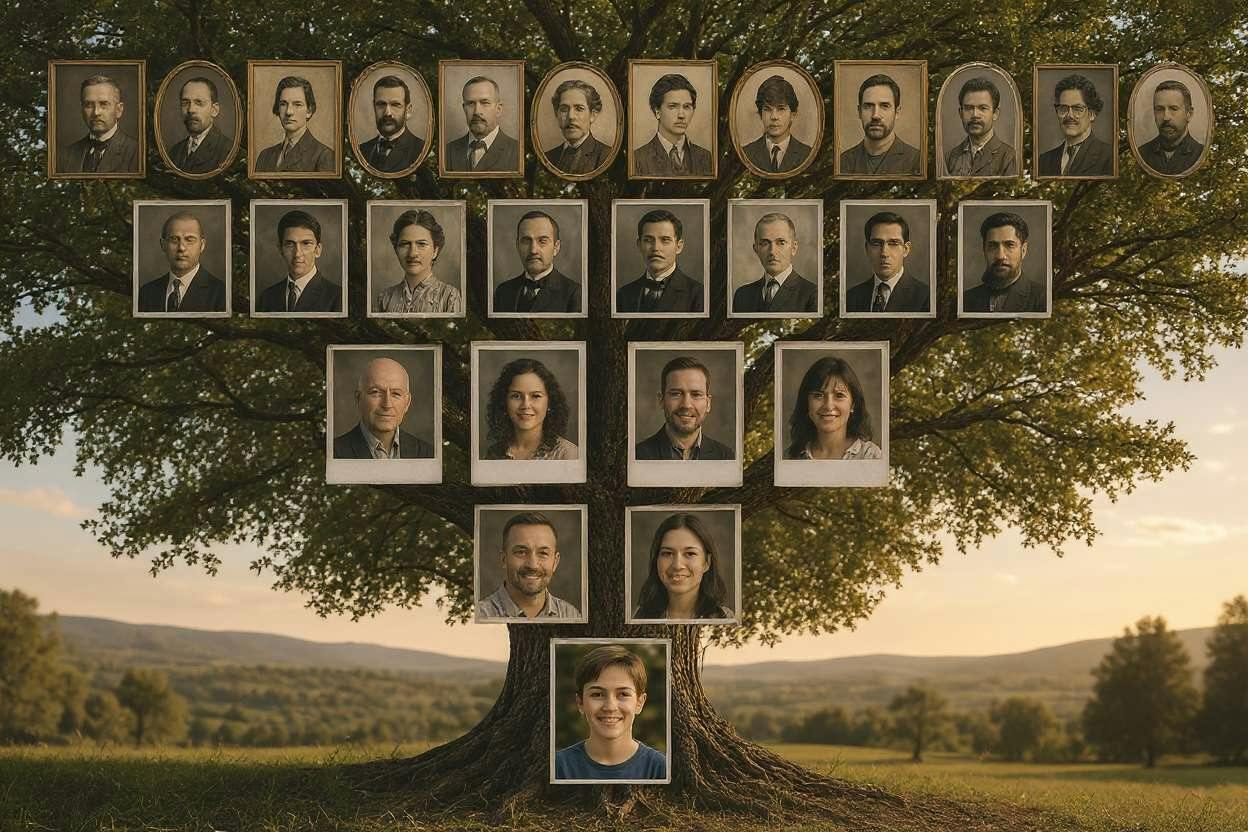
AI-Assisted Genealogy: Lessons From Tracing a Family Tree
A developer's follow-up report on tracing a family tree with AI assistants: grounding answers in official records, automating archive browsing, and what 1200 ancestors taught him.
A developer who builds his family tree with the help of AI assistants has published a follow-up to his earlier account, adding practical detail. In the new report on his A Java Geek blog, he explains how he grounds AI searches in official records, how he automates browsing of genealogy and archive sites, and what he learned from attempts to read centuries-old handwriting with dedicated tools.
Trust, but verify
The first lesson concerns hallucination. The author acknowledges that an assistant can invent an answer, but argues the objection loses most of its force once the answer is grounded in data. Genealogy sites themselves, he notes, are not fully trustworthy sources. GEDCOM, the standard format for family-tree data, defines a quality field called QUAY: 0 means unreliable or estimated data, 1 questionable reliability such as interviews or oral genealogies, 2 secondary evidence recorded after the event, and 3 direct and primary evidence.
Data mined from genealogy sites starts at QUAY 2; if a civil or parish act confirms it, the record is promoted to QUAY 3, and if not, it is discarded.
Automating archives and logins
Archive sites vary along two axes: open access versus a required account, and how aggressively they block bots. The weakest protection can be read with curl; the middle tier needs a full browser, which he steers with Playwright; the hardest sites sit behind Cloudflare-style defenses, where he launches Chrome in debug mode. That last method is fragile, since closing the browser ends the run, so for most sites he prefers Playwright with a persistent session profile: log in once, close the browser, and let the assistant work later with the same access. Handing an assistant your credentials, he adds, is not a smart move.
Transcription trials
Transcribing acts matters, and the difficulty depends on the clerk's handwriting, the reader's familiarity with the language, and the age of the document. The assistant proved careful, preferring a placeholder to a guess. Other tools fared worse in his tests: Transkribus returned gibberish and, he later read, needs training on the user's own documents; a local setup built on kraken beat Transkribus but lagged far behind the assistant; and Filae, a French genealogy site, gave excellent results on French handwriting before the service appears to have been switched off.
What came out of it
The report also describes a cycle: ancestors found in official records send him back to genealogy sites, where "smart match" heuristics can surface people already present in other users' trees. He treats those matches conservatively, because one bad acceptance can corrupt a branch, though they can also reveal spelling variants that earlier searches missed. The project now counts more than 1200 people and spans 13 generations on a single branch.
SiTech — AI-powered web development
We build fast, modern websites and bring AI into real business workflows. Have a project or a question? We'd love to help.