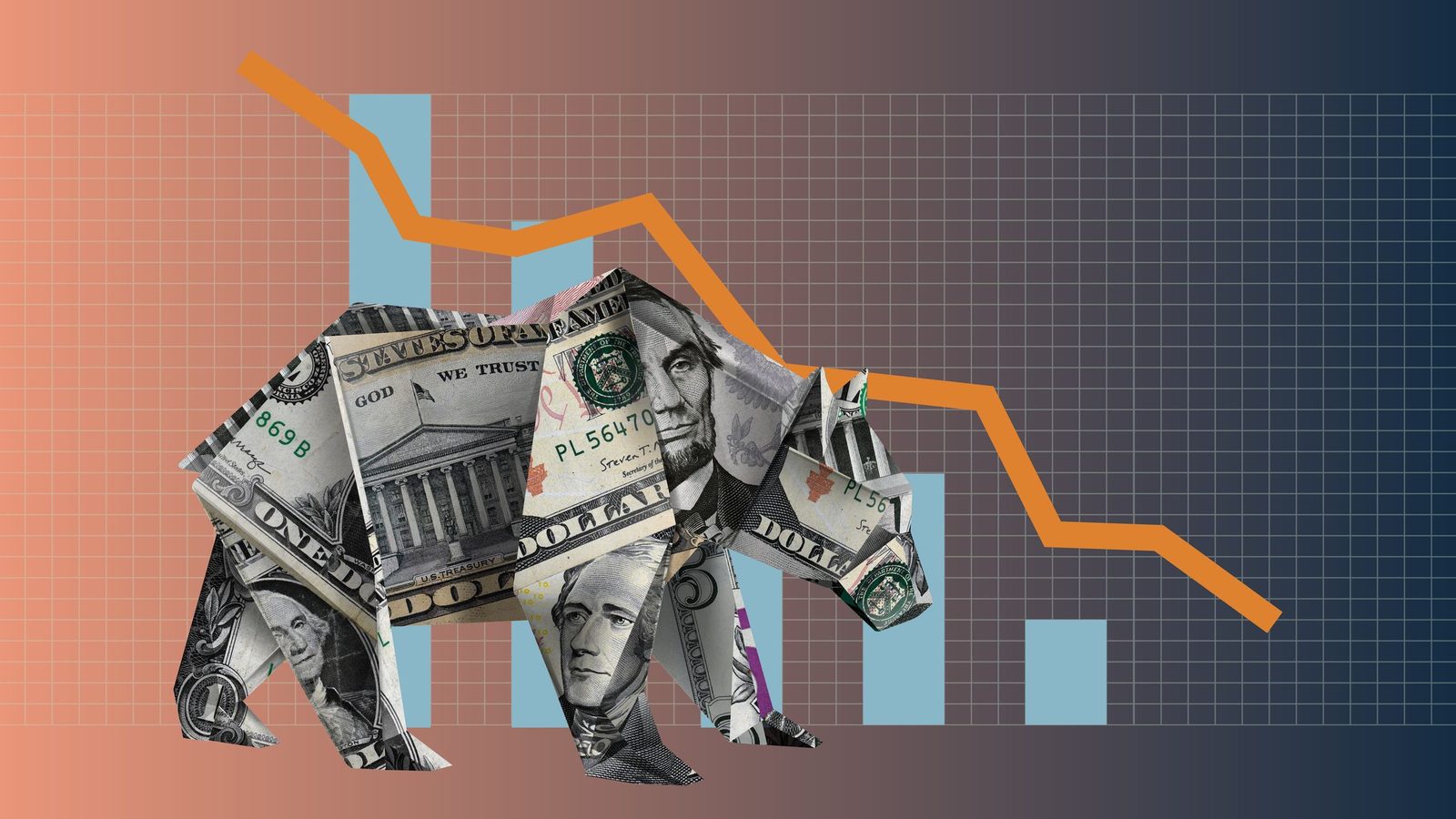
IMF Warns AI Sector Wipeout Could Trigger Global Financial Contagion
The IMF's latest Global Financial Stability Report warns that a collapse in the AI sector could trigger a global financial shock, with circular investments, leveraged positions and heavy debt amplifying the risk.
Circle of Debt
The IMF's latest Global Financial Stability Report warns that the global economy is becoming increasingly dependent on capital flows into the AI sector, and a crash could harm global GDP, investment, and consumption by 2028. The report distinguishes between core AI firms, including companies like TSMC, Nvidia, AMD, SK hynix, Micron, and Western Digital, and others in the space. While a failure of non-core companies would mainly hurt their investors in theory, the report says the risk extends further.
The fund tracked fourteen public transactions since 2023 and found that $300 billion invested in financially weaker AI companies, mostly by hyperscalers, along with $650 billion in debt, generated $1.4 trillion in revenue from services and chip orders. Most of those virtual dollars are concentrated in only a handful of companies, meaning trouble at one firm could spread quickly across the herd.
Contagion Channels
The report points to several channels through which a sharp drop in AI equities could ripple outward. Hedge funds have increased leveraged positions and margin borrowing, and the share of single stocks in leveraged ETFs has risen to 28%, likely fueled by demand for AI and tech stocks. The IMF warns that a sharp drop in those equities could trigger a massive sell-off by ETF issuers and lenders, setting off a feedback loop.
Debt has also grown rapidly. Hyperscalers now represent 10% of investment-grade bond issuance, up from under 1% in 2024. Demand for AI compute remains intense and the companies are profiting, but they are increasingly strapped for cash due to outsized investments in AI gear, necessitating substantial loans to keep operations running.
Correction Scenario
The IMF notes that AI has become an important source of support for the global economy and financial markets, helping prop up economies while the war in Iran affects energy prices and creates policy uncertainty. A recent global stress test on banks indicated they would remain broadly resilient even with an energy pricing shock, higher inflation, and an AI-driven market correction combined.
Even so, the fund believes a correction may come through weaker or less durable AI investments and profitability, arguing that AI computing may not require such high investment levels and may be less profitable than expected or hoped. Under that scenario, the IMF predicts global GDP could drop 0.4%, investment by 1.3%, and consumption by 0.6% by 2028. The fund adds that the excessive debt and leveraging flowing through the industry could make the eventual shock harsher.
Sources: Tom's Hardware
SiTech — AI-powered web development
We build fast, modern websites and bring AI into real business workflows. Have a project or a question? We'd love to help.