AI, Tariffs, Rare Minerals: What to Expect From Trump's Summit With Xi Jinping
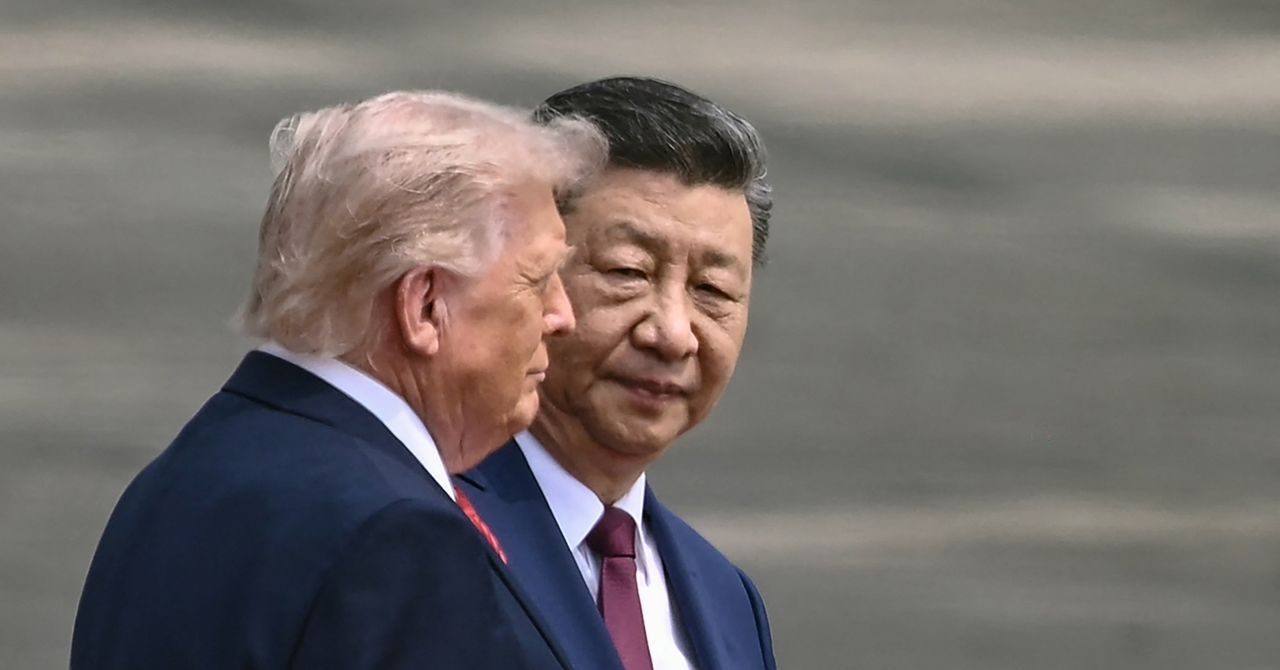
The most anticipated meeting of this year's UN General Assembly week is Donald Trump's face-to-face with Xi Jinping at the White House, where trade, rare earths and AI policy are all on the table.
The most anticipated event of this week's United Nations General Assembly is the meeting between Donald Trump and Chinese president Xi Jinping. Most of the diplomatic activity is unfolding in New York, but the face-to-face between the two leaders will take place at the White House.
Trump is scheduled to personally welcome Xi at Joint Base Andrews on Wednesday, September 23 — an unusual gesture, since US presidents do not typically go to the airport to greet foreign leaders. Ahead of that, a US delegation led by Treasury secretary Scott Bessent and trade representative Jamieson Greer is meeting He Lifeng, China's vice premier of the State Council, to set the agenda.
Trade truce expiring
The trade truce from Trump and Xi's meeting in Busan expires on November 10. Both governments must decide whether to extend the agreement, which lowered Trump's tariff threats and paused port fees.
Beyond the extension, the leaders could set purchase targets for agricultural products, energy and Boeing aircraft. Talks may also continue on a roughly $30 billion package of "non-sensitive" goods spanning about ten categories, though there is no agreement on their scope.
Rare earths and the AI race
A key component of the Busan agreement lifted China's export limits on rare earths and minerals — critical for automobiles, defense and technology, including the hardware AI depends on. The US seeks a more stable supply, while Beijing has leveraged its dominant market position to bring Washington to the table.
According to Scott Bessent, AI safety will be on the agenda for the bilateral meeting. That has been a main request from business leaders, though the industry is divided on the outcome: Beijing wants the US to ease restrictions on Chinese technologies, while some US businesses worry about being outpaced by China. Trump has dismissed calls for AI regulation at home, and the talks are intertwined with trade discussions on export controls for chips and related materials.
Iran, Taiwan, and global politics
The trade talks sit uneasily between each country's most sensitive geopolitical positions. China has threatened to pull out of the summit entirely if the US green-lights new arms sales to Taiwan. The sides are also expected to discuss China's economic ties with Iran and detained foreign nationals.
Washington is pushing for greater access to Chinese products and markets, critical minerals and commitments on certain security issues; Beijing seeks relief from tariffs and restrictions. The May meeting in Beijing was full of symbolic gestures, but both leaders made very few concessions at the negotiating table. "I think there will be some show of deliverables because of the fact that it's a presidential summit coming, but I don't feel like we're on the verge of some sort of breakthrough," Anna Ashton, a China trade analyst and founder of Ashton Intelligence, told CNBC. "I think status quo is probably both sides' general best expectation."
SiTech — AI-powered web development
We build fast, modern websites and bring AI into real business workflows. Have a project or a question? We'd love to help.