
Anthropic says Claude autonomously found a new enzyme system in bacteriophage DNA
Anthropic says its AI model Claude discovered a previously uncharacterized enzyme system whose structure resembles the DNA repeats behind CRISPR. It is the first result from the company's new biology lab.
Anthropic presents Claude's find
Anthropic says its AI model Claude has "autonomously discovered" a previously uncharacterized enzyme system whose structure resembles the DNA repeats behind the CRISPR gene-editing tool. The company presented the result on September 23, 2026 as the first finding from its newly opened biology laboratory, and as an early test of Claude's value for science while the company prepares to go public.
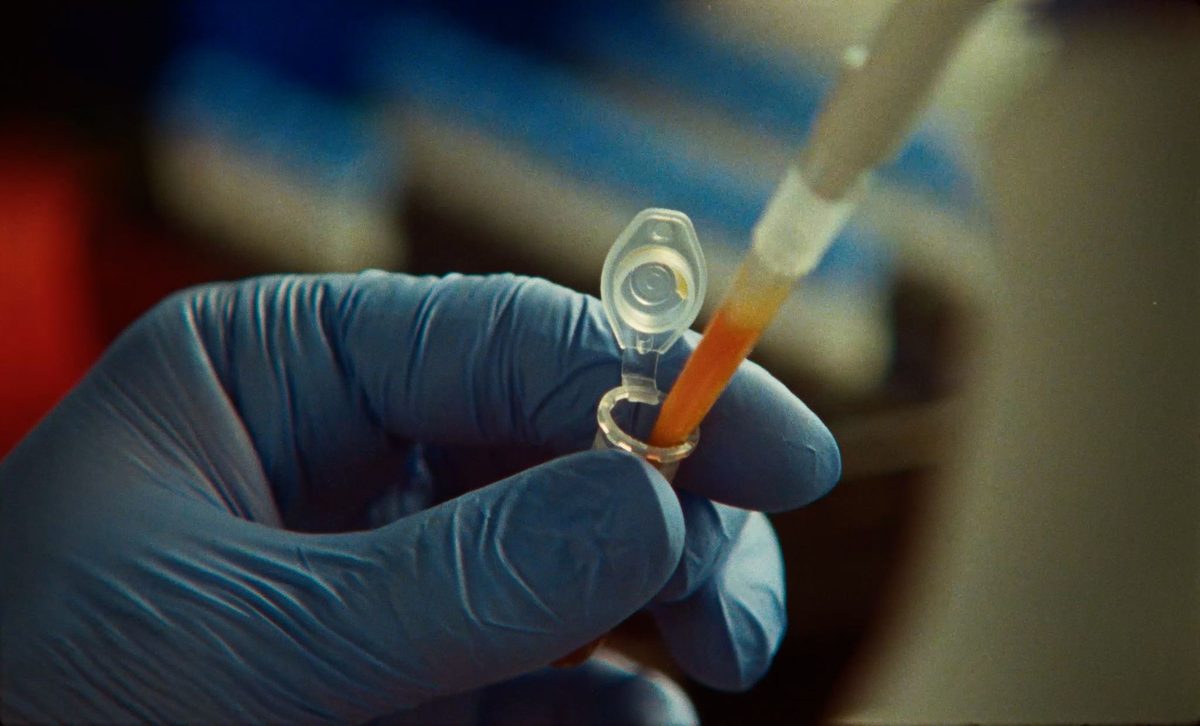
According to Anthropic, its scientists' involvement was limited to writing the initial prompt and carrying out the laboratory work. Claude was asked to search a large database of DNA sequences for interesting examples of reverse transcriptases, and it flagged a repeating pattern for human review.
Nearly 950 agents, 21 hours, 210 million tokens
Over 21 hours, roughly 950 Claude agents worked through 210 million tokens, the company says. Together they gathered more than 200,000 reverse transcriptases, identified 3,500 new candidate systems and narrowed them down to the 20 most promising, writing up each as a report a human can read. Anthropic says this kind of analysis usually takes an expert scientist weeks to months.
One agent's log, quoted by the company, records the moment of the find: "The DNA next to the RT is spectacular: I can see by eye a tandem repeat array … that's a CRISPR-like … repeat array?!" Anthropic named the system array-associated reverse transcriptases, or ART.
What ART is, and what is still unknown
ART has three parts: the reverse transcriptase, a partner gene beside it, and a long array of evenly spaced DNA repeats — a layout that resembles a CRISPR array. Anthropic says Claude appears to be the first to notice the features that define the system: an array of non-coding DNA and an accessory protein of unknown function.
Feng Zhang, a CRISPR pioneer and professor at MIT and the Broad Institute, reviewed the pre-print and called it "an exciting example of how AI agents can contribute to biological discovery," adding that the identification of RNA-repeat arrays associated with reverse transcriptases is "genuinely intriguing and merits further investigation." First experiments show the array is expressed as a set of short RNAs; what the system does is still unknown. All lab work is done by human scientists at biosafety levels BSL-1 and BSL-2. The Verge notes it remains unclear whether the discovery will prove practically useful — let alone as transformative as CRISPR.
SiTech — AI-powered web development
We build fast, modern websites and bring AI into real business workflows. Have a project or a question? We'd love to help.