Stanford and NVIDIA Present CLM-8B, a Fast System One Model for Decisions
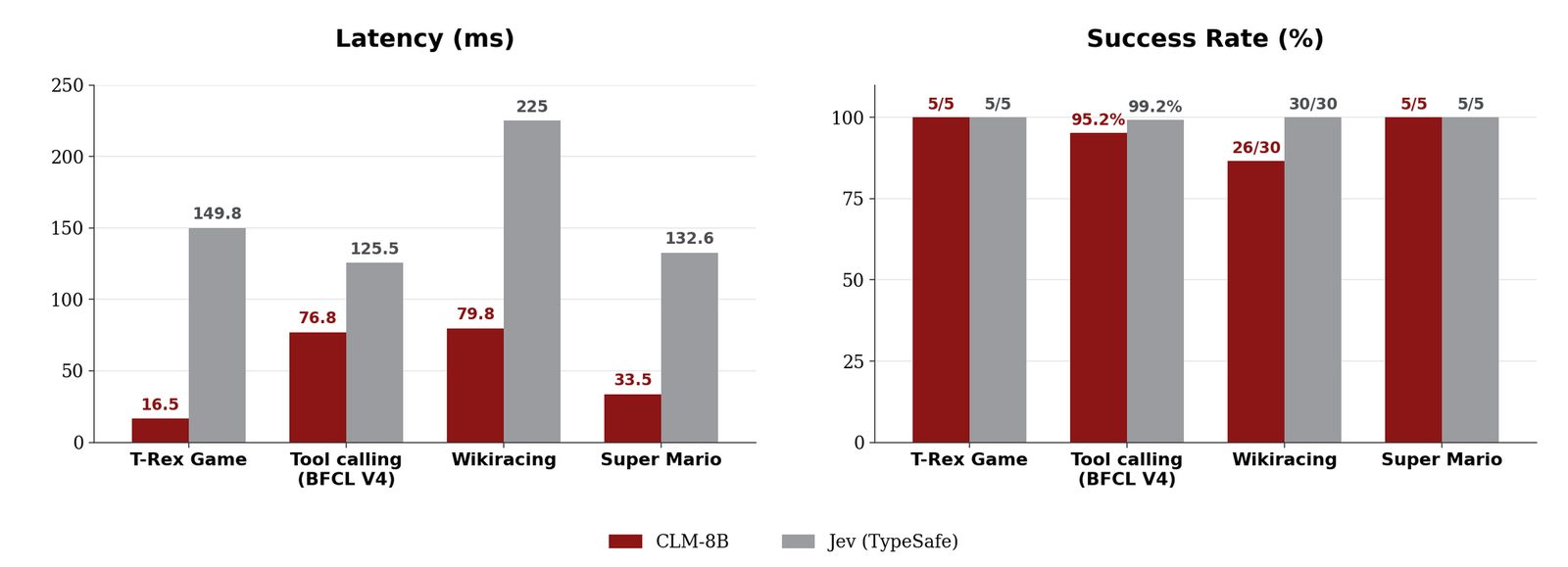
A team from Stanford University and NVIDIA Research introduced Contrastive Language Models, trained to match states with actions. CLM-8B matches Jev on computer-use, gaming and tool-calling tasks while running up to 9 times faster.
What a Contrastive Language Model is
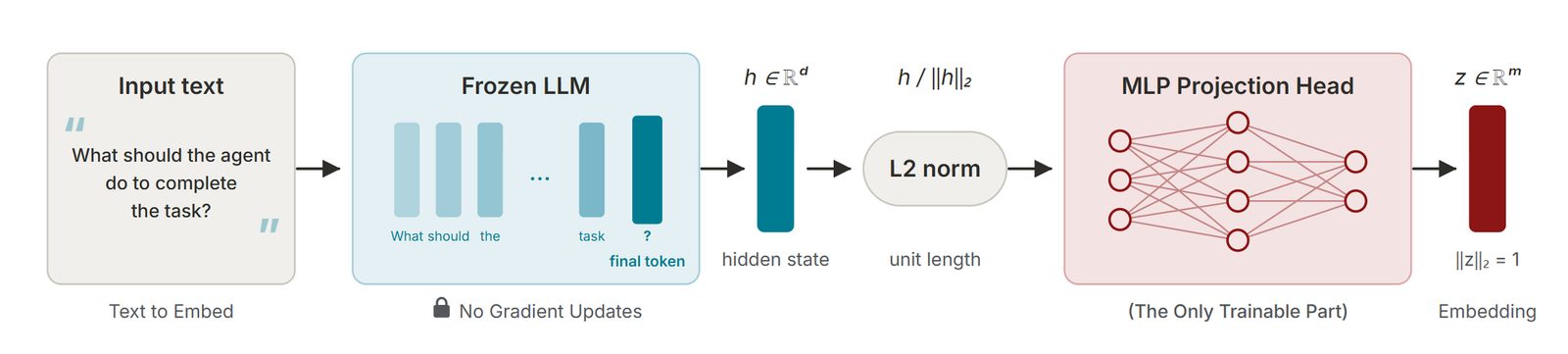
A team from Stanford University and NVIDIA Research, led by Jacky Kwok, presented Contrastive Language Models (CLM) on September 23. The authors describe CLM as a new class of System One model: instead of reasoning step by step, it makes fast, reflexive decisions by pairing a state encoder with an action encoder in a shared embedding space, trained with a bidirectional InfoNCE contrastive objective.
At deployment the two encoders act as a zero-shot action classifier: given a state and a set of candidate actions, CLM scores each candidate by cosine similarity with the state embedding and selects the highest. Each encoder combines a frozen LLM backbone with a trainable 20-million-parameter projection head, so only the head receives gradients; a full pre-training run on the Nemotron DQA corpus takes about an hour on one RTX 4090.
A three-stage data recipe
Pre-training covers about 60 million question-answer pairs from Nemotron DQA, with the question as the state and the answer as the action. Mid-training adds roughly 30 million synthetic hard negatives built with Gemini 2.5 Flash-Lite, and post-training uses about one million agent trajectories from the Agent Data Protocol.
Benchmarks and latency
On computer-use, gaming and tool-calling tasks CLM-8B matches Jev while running up to 9 times faster, a gap that reaches 13 times at roughly 1,000 candidate actions. Fine-tuned as a trajectory verifier it sets a new state of the art on DeepSWE (81.6%) and Terminal-Bench 2.1 (87.6%), with inference 4-6 times faster than Jev on an H100 GPU across 38 and 30 held-out tasks.
Infrastructure and next steps
The serving stack disaggregates states and actions so their embeddings can be cached independently: when only the state changes, as in Super Mario, each step takes one forward pass instead of five. The team also reports scaling laws, with test contrastive loss falling as a power law in compute, data and model size, and says a multimodal CLM-35B is already in training, with a release planned for early next month.
SiTech — AI-powered web development
We build fast, modern websites and bring AI into real business workflows. Have a project or a question? We'd love to help.