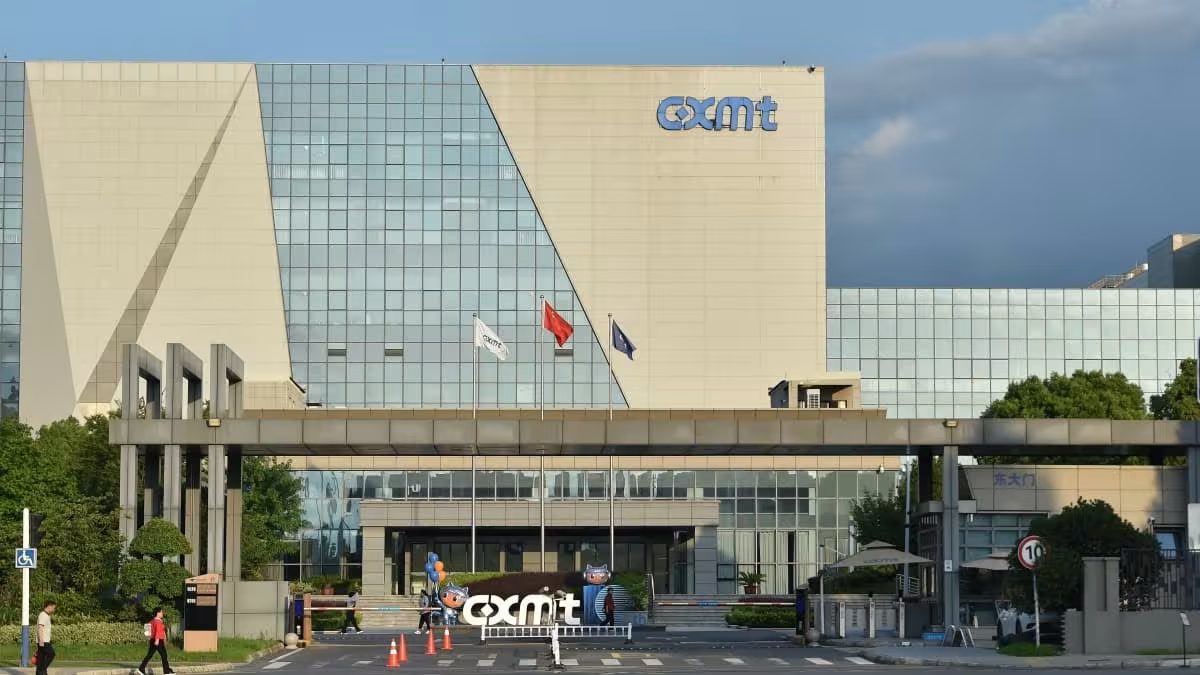
CXMT Plans 4F² DDR5 Server Memory for Late 2026
CXMT plans to launch DDR5 RDIMM server memory built on its 4F² DRAM architecture by the end of 2026, potentially reaching the design about two years before Samsung. The change from mainstream 6F² cells can increase chip density.
CXMT targets late 2026 for 4F² server memory
CXMT plans to launch DDR5 RDIMM server memory built on its 4F² DRAM architecture before the end of 2026, CXMT President Cao Kanyu said at the 4th Integrated Chip and Chiplet Conference in Shanghai. If the schedule holds, CXMT could ship 4F² memory about two years before Samsung, which is not expected to produce 4F² products until 2028.
The company said the move from mainstream 6F² cells to 4F² can raise DRAM cell density per chip by 30 to 50 percent. CXMT published its first paper on the architecture in 2021 and has accumulated more than 300 published patent families related to it, a position Cao described as industry leading.
VSG and HKMG back the smaller cell
CXMT said the core innovation in its implementation is an in house developed Vertical Surrounded Gate transistor, or VSG. The vertically wrapped channel structure is designed to address current leakage and short channel effects while enabling better area scaling as cells shrink.
CXMT is also applying High k Metal Gate technology, or HKMG, to its G4 process. The approach replaces traditional silicon based gate insulators with high k materials such as hafnium oxide, which the company links to lower leakage, better power efficiency and faster switching.
Server market and fab capacity
Server memory requires continuous operation under sustained loads, a higher bar than consumer electronics, where CXMT said its customer base has been concentrated. The RDIMM plan is therefore a direct bid to enter the high end server memory market served by Samsung, SK Hynix and Micron. None of the three has achieved large scale commercialization of 4F² architecture, and no 4F² timeline was given for SK Hynix or Micron. Samsung has outlined use of wafer to wafer hybrid bonding on its B1b process, but the approach is described as expensive and still years from mass production.
CXMT is also expanding capacity. It is targeting 300,000 wafers per month by year end across three 300mm fabs. Two facilities under construction in Shanghai and Hefei could eventually raise total capacity to 600,000 wafers per month.
Sources: Tweaktown · Trendforce · Techmeme
SiTech — AI-powered web development
We build fast, modern websites and bring AI into real business workflows. Have a project or a question? We'd love to help.