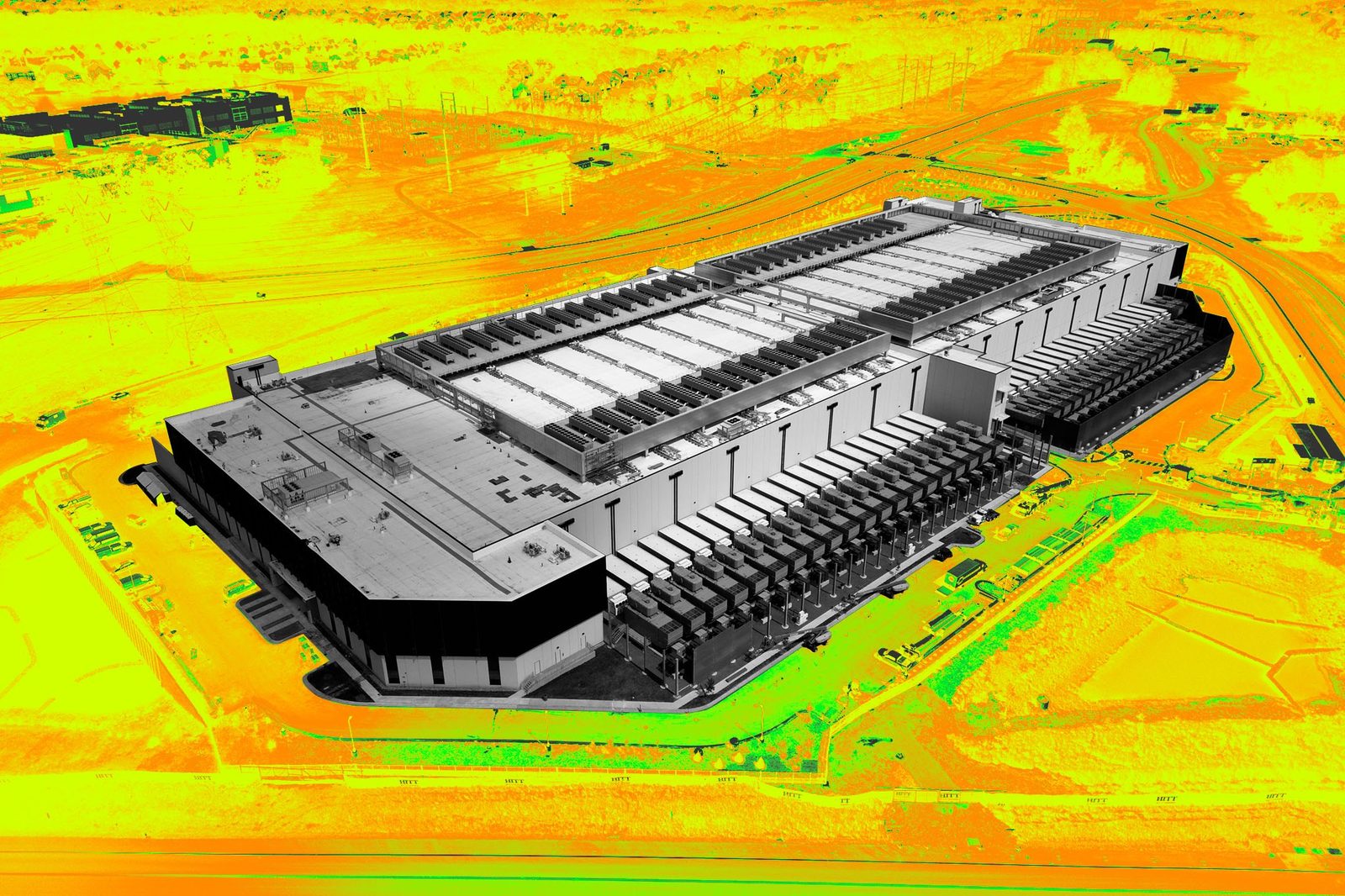
Data centers could erase decades of air quality gains
A new report from the Houston Advanced Research Center says planned data centers in Texas could push soot and smog-forming pollution to levels not seen since the 2000s.
Pollution risks from planned data centers
A rush of new data centers could bring air pollution roaring back to levels not seen since the 2000s in Texas, which has become ground zero for the physical infrastructure behind generative AI. New and proposed data centers are demanding a tremendous amount of electricity, and how developers and utilities meet that demand will determine how dirty things get.
If all planned data center projects were to plug into the electricity grid in Texas and be powered by the anticipated grid mix, soot and smog-forming pollutants would skyrocket, according to a new report from the Houston Advanced Research Center. In just five years, it would be enough pollution to wipe out decades of gains in air quality.
In that scenario, fine particle pollution or soot from the power sector would more than triple, reaching its highest level since 2006. Smog-forming NOx emissions would increase 136 percent, approaching pollution levels from 2004. Planet-heating carbon dioxide pollution would climb 90 percent above what they were in 2025.
Different paths for power
The outcome is not set in stone. HARC modeled different outcomes based on three different projections for data center energy demand. Many proposed data center projects are speculative and could fall by the wayside. Developers can limit the environmental impact of a data center by building solar and wind farms onsite.
NOx emissions could be up to 10 times lower if data centers pair grid power with renewable electricity generated onsite. But if developers decide to build gas engines on site to power their data centers as a way to avoid long wait times to connect to the grid, the opposite could also play out, resulting in the highest pollution levels possible.
In many cases, developers are turning to less efficient gas turbine technology in order to speed construction, another trend that is making the data center boom more polluting than it needs to be.
Texas becomes ground zero
Data center capacity is typically measured by how much power they draw, and Texas has become the leading data center market in this measure with 26 gigawatts of existing and under-construction capacity. Texas is also bracing for four times more proposed data center capacity running on power generated onsite than any other state, according to a separate Wood Mackenzie report published in March.
"There is a good chance that our children and grandchildren will breathe dirtier air than we did," John Hall, HARC CEO, said in a press release. "The transportation sector, the state, and other stakeholders have been working for decades to successfully bring these [emissions] numbers down, and that progress is now at risk."
Sources: The Verge · Texas Tribune
SiTech — AI-powered web development
We build fast, modern websites and bring AI into real business workflows. Have a project or a question? We'd love to help.