Starlink compares six dishes for home, travel, mobility and business use
Starlink offers six dish options for fixed home internet, travel, mobile use and business sites. The V4 and V5 serve homes, while Mini prioritizes portability and Performance kits target mobility.
V4 and V5 residential options
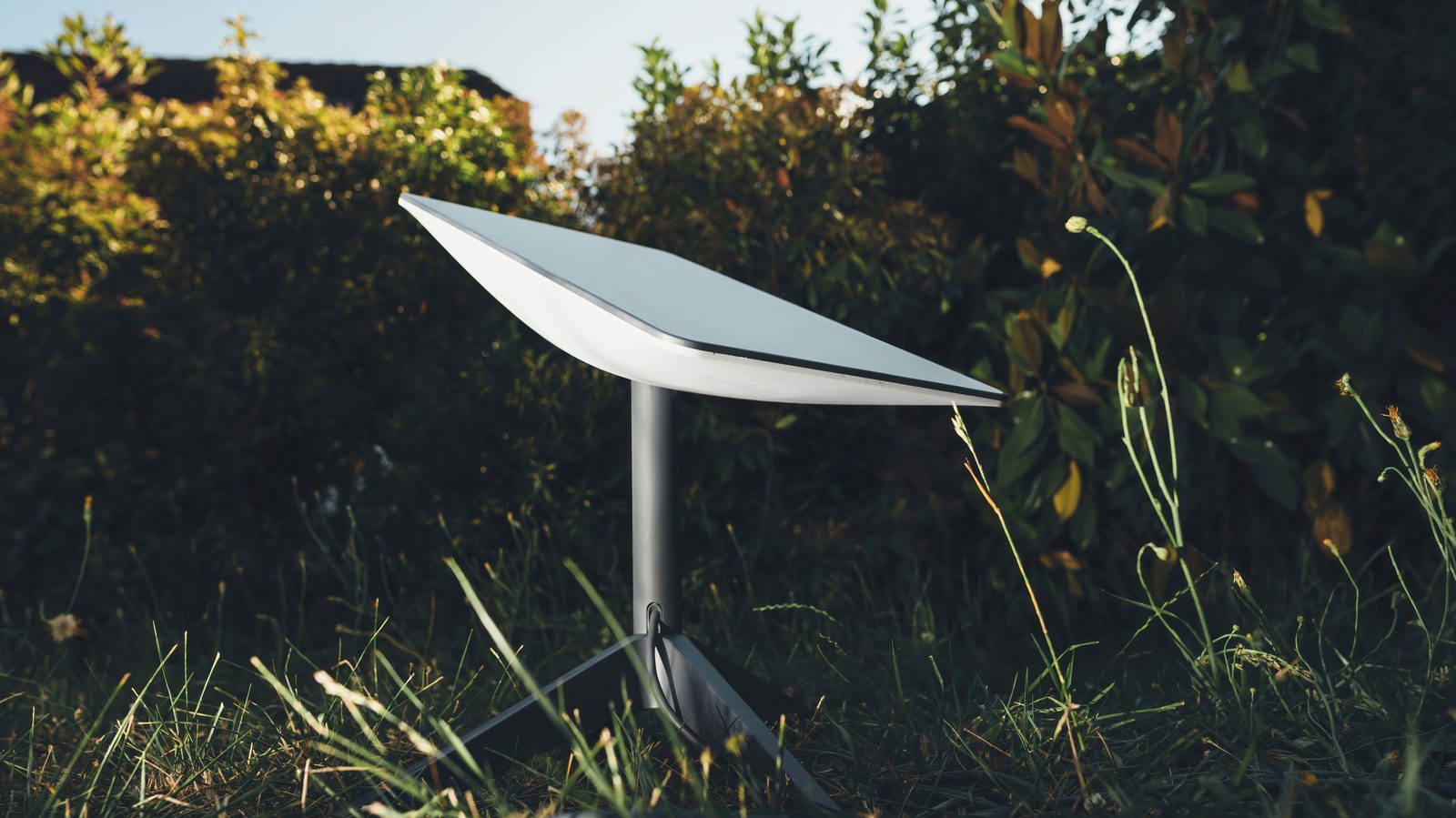
The Starlink V4, used in the Standard 4 and Standard 4 X kits, is positioned for fixed home internet, streaming, video calls and online gaming. It measures about 23.4 by 15 inches, weighs 6.4 pounds and uses software-assisted manual orientation. The Standard 4 includes the smaller Router Mini, while the Standard 4 X includes the newer, faster Router 3.
The V5 is Starlink's newest residential dish, but it is not a performance upgrade over the V4. It is smaller, lighter and more power-efficient, measuring about 15.1 by 12 inches and weighing 2.4 pounds. Starlink lists average power use at 35 to 50 watts, compared with 75 to 100 watts for the V4. Its peak download speed is slightly lower at up to 375 Mbps, compared with 400+ Mbps for the V4. The V5 is intended for fixed locations and is currently available only in select areas.
Mini prioritizes portability
The Starlink Mini is a compact kit for home, road trips, camping and other off-grid use. It measures 11.75 by 10.2 inches, weighs about 2.4 pounds and includes a built-in Wi-Fi router. Average power consumption is listed at 20 to 40 watts, and a compatible USB-C power source can be used with Starlink's optional USB-C to barrel jack cable.
Starlink lists download speeds of up to 300 Mbps for the Mini. Its direct purchase price has fallen from the original $599 to $199, and it does not require a residential subscription. The Standard residential dish may still be more practical for a permanent home installation, but portability is the Mini's main advantage.
Performance dishes target mobility
The Performance Gen 2, formerly called the Flat High Performance Kit, is designed for RVs, boats and other mobile applications. Its 140-degree field of view and enhanced GPS capabilities help it track satellites while a vehicle moves or a boat rocks. Starlink lists peak download speeds of up to 450 Mbps, upload speeds of up to 60 Mbps and a survivable wind speed of more than 174 mph. It uses a wedge mount for permanent installation.
The Performance Gen 3 is aimed at remote locations, extreme weather and use in motion. It has the same 140-degree field of view, with peak download speeds of up to 475 Mbps and upload speeds of up to 75 Mbps. Starlink says it can operate from minus 40 to 140 degrees Fahrenheit, survive winds above 174 mph and resist water, dust and high-pressure cleaning when installed with its cables. It also supports AC and DC power.
Enterprise and installation choices
The Enterprise kit is intended for fixed business applications and custom network configurations. It includes a 50-meter cable, a 5-meter Ethernet cable and support for third-party routers, although a Starlink router must be purchased separately. The dish uses manual orientation and has a 110-degree field of view.
For most home users, the V4 or V5 is the starting point, while the Mini is the portable option. Performance Gen 2 and Gen 3 suit more demanding mobility and environmental requirements, and Enterprise provides greater installation flexibility. Standard kits and the Mini include a kickstand, with additional mounts available for permanent installations. Starlink says its hardware is designed for self-installation, but professional installation is available for complex setups. Local hardware availability should also be checked before purchase.
SiTech — AI-powered web development
We build fast, modern websites and bring AI into real business workflows. Have a project or a question? We'd love to help.