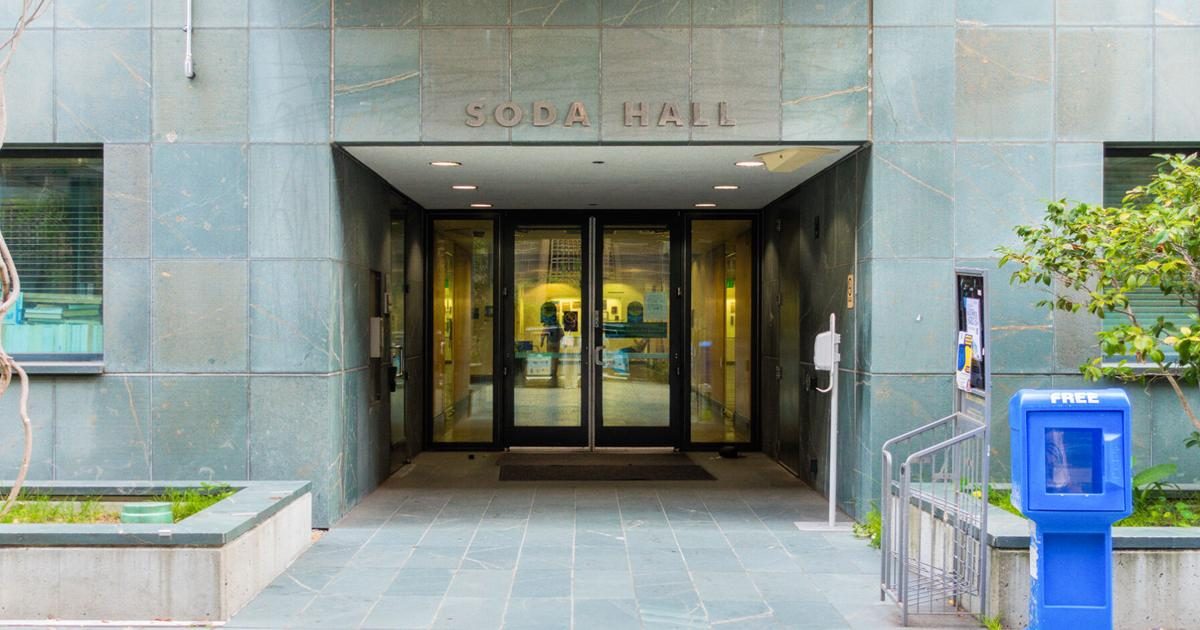
Failing grades soar in Berkeley CS classes as professors point to AI use
Spring 2026 brought unusually high failure rates to several UC Berkeley computer science courses: 35.3% of CS 10 students and 10.6% of CS 61A students received F's, far above the department's 7% guideline for lower-division D and F grades.
Failure rates well above department guidelines
In spring 2026, 35.3% of students in UC Berkeley's CS 10 course received an F, according to data published by Berkeleytime. In CS 61A, the share was 10.6%. In spring 2025 and spring 2024, the proportion of F's did not exceed 10% in either class.
The electrical engineering and computer sciences department's grading guidelines say that 7% of students in lower-division courses, including CS 10 and CS 61A, should receive D's and F's, and that a typical lower-division GPA falls in the 2.8–3.3 range. In spring 2026, average grades in both classes were C-pluses, a 2.3 GPA.
AI, dishonesty and mathematical preparation
Teaching professor Dan Garcia, who taught both courses, believes the “primary driver” of the abnormally high failing rates is a “vast increase in academic dishonesty” tied to students' use of large language models such as Claude, ChatGPT and Google Gemini. “In other cases, it's students who are leaning a little too hard on LLMs to do their work for them, and then at exam time just really aren't ready,” he said. Nearly 30 students in CS 10 were caught cheating on take-home exams, and their cases were sent to the Center for Student Conduct.
Garcia also pointed to weak mathematical preparation, a concern echoed by associate teaching professor Gireeja Ranade. In her spring 2026 EECS 127 course, 16.8% of students received an F, far above the 5% D-and-F rate the department describes as typical for upper-division courses. One student told her that a Berkeley linear algebra class they took had an “open-internet, open-AI policy” for homework and exams; the mathematics department said it has no record of such a policy in its classes, and the newspaper could not verify which instructors elsewhere allowed AI use.
Petition, staffing and engagement
Both professors joined more than 1,300 UC faculty in signing a petition calling for the reinstatement of ACT and SAT scores in STEM admissions. Ranade removed EECS 127's final project because of a lack of staff, and EECS department chair Jelani Nelson wrote on X that the campus has reduced undergraduate CS enrollment and the number of undergraduate teaching assistants because of the high hourly wages TAs are paid.
Both instructors reported falling engagement. Ranade said office hours used to be “overflowing,” but this semester she and her TAs saw “very low engagement.” Garcia said that for the first time he was sitting in his office alone. Looking ahead, he plans to tell future classes on day one what happened in spring 2026 and to find ways to identify students who need remedial support. Ranade stressed that professors should teach students “more, not less” in the age of AI, preparing them for a competitive world.
SiTech — AI-powered web development
We build fast, modern websites and bring AI into real business workflows. Have a project or a question? We'd love to help.