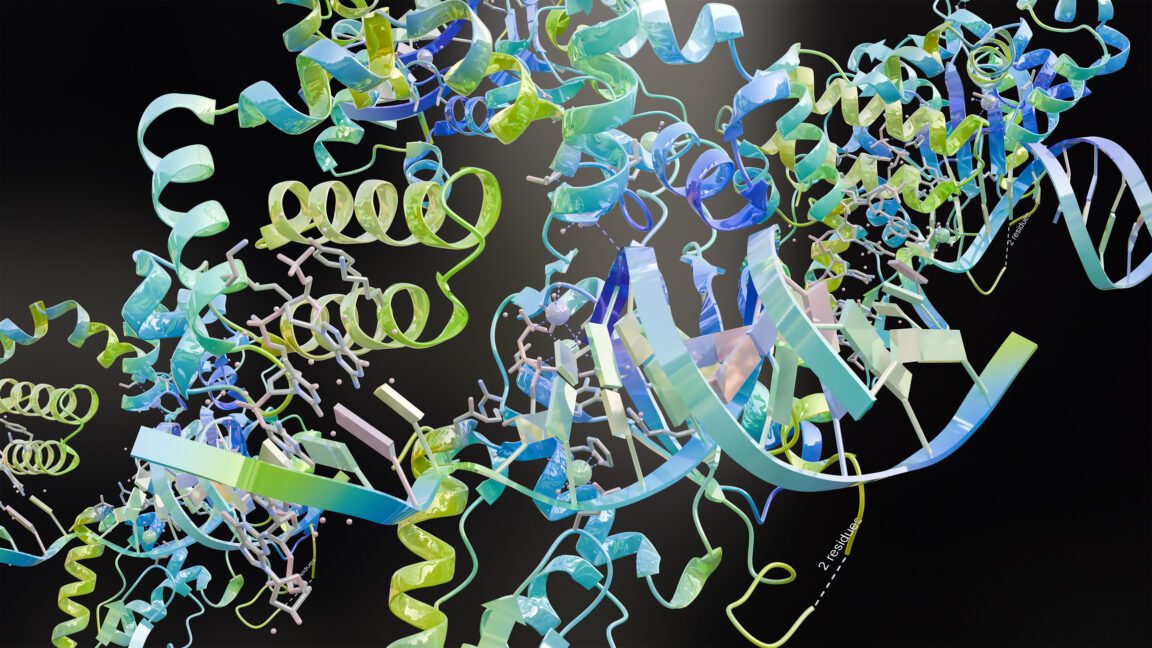
Google DeepMind introduces SynthID Bio to watermark AI-designed proteins
Google's DeepMind team has published a Nature paper describing SynthID Bio, a protein-watermarking method that leaves function intact and aims to help biosecurity screening of AI-designed proteins.
On September 30, Google's DeepMind team published a research paper in the journal Nature describing SynthID Bio, a family of methods for watermarking AI-designed proteins. The system marks the protein sequence itself without harming its function, making it possible to identify designs produced by trusted researchers while subjecting everything else to closer scrutiny.
The biosecurity gap
AI-driven protein design has already produced notable results, including enzymes that digest plastics and proteins that block snake-venom toxins. The same tools could be turned to building toxins or altering viral proteins. The software used to screen DNA sequences for threatening proteins does not flag AI-designed ones, however, because they have not been characterized well enough to be assessed. Nearly a year after that risk was flagged, no remedy existed.
How the watermark works
SynthID Bio builds on Google's SynthID, which biases the probabilistic choices a model makes so that the mark spreads across the output and cannot be removed without knowing the encoding. Proteins are a harder target: they are built from only 20 amino acids, some of which may be essential to structural integrity or catalytic activity, and even a large protein of 500 amino acids offers far less material to hide a signal in than a digital image.
The team integrated the method with ProteinMPNN, a widely used Baker Lab tool that places side chains one amino acid at a time according to how well they fit the target backbone. SynthID Bio proposes a candidate using a cryptographic-style key together with the identity of the amino acids already chosen; ProteinMPNN accepts it only if the result remains functional. Watermark amino acids therefore appear only where the chemistry allows, and they are scattered along the whole sequence. Detection is statistical: with the key, a checker scans the sequence and measures how often the suggested amino acids appear.
Tests and limits
The team used the system to design proteins that bind natural targets previously addressed with AI designs, and the watermarked versions bound their intended targets normally. For biosecurity, Google proposes that DNA synthesizers receive key sets from trusted organizations such as universities and large biotech companies. That would let them quickly tell whether an unknown protein is a trusted AI design and focus on the rest.
Several holes remain. Security depends on how the watermarking keys are distributed. Very short proteins may carry too few watermark amino acids to be identified. Padding a sequence with unmarked material, for instance by fusing the design to a natural fluorescent protein, can dilute the watermark. Many AI protein-design packages do not rely on ProteinMPNN, and because identification is statistical, the chosen cutoff shapes false positives and false negatives. In its original form the approach may not prove especially practical, but it works.
Sources: Ars Technica · Techmeme
SiTech — AI-powered web development
We build fast, modern websites and bring AI into real business workflows. Have a project or a question? We'd love to help.