
Google prepares first Project Suncatcher satellite to test TPUs in orbit
Google is preparing the first orbital test of Project Suncatcher: a prototype satellite will evaluate how the company's TPUs handle the physical stress of spaceflight, radiation and thermal extremes.
Google is moving Project Suncatcher from research toward its first orbital test. The long-term moonshot, announced last year, explores whether space could one day host scalable machine learning infrastructure, and the company's next step is a prototype satellite that will evaluate how its Tensor Processing Units (TPUs) perform in space.
According to Google's blog post, the initial mission will fly on the upcoming Transporter-18 rideshare mission with SpaceX and was developed in partnership with Planet.
What the first mission will test
The satellite is designed to gather in-orbit data on how Google's TPUs handle the physical stress of spaceflight, along with the radiation and thermal extremes of the space environment. Google describes the launch as a deliberate first step that should show what works before the team attempts to scale up.
Why space attracts AI compute
In low Earth orbit, satellites can access near-constant sunlight, generating up to eight times more solar power than on Earth. Eventually, Google says, it could be possible to link together multiple constellations of satellites, allowing them to manage larger AI workloads while in orbit.
Engineering hurdles and next steps
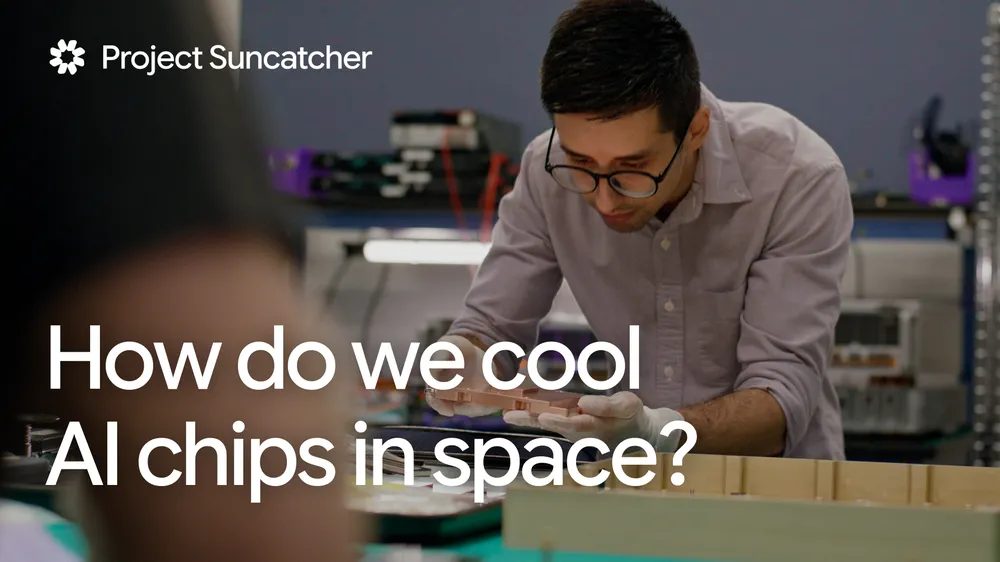
Engineers still face major challenges: extreme radiation, intense vibrations during launch and cooling hardware in a vacuum. The Project Suncatcher team discusses those problems in a new video series presented by Travis Beals, senior director of Paradigms of Intelligence, and is working toward a next milestone in 2027.
The company compares the effort to early research into autonomous driving and quantum computing; each required years of experimentation before practical systems emerged. The orbital test is meant to answer a basic question first: can AI hardware operate in space at all?
SiTech — AI-powered web development
We build fast, modern websites and bring AI into real business workflows. Have a project or a question? We'd love to help.