Hark Releases Privacy Focused AI Personal Assistant Hark Pro
Startup Hark, founded by serial entrepreneur Brett Adcock, has released Hark Pro, an AI personal assistant trained for computer use. The free service with a subscription tier aims to act as an operating system for future AI computers.
Hark Pro Goes Wide
Hark, a startup founded less than a year ago by serial founder Brett Adcock, has released Hark Pro, an AI personal assistant with a focus on privacy. Users can access the service for free, with a subscription tier for heavy users. The company describes its mission as building a user interface for AI rather than pursuing AGI, and says its foundation is a model trained specifically for computer use.
A Full Screen Assistant
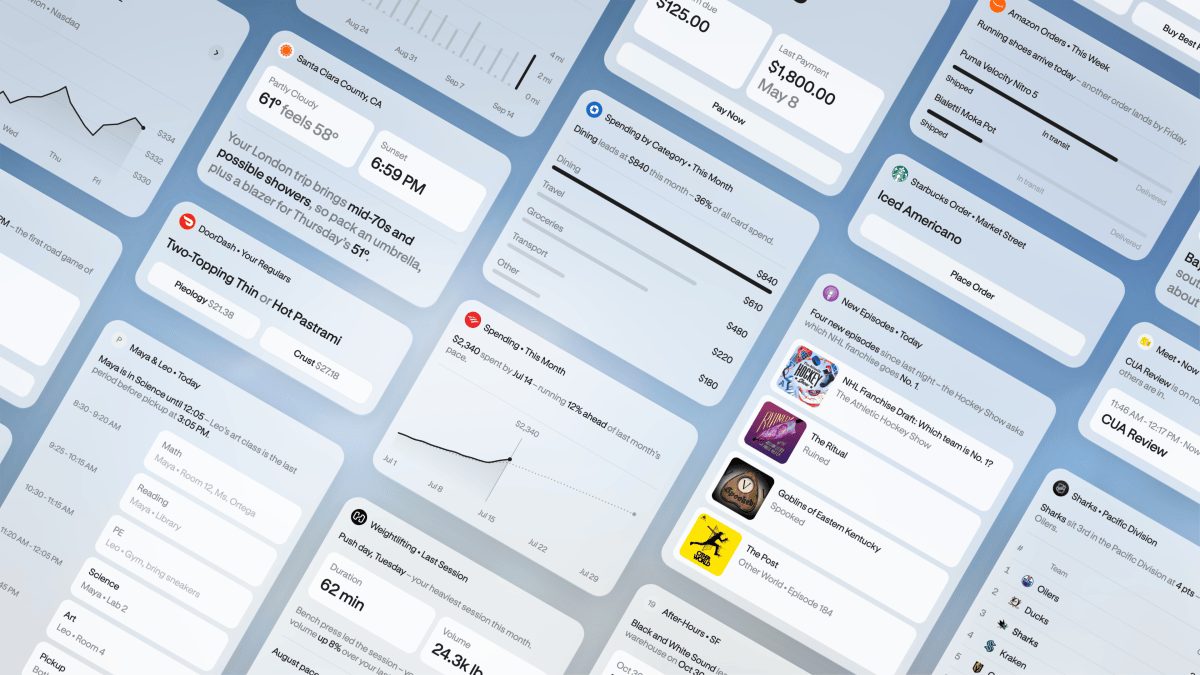
Hark Pro is a full screen experience with a homepage built around a central chat dialog, a feed of suggested prompts, and visualizations the company calls panels that act as mini dashboards. The background is custom imagery tailored to the weather and time where the user is. Like other AI assistants, users configure it to access their digital life, including email, calendar, hard drive and credit cards, and it can then take on digital tasks as well as answer classic chatbot questions.
Abidur Chowdhury, a former Apple staffer who leads design at Hark, demonstrated the product. It proactively asked him about expenses to approve, emails to respond to, an upcoming meeting, and offered to book a flight for a trip. He said he was impressed when the assistant recognized that a colleague needed to renew a car registration at the California DMV and handled it through the agency's website.
Trust and Privacy
One notable UX choice is showing the user how the agent navigates the web in a small window, an action most AI assistants perform without surfacing in the app, which Chowdhury says is intended to build trust. That matters because part of Hark's pitch is that it is not Meta or OpenAI. Chowdhury said the company is not there to sell ads and steal data. Asked about profiling, he said Hark is doing work to understand users and be helpful, but that it is really task related and about taking something off the user's plate.
Chowdhury said what sets Hark Pro apart is its effort to fully substitute for the user's computer, and his belief that it just works better. He invited comparison with competitors, saying it might not be faster than Muse but will give a better result and work end to end instead of asking the user to take over at a point.
Open Questions and a 2027 Device
One open question is what kind of model best suits an AI personal assistant. Hark's model is explicitly trained for computer use, which makes it faster and cheaper at those tasks, but it is not clear how much broader knowledge and capability it trades away compared with a frontier LLM.
The software is only half of Hark's promise. Chowdhury made his name designing devices at Apple, and Hark says it will release an AI native device to support its software in 2027. The company is still cagey about the form it will take, with Chowdhury bemoaning the creep factor of wearable cameras, while saying the first product is one that has never existed before.
Sources: Techcrunch
SiTech — AI-powered web development
We build fast, modern websites and bring AI into real business workflows. Have a project or a question? We'd love to help.