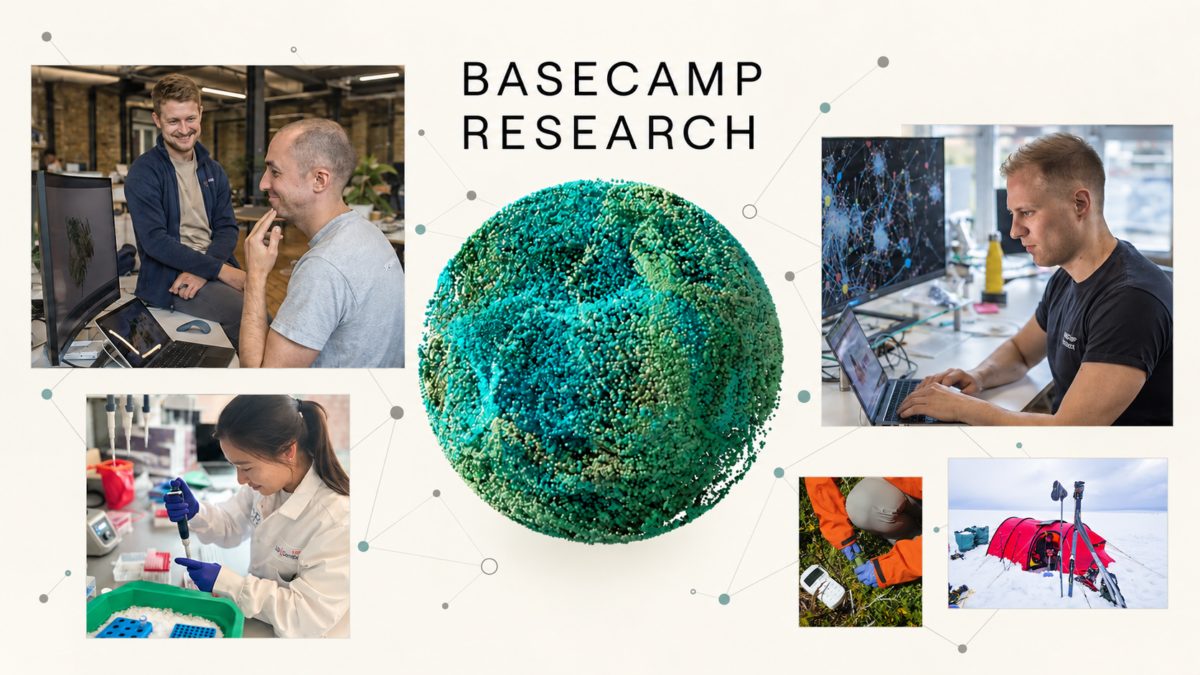
Basecamp Research raises $140 million to train AI on DNA from nature
London-based Basecamp Research has raised $140 million from investors including Nvidia and Anthropic's Anthology Fund to build AI models that design antibiotics and gene-editing tools.
London-based Basecamp Research has raised $140 million to expand its biological AI models and move its therapy candidates toward clinical testing. S32 led the round, with Nvidia, Anthropic's Anthology Fund and the NATO Innovation Fund among the investors.
Evolution as a training corpus
Founded in 2020, the company trains models called EDEN on DNA from microorganisms collected in barely studied habitats: rainforest soil, volcanic ground and Antarctic waters. Its network spans more than 30 countries, and the dataset held about 15 trillion tokens at the time of THE DECODER's interview — here a token is a single DNA building block.
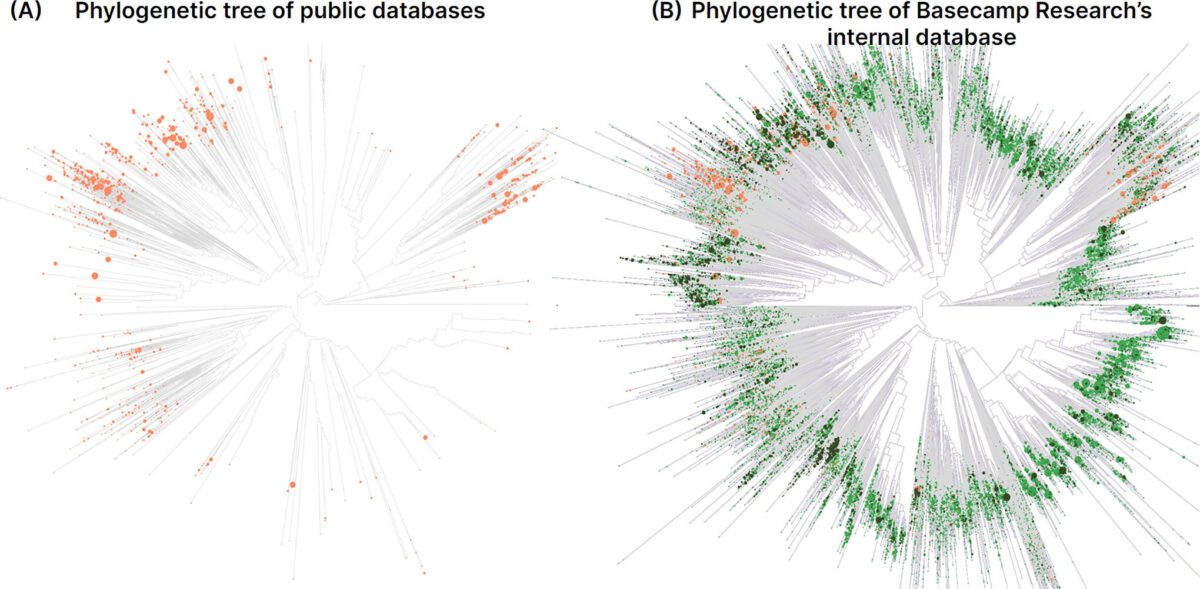
Public archives are not enough, says CTO Philip Lorenz. Basecamp reports that about 68 percent of the sequence volume in the Sequence Read Archive comes from just five species, humans alone accounting for roughly 54 percent. Its Trillion Gene Atlas, announced in March with Anthropic, Nvidia, PacBio and Ultima Genomics, is meant to grow the dataset about a hundredfold, past one quadrillion tokens.
From design to animal tests
Antibiotic design is the clearest early evidence. In a not yet peer-reviewed paper on EDEN, the authors report that 97 percent of a small, curated set of tested antimicrobial peptides showed activity in the lab. A June announcement describes EDEN-7, which in mice infected with multidrug-resistant bacteria performed about as well as a last-resort antibiotic. Basecamp says the model produced it without rounds of tweaking, in work with the University of Pennsylvania.
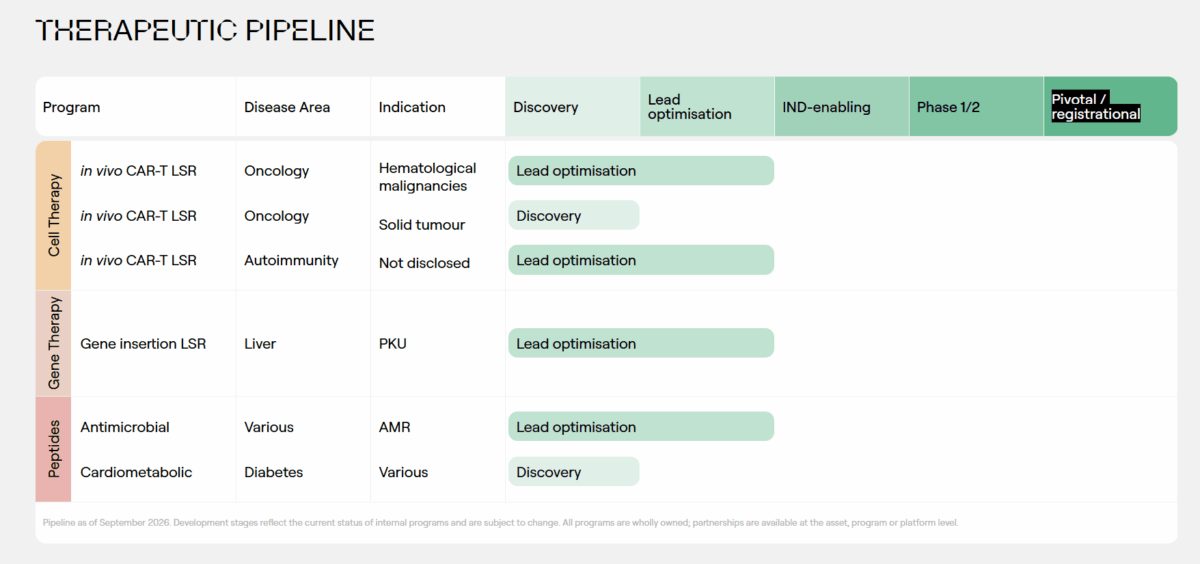
For its own therapies, the company uses EDEN to design large serine recombinases, enzymes that insert genes at chosen spots in the human genome. Half of the generated enzymes were active in human cells, and the published pipeline lists six programs, none past lead optimization as of September 2026.
Compute, access and who gets paid
Selected EDEN features are available through Claude and Claude Science, but the models will not be released openly, Lorenz says, citing safety and agreements with data partners.
Basecamp says it does not start sampling without prior informed consent from landowners and governments, and that every training token can be traced to a location and a consent record. By the end of 2024 it had paid 52 beneficiaries in 19 countries; the Financial Times reported that the payments amount to about one percent of revenue. Human trials remain the open question.
SiTech — AI-powered web development
We build fast, modern websites and bring AI into real business workflows. Have a project or a question? We'd love to help.