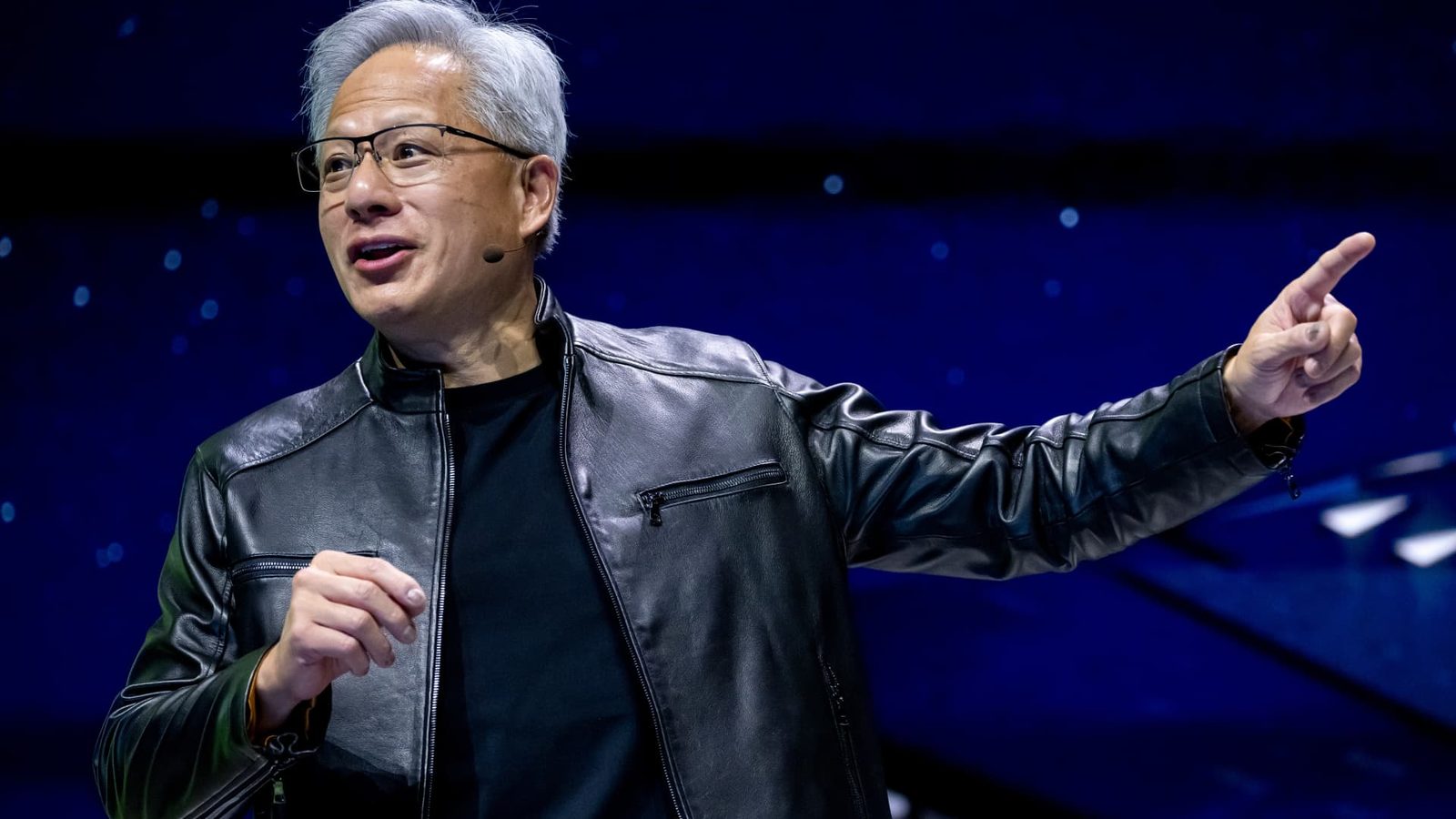
Jensen Huang calls AI distillation 'competition' as Washington weighs action
Nvidia CEO Jensen Huang told CNBC that training a model on a competitor's outputs is "competition," pushing back on U.S. officials who call the practice theft and threaten sanctions.
Nvidia CEO Jensen Huang has rejected the idea that AI model distillation should be treated as theft, telling CNBC that training a model on a competitor's outputs is ordinary competition. In comments aired Monday on Squawk Box, the head of the world's largest chipmaker pushed back against U.S. officials who have threatened sanctions over the practice.
Distillation is a common technique in which one model is trained on the outputs of another, letting a smaller or cheaper system absorb capabilities developed elsewhere. It has become one of the sharpest flashpoints in the AI race between the United States and China.
Rejecting the "theft" framing
Asked whether distillation amounted to something less than robbery, Huang answered: "That's called competition."
"You're allowed to test somebody else's products all you want," he said, adding that Nvidia's own products are sometimes stripped "down to bones" as companies try to learn how they work. "I'd really prefer they didn't," Huang said. "I'd really prefer that nobody learns from our products, and we have the benefit of just cruising along. But, you know, frankly, competition makes everything better."
He also suggested that companies unhappy about others using their products should act on their own terms: "If you don't like that, if you don't like people to use your products, all you have to do is know your customers, and disable the service."
Washington's accusation
The dispute escalated in July, when U.S. Treasury Secretary Scott Bessent described distillation as "theft" and threatened sanctions against overseas companies that use it to extract capability from American-built models. The White House did not immediately respond to a request for comment from CNBC.
Earlier this month, the U.S. Cybersecurity and Infrastructure Security Agency accused Chinese AI companies of running "industrial-scale knowledge distillation campaigns" that violated U.S. companies' terms of use. Anthropic said it had found Alibaba, which develops the Qwen family of models, and DeepSeek both engaging in "illicit distillation." China has rejected the claims.
Why it matters
The disagreement remains unresolved: U.S. agencies and model developers treat distillation as a violation, while the head of the company supplying chips for most leading models calls it normal market behavior. U.S. officials are weighing measures against overseas firms, which turns the question of how to define the practice from a technical detail into a policy one.
SiTech — AI-powered web development
We build fast, modern websites and bring AI into real business workflows. Have a project or a question? We'd love to help.