Kakapo Party: How Simon Willison Built a Closing Keynote Slide With Claude and Playwright
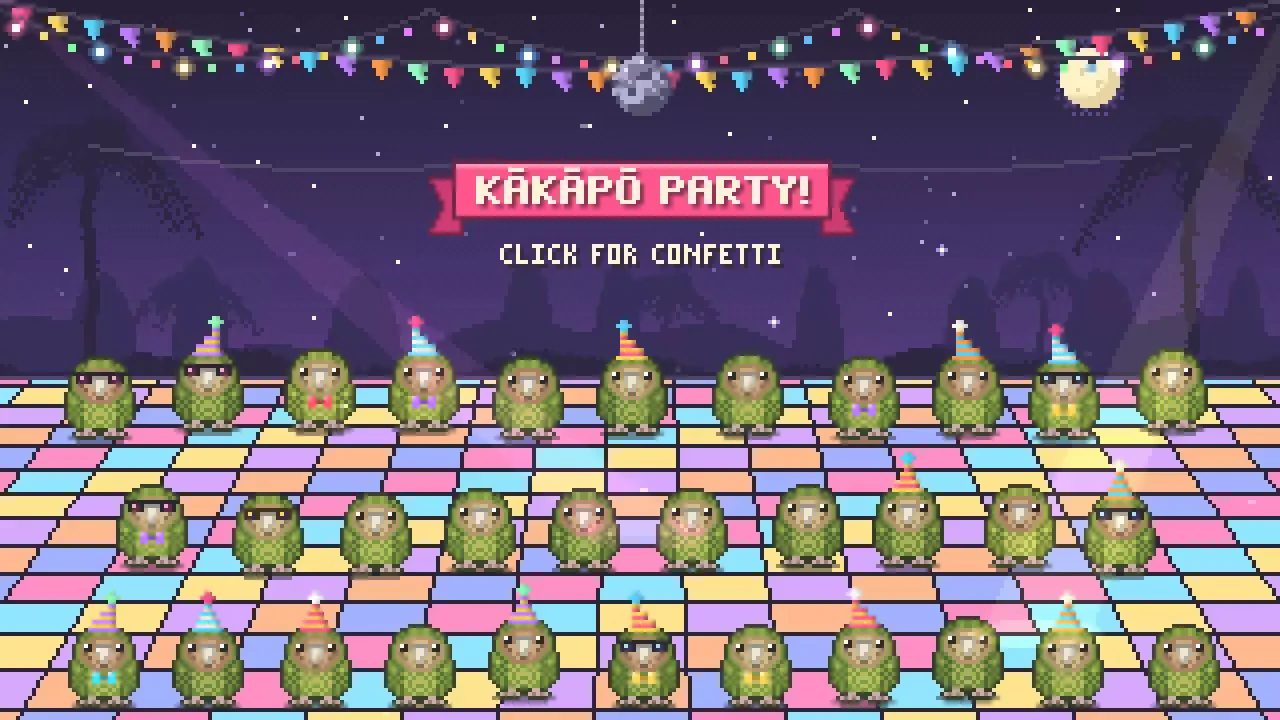
For the closing slide of his WeAreDevelopers keynote, Simon Willison had Claude Opus 5.5 turn three kakapo photos into a pixel-art party, then used Claude Code and Playwright to record the animation as a 15-second video.
Simon Willison built the closing slide of his talk at the WeAreDevelopers World Congress North America with AI, and documented the whole workflow in a weblog post published on 26 September 2026. The post shares both the prompt he used and the code behind it.
Willison wrote that he wanted a memorable moment for the talk, so he decided to weave in references to the record-breaking kakapo breeding season of 2026, reported by New Zealand's Department of Conservation. He had seen buzz around how good Claude Opus 5.5 was at creating pixel-art animations, so he built the final slide around it.
From three photos to an HTML5 canvas
He rounded up three kakapo photos from Google Image Search and dropped them into Claude with a short prompt: create an animated pixel-art kakapo party on an HTML5 canvas, with birds jumping up and down, confetti and at least 20 of them. The conversation transcript is public, and the result runs as a standalone page at tools.simonwillison.net/kakapo-party, where clicks trigger the confetti effect.
Claude Code records the video with Playwright
The animation could not go into the slide deck as a web page, so Willison downloaded the HTML and gave a local Claude Code session three constraints: load the file in a browser, click a few times for the confetti effect, and record a 15-second video. He told the session not to start clicking until three seconds in, and to spread the clicks around the clickable area. Claude Code used Playwright, the browser automation library, and produced a video that was exactly what he needed for his final slide.
The Playwright script is pleasingly short: it opens a 1280×720 viewport with video recording enabled, waits until the third second, then fires ten clicks between 3.0 and 13.2 seconds across the centre, corners and edges of the canvas, and closes the session at the 16-second mark. Both the transcript and the full script are linked from the post.
What the workflow shows
The example is a compact look at how AI tools fold into an existing production pipeline rather than replace it: a person picked the subject, the photos and the constraints, and judged the result, while the models generated the animation and drove the browser. The recording step, which once would have meant a manual screen capture, took a single instruction to an agent able to operate the page itself.
SiTech — AI-powered web development
We build fast, modern websites and bring AI into real business workflows. Have a project or a question? We'd love to help.