KDE Plasma 6.8 Drops X11 Sessions, Goes Wayland-Only
KDE's latest desktop release removes X11 session support entirely, requiring users to adopt Wayland. The change brings improvements to HDR, remote desktop, and multi-monitor handling, though some legacy workflows will need alternatives.
Wayland-Only by Default
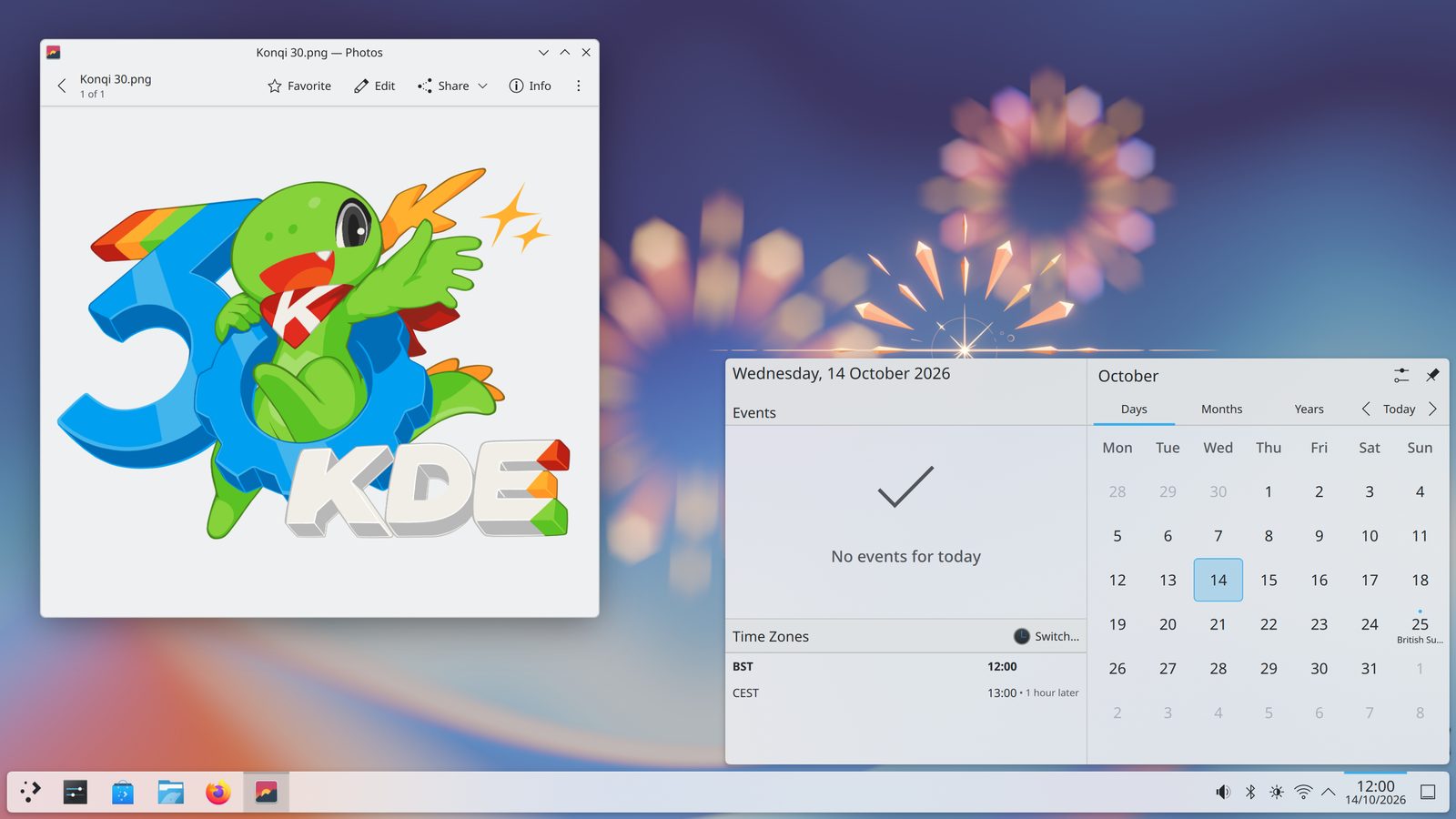
KDE has released Plasma 6.8, marking a significant milestone by dropping X11 session support entirely. The release, which arrives on KDE's 30th birthday, requires users to run Wayland sessions, though X11 applications can still function through the XWayland compatibility layer. KWin, KDE's window manager, now handles both window management and display-server duties under Wayland.
The transition means some legacy workflows will no longer work. X11-based screen-recording tools are incompatible, and the ability to "shade" windows by rolling them into the title bar has been removed with no plans to restore it. Additionally, applications cannot freely position their own windows under Wayland, as window placement is now controlled by the compositor, which may affect how saved sessions are restored.
New Features and Improvements
Despite the breaking changes, Plasma 6.8 introduces numerous refinements. The Spectacle screenshot tool can now capture system audio and microphone input during screen recordings. KDE's browser integration has expanded to support the Flatpak version of Microsoft Edge, and GTK2 applications receive better dark-theme matching.
Internationalization improvements include Bikram Sambat calendar support in the Clock application and Amharic language support in the on-screen keyboard. The System Monitor now tracks VRAM usage alongside main memory and allows users to pin tasks to specific CPU cores. Multi-monitor setups benefit from color-coded displays, which helps distinguish between identical monitors.
The Union theming system has entered beta, though it is not enabled by default. KWin can now apply matching visual effects to windows with client-side decorations, such as the Steam client. HDR support has been enhanced with ICC color profile compatibility and Hybrid Log Gamma understanding. On Nvidia GPUs, Plasma 6.8 enables triple-buffered output for smoother animations, and more system effects now respect global animation settings.
Remote Access and Compatibility
For users who rely on remote desktop functionality, the built-in KRdp server has been significantly improved. It is faster, adapts to slower connections dynamically, and now features bi-directional clipboard sharing between host and remote systems. An exclusive mode can lock the host screen while providing a virtual display sized to the client window. KRdp uses Microsoft's Remote Desktop Protocol, while Krfb offers VNC support for those who prefer it. For running individual remote Wayland applications over SSH, the Waypipe tool provides a solution.
Looking Ahead
KDE's internal metrics showed that over 95 percent of Plasma 6.6 users were already running Wayland sessions as of June, with overall adoption at approximately 76 percent when including older versions. Despite this, some users may be unhappy with the removal of X11 support. The SonicDE project, which aims to continue development of the X11-capable KWin from Plasma 6.7, may see increased interest as a result.
Kubuntu 27.04, recently announced with the codename "Tenacious T-Rex," is expected to include Plasma 6.8 when it arrives in April next year. KDE itself traces its origins to founder Matthias Ettrich's announcement on the de.comp.os.linux newsgroup on October 14, 1996, making it one of the longest-running free desktop projects.
Sources: The Register
SiTech — AI-powered web development
We build fast, modern websites and bring AI into real business workflows. Have a project or a question? We'd love to help.