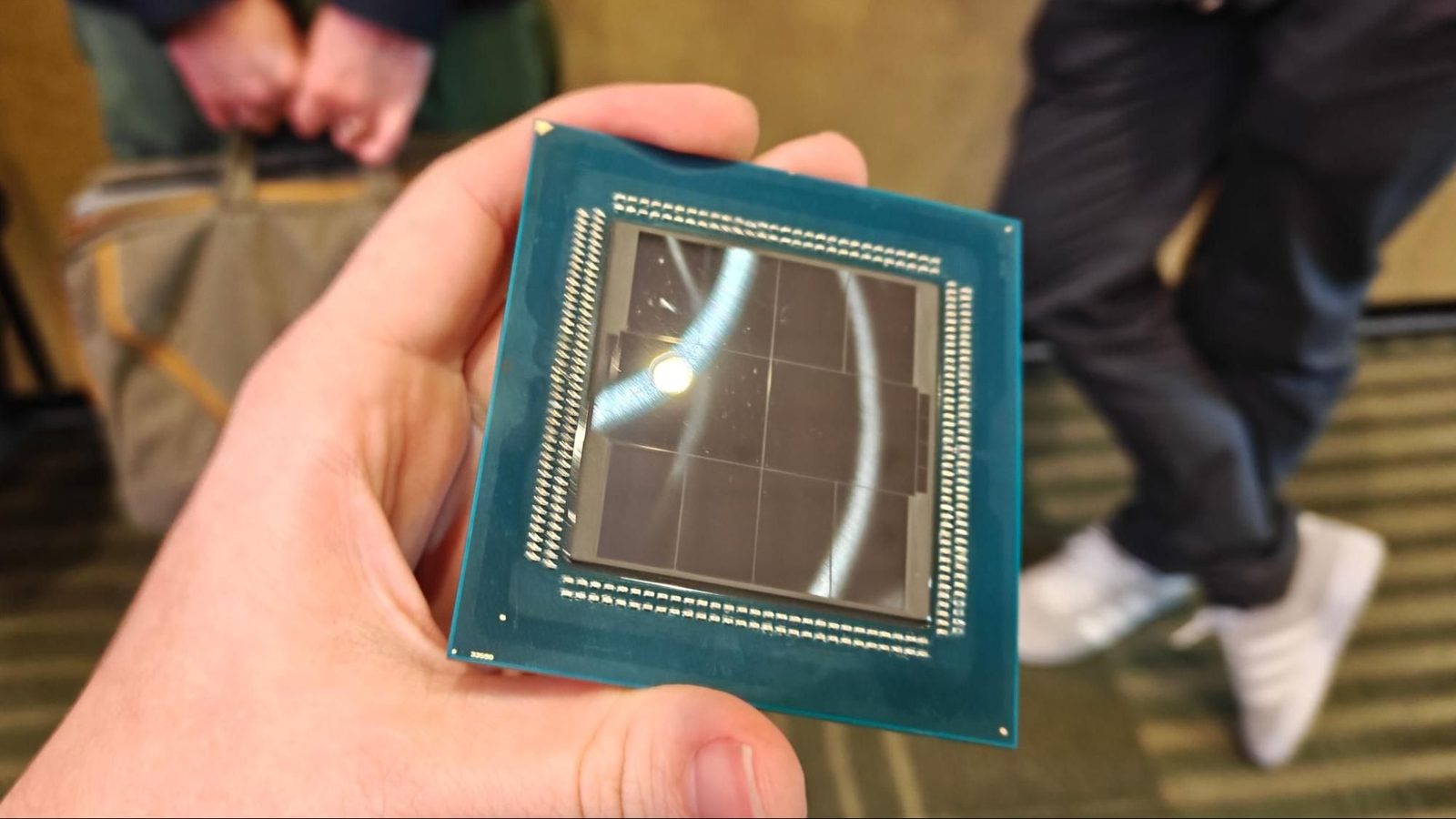
Leaked Zen 6c EPYC Results Hint at Big IPC Gains Over Zen 5
Early Geekbench 7 results for AMD's 256-core EPYC 9996 suggest large single-threaded gains over Ryzen 7 9700X, but confounding factors keep the true Zen 6 IPC uplift uncertain.
AMD's Zen 6-based EPYC 9006 server CPUs have arrived, and early Geekbench 7 results for the 256-core EPYC 9996 suggest large single-threaded gains over a Ryzen 7 9700X at the same clock. The comparison is not a clean IPC test, but it has renewed attention on AMD's next desktop architecture.
What was tested
Enthusiast 'three twenty six' (@326powah) compared the EPYC 9996 with a Ryzen 7 9700X, matching CPU core clock rates at 4.1 GHz. The EPYC 9996 has 256 Zen 6c cores across eight Monarch CCDs with 32 cores each, 128MB of L3 cache per CCD, and 1GB of total L3 cache. The Ryzen 7 9700X has eight Zen 5 cores and 32MB of L3 cache, giving both chips the same cache-per-core ratio. The EPYC part also has a 1024-bit memory bus, likely running at 12,800 MT/s, for 1.64 TB/s of bandwidth, but single-threaded benchmarks are unlikely to be bottlenecked by memory bandwidth. Even the desktop's DDR5 memory at 6000 MT/s CL34 is sufficient for such a workload.
Reported gains
The Dell PowerEdge R9815 server with the EPYC 9996 scored 2847 in the single-threaded Geekbench 7 test. The Ryzen 7 9700X scored 2483 in Linux and 2318 in Windows. In Linux results, the biggest gap was 24% in the HTML5 Browser test, which is sensitive to memory latency and could be affected by the EPYC chip's large L3 cache. Other reported gaps were 19% in asset compression, 21% in video encoding, and 17% in photo editing.
Why it is not definitive
Tom's Hardware cautions against treating the results as proof that Zen 6 has 15% higher IPC than Zen 5. There are too many confounding factors, including the EPYC 9996's huge cache, its use of Zen 6c dense cores rather than the desktop Zen 6 core, and a 4.1 GHz test clock that is not a high rate for chips on a bleeding-edge 2nm-class process. The test is marked AVX2, so it does not use the AVX-512 units in either CPU, and Geekbench historically makes relatively light use of SIMD. Most tests measure integer arithmetic and memory subsystem performance more than raw number crunching, so media processing appearing especially strong is notable but not conclusive.
Desktop outlook
Zen 5 had a modest IPC uplift over Zen 4, including some regressions, along with a modest clock gain. Zen 6 may have a significant IPC advantage and, if rumors hold, a fairly extreme clock jump over current-generation parts. These parts are confirmed to be coming to an AM5 socket, with launch expected early next year. One commenter also noted an earlier AMD-based estimate of a 10-11% IPC gain, suggesting expectations should stay measured.
Sources: Tom's Hardware
SiTech — AI-powered web development
We build fast, modern websites and bring AI into real business workflows. Have a project or a question? We'd love to help.