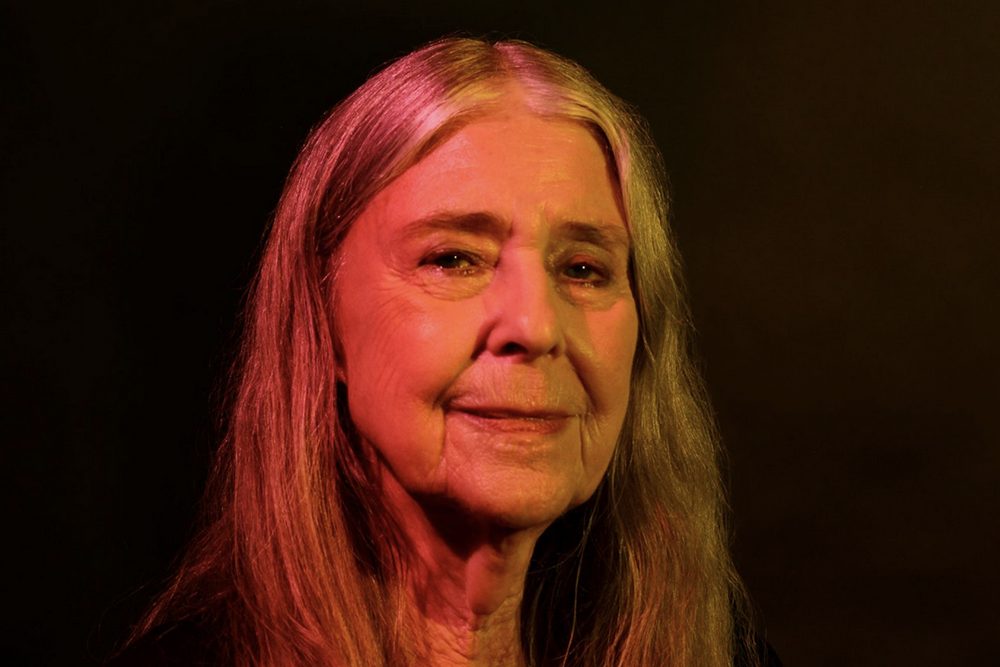
Margaret Hamilton, Apollo Software Pioneer, Dies at 90
Margaret Hamilton, the computer scientist who led software development for NASA's Apollo program at MIT, has died at 90. Her work helped establish software engineering as a discipline.
Apollo software leader dies at 90
Margaret Hamilton, the computer scientist who led software development for NASA's Apollo program at MIT's Instrumentation Lab, died on September 30. She was 90. Hamilton authored more than 130 publications and helped establish software engineering as a dedicated discipline. She worked at MIT from 1959 until the mid-1970s, then became a computing entrepreneur and CEO. Her 2016 Presidential Medal of Freedom citation noted that she defined new forms of software engineering and helped launch an industry that would forever change human history.
From weather prediction to the moon
Born in Paoli, Indiana, in 1936, Hamilton studied mathematics at the University of Michigan before transferring to Earlham College, where she earned a BA in mathematics with a minor in philosophy in 1958. She moved to Boston in 1959 and took a temporary position in MIT's meteorology department, working with professor Edward N. Lorenz on weather prediction software, her first entry into programming. In 1961 she joined MIT Lincoln Laboratory as a programmer on the SAGE air defense project, writing software for the AN/FSQ-7 prototype computer. In 1965 she became the first programmer, and the first female programmer, hired for the Apollo project at MIT's Instrumentation Lab. By 1968 she was assistant director in charge of the Command and Service Module team, with more than 400 people working on Apollo's software.
Defensive programming saved the landing
Hamilton's focus on software reliability proved critical. After her four-year-old daughter crashed a command module simulator by launching the pre-launch program P01 midflight, Hamilton proposed a fix to prevent the error in real missions, but was overruled. During Apollo 8 in 1968, astronaut Jim Lovell inadvertently launched P01 in flight, wiping navigational data; Hamilton's team solved the error and her changes were integrated. During Apollo 11 in July 1969, the onboard computer raised a 1202 overload alarm moments before landing. Priority-driven software designed by Hamilton's team shut down background tasks to prioritize mission-critical functions, and Houston allowed the landing to proceed.
Legacy and honors
Hamilton founded Higher Order Software in 1976 and Hamilton Technologies a decade later, whose flagship product is the Universal Systems Language for engineering complex, error-resistant systems. She received the Presidential Medal of Freedom in 2016, the NASA Exceptional Space Act Award in 2003, the Computer History Museum Fellow Award in 2017, the Intrepid Lifetime Achievement Award in 2019, and induction into the National Aviation Hall of Fame in 2022. The Apollo code was added to GitHub in 2015, and a Lego minifigure of Hamilton appeared in the 2017 Women of NASA set. She is survived by her daughter Lauren, two grandsons, four great grandchildren, and three siblings. A memorial service is planned for spring in Cambridge, Massachusetts.
Sources: Mit News · Techmeme · The Register
SiTech — AI-powered web development
We build fast, modern websites and bring AI into real business workflows. Have a project or a question? We'd love to help.