Microsoft Turns Windows Search Into a Chatbot With Copilot-Powered Redesign
Microsoft plans to turn the Windows Search Menu into a chatbot-style interface this fall, letting users type short commands to change settings, message from a paired phone, and chat with Copilot without opening the app.
Windows Search Becomes a Chatbot
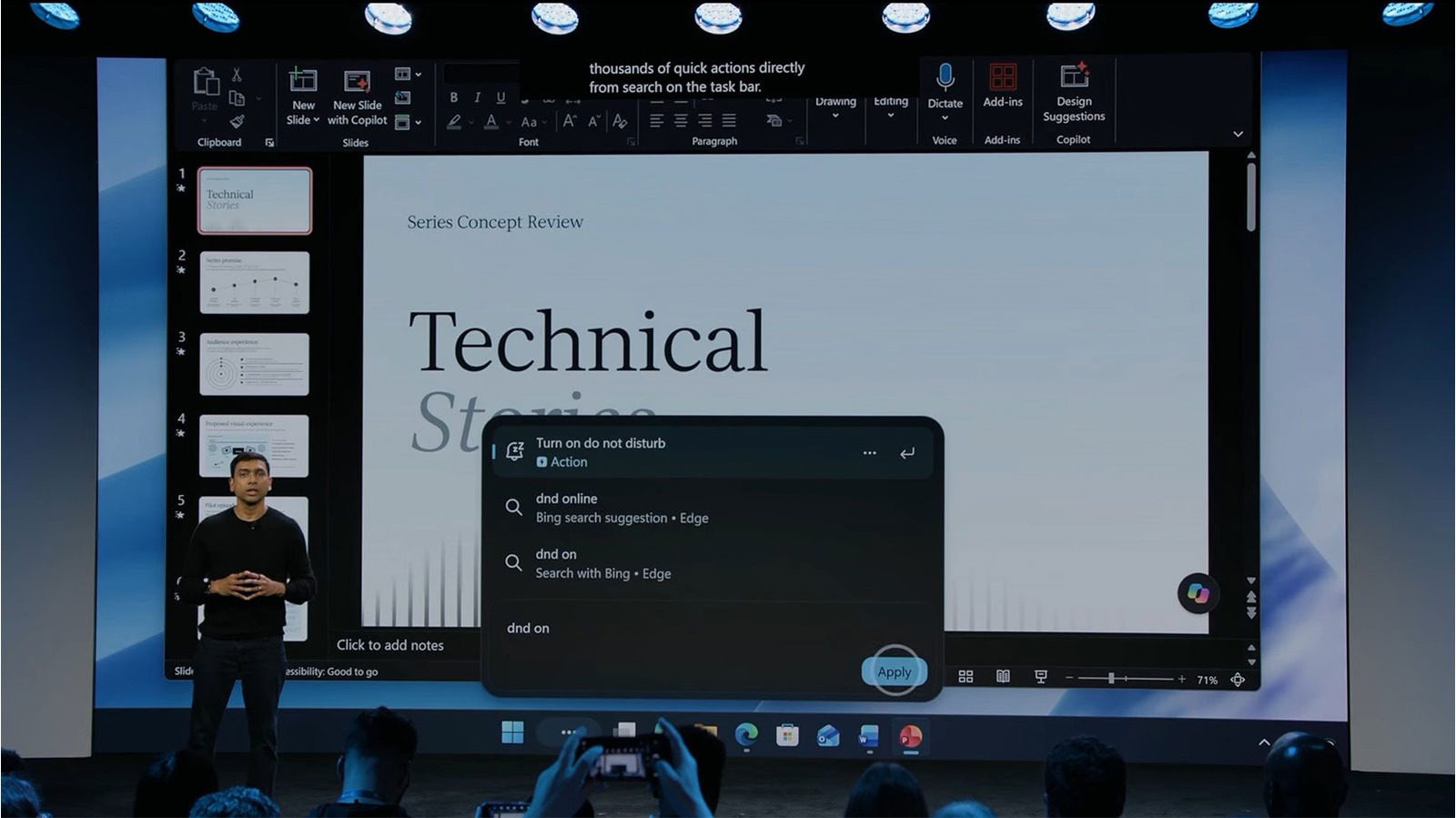
Microsoft announced plans to turn part of the Windows Task Bar into a chatbot, with a redesigned Search Menu arriving this fall. During the company's fall Surface event in San Francisco, Pavan Davuluri, executive vice president of Windows and Devices, demonstrated how the new Search experience lets users carry out thousands of actions across Windows by typing short commands into the interface.
The demo showed the menu quickly toggling settings such as dark mode and do not disturb, and conversing with the Copilot app without launching it separately. Davuluri said the redesigned interface is faster and more efficient, making it easier to find apps, settings and files. The inference is also more contextual: typing "increase mic volume" brings up a volume slider above the prompt bar. If a phone is paired with Windows, the Task Bar can also send text messages without pulling out the device. "To make AI a part of everyday life, we need to bring it to places people use the most," Davuluri told the audience.
Hybrid Intelligence Brings Local AI to Copilot
Microsoft also announced Hybrid Intelligence, a suite of software orchestration tools that lets a PC run AI models locally. When enabled, the updated Copilot app can access files on the computer and take actions across apps and settings. The company says Copilot will still use cloud inference for the hardest tasks, but can run prompts against on-device models in scenarios where cost or privacy is a concern.
Better Coding and a Smarter Autopilot
For coding assistance, Microsoft says Hybrid Intelligence makes writing native Windows apps directly from Copilot easier and safer, thanks to built-in support for its new Microsoft Execution Containers (MXC) technology, which helps keep local AI agents in a secure sandbox.
The update also enhances Autopilot, Microsoft's in-house personal AI agent, which can now use local files to inform its responses. In one demo, the assistant helped an employee organize tax documents for filing: it used a local model to find, rename and zip the files, then drafted an email for the employee to send to their accountant. Because a local model was used, no information had to be sent to the cloud.
Copilot features powered by Hybrid Intelligence will roll out to Windows PCs over the coming months.
Sources: Engadget
SiTech — AI-powered web development
We build fast, modern websites and bring AI into real business workflows. Have a project or a question? We'd love to help.