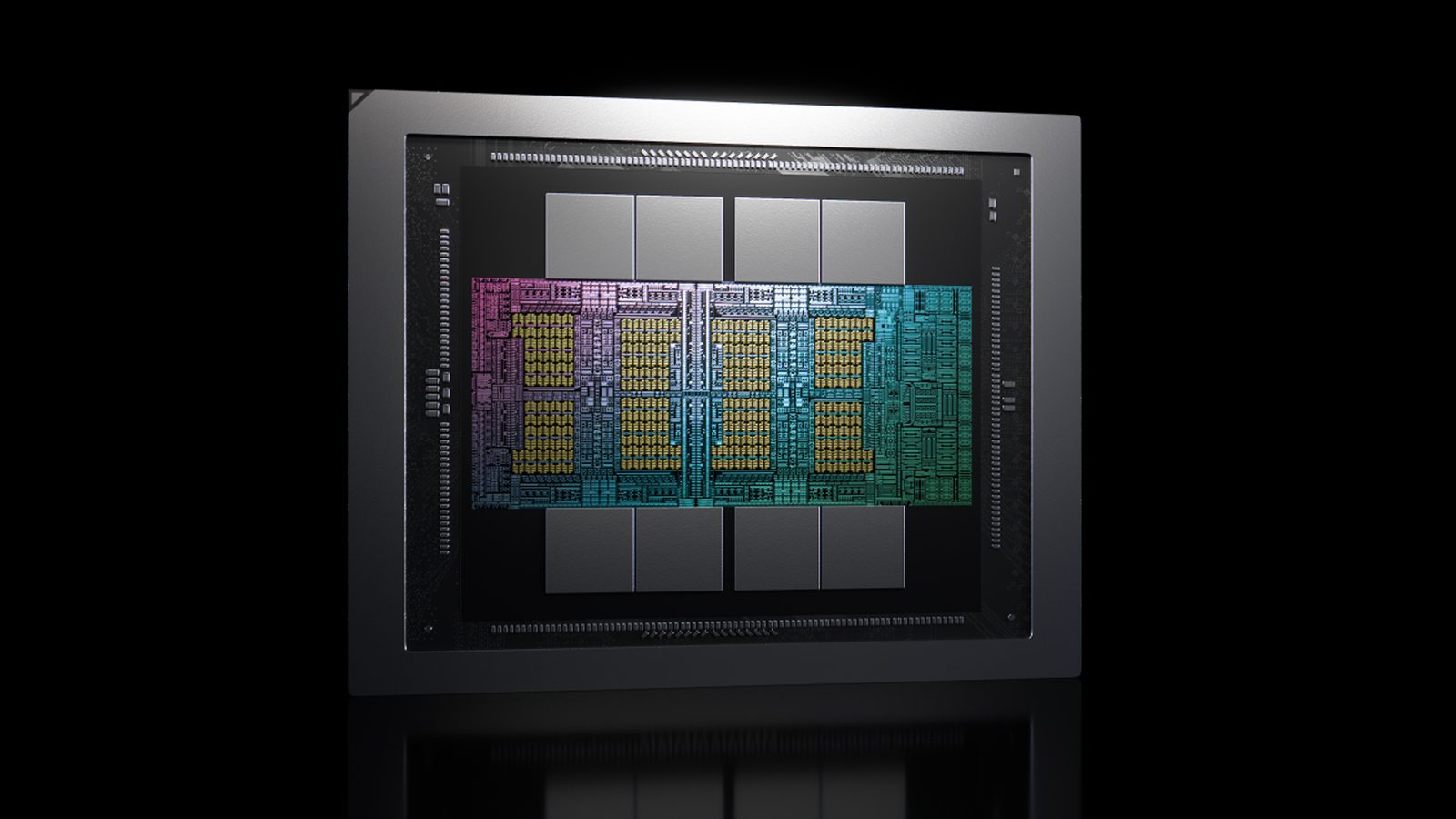
Nvidia Announces Rubin HPC GPU With Record CUDA Cores at Supercomputing 2026
Nvidia unveiled Rubin HPC at Supercomputing 2026, a GPU for agentic HPC workflows with more than 50,000 CUDA cores, NVLink 7, and a planned 2028 arrival for scientists and engineers.
Nvidia announced Rubin HPC at Supercomputing 2026, a new member of the Rubin GPU family aimed at accelerating agentic workflows and simulation. The company says the chip is designed for scientists, engineers, and analysts working with large data sets, and it carries more than 50,000 CUDA cores. Nvidia expects Rubin HPC to arrive sometime in 2028.
Record CUDA core count
Nvidia says Rubin HPC has the highest number of CUDA cores on any of its GPUs, with 'more than 50,000' cores. The company did not reveal more details of the chip's physical layout, but the figure might imply a configuration similar to the four-die Rubin Ultra GPU, which links those dies together using NVLink-C2C. Today's Rubin GPU has 224 SMs and 28,672 CUDA cores, so scaling compute resources to the degree Rubin HPC does would necessarily require more dies on a package.
Data movement and agentic workloads
To keep data moving between Rubin HPC GPUs, Nvidia will use its NVLink 7 interconnect. Past disclosures about the technology have indicated that it retains the 3.6 TB/s of per-GPU bandwidth that NVLink 6 delivers while enlarging the size of its scale-up domain. Nvidia says the chip's balanced design, with higher compute resources and, presumably, faster data movement between nodes, will help feed it with the massive data sets typical of climate research, genomic analysis, and financial simulation. Researchers, engineers, and analysts marshaling agent swarms can also use Nvidia's CUDA-X domain-specific libraries to boost performance on Rubin HPC, tightening the reasoning loop from hypothesis to simulation to refinement.
Unanswered details
Nvidia did not share details of the Rubin HPC GPU's HBM capacity or bandwidth. The company also did not share whether this part includes a rebalancing of compute resources toward native FP64. Nvidia says the chip's suitability for scientists and engineers using agentic workflows should bring faster simulation performance and faster opportunities for discovery in those fields thanks to better agent performance in those domains.
Sources: Tom's Hardware · techmeme.com
SiTech — AI-powered web development
We build fast, modern websites and bring AI into real business workflows. Have a project or a question? We'd love to help.