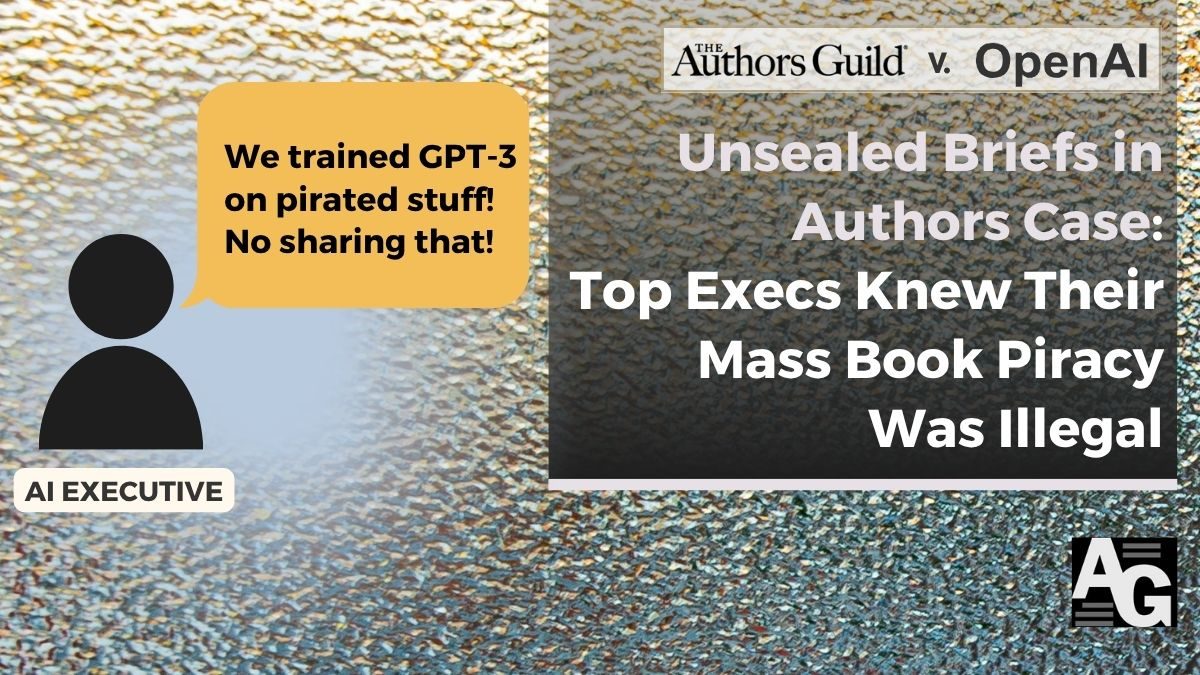
Unsealed Briefs: OpenAI and Microsoft Knew Book Piracy Was Illegal, Feared Hacker News
The Authors Guild says unsealed briefs in its case against OpenAI and Microsoft show both companies knew books were taken from the pirate library LibGen, and worried more about publicity than about the law.
What the unsealed briefs say
The Authors Guild reported on September 21, 2026 on briefs unsealed last week in Authors Guild v. OpenAI, the class action that accuses OpenAI and Microsoft of training their products on copyrighted books. The filings argue that employees at both companies knowingly broke the law; one line states that “OpenAI’s GPT models pose an existential threat to those who write and publish books.”
The documents were filed on September 17 in the Southern District of New York: a memorandum seeking partial summary judgment (Docket 1982) and a statement of undisputed facts (Docket 1987). Plaintiffs include the Authors Guild and writers David Baldacci, John Grisham, George R.R. Martin and Jodi Picoult.
LibGen, and the worry about Hacker News
According to the briefs, Microsoft knew about OpenAI’s use of LibGen as early as April 2019, when Sam Altman and Dario Amodei presented an early version of GPT-3 to Bill Gates and Microsoft chief technology officer Kevin Scott and disclosed the use of the pirate library. Amodei, then OpenAI’s research director, replied that as a training set LibGen was “a bit sketchier”. OpenAI researcher Sam McCandlish put it more plainly: “I was just worried about optics, i.e. ‘openai uses copyrighted data from sketchy russian website’ showing up on [Hacker News] would be unfortunate.”
The same filings describe a cleanup. In the summer of 2022, after employees asked how concerned they should be about LibGen mentions spread across Google Docs, Slack and GitHub, the company deleted its copies of the library. Bob McGrew, vice president of research, wrote on the evening of June 15, 2022: “Given how much OpenAI is in the news, now is the right time to excise Libgen from our systems and storage.”
“Make people unemployed”
Messages quoted in the brief show that the company understood the human cost. Policy director Jack Clark wrote in May 2020 that better models would make genre fiction authors worry about being replaced “on Amazon”, and added: “Our work in this area will make people unemployed... we’ll likely ignore their concerns and release anyway.” Tarun Gogineni, hired in 2022 to improve the writing quality of the models, said his research mission was to finish the last two books of Martin’s A Song of Ice and Fire with GPT, and joked that GPT-5 would “autocomplete” the series if the author died early. He described authors’ complaints about stolen datasets as “acceptable economic disruption”.
What happens next
Authors Guild chief executive Mary Rasenberger said the filings reveal “repeated, intentional decisions to steal books rather than pay for them”. The case is part of multidistrict litigation pending in Manhattan; more briefing is expected in the coming months, with a hearing early in 2027.
SiTech — AI-powered web development
We build fast, modern websites and bring AI into real business workflows. Have a project or a question? We'd love to help.