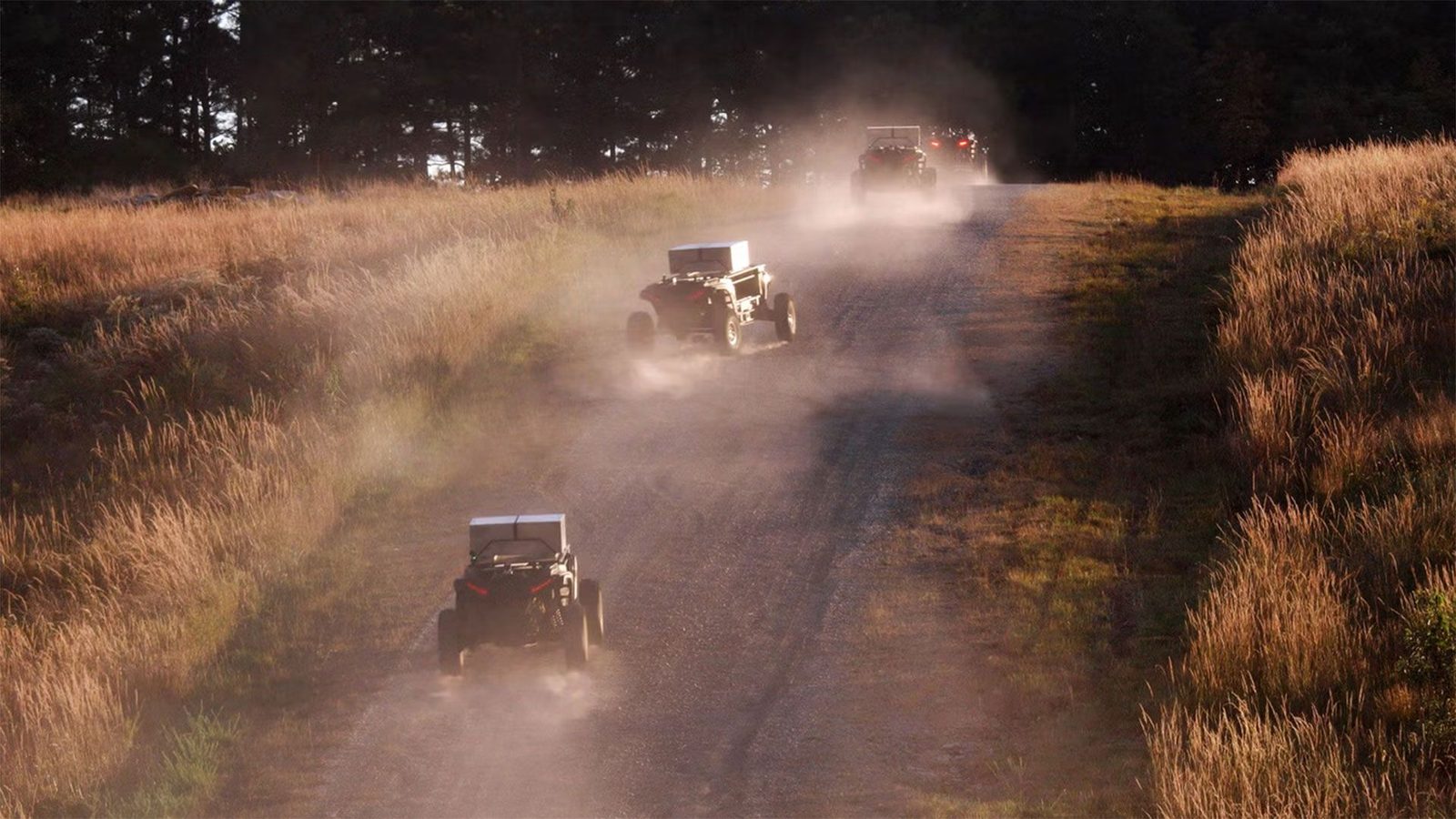
Pentagon Tests Autonomous Ground Vehicle Packs in Simulated Combat
DARPA tested four autonomous ground vehicles at Fort Knox that worked as a team to scout, provide cover, and engage simulated threats, while a human operator controlled any kinetic engagement.
The Pentagon has been testing packs of autonomous ground vehicles (UGVs) in simulated combat situations. In mid-October, at Fort Knox's St. Vith Range in Kentucky, four UGVs worked as a team to negotiate and surveil the rolling landscape in search of enemy forces, according to a DARPA blog post. Target engagement was controlled by a human operator.
How the demonstration worked
During the demo, an operator received a tip about a simulated threat alongside satellite imagery. They then sent the pack of UGVs to the area to surveil the landscape and identify targets. One UGV went ahead of the pack to scout, while three others waited behind. The scout UGV was equipped with a flying drone. After the area was scouted by the leading vehicle, the other UGVs followed on to provide cover and support. A simulated rocket was fired at a target identified about 300 yards from the robot pack. Finally, the last robot came out of cover, higher up over a ridge, to assess the field of conflict.
Modular vehicles and human control
The UGVs are highly modular and can be kitted out with a wide range of tactical add-ons. A technician attending the demo said soldiers can mount a wide range of equipment on the platforms, describing them as super modular platforms. The blog says three of the four UGVs in the exercise had drones. It was emphasized that a human operator controlled any kinetic engagement. Jason Gregory, technical advisor at DARPA, said all mobility, movement, and detections were autonomous, but the robots do not pull the trigger until a human says pull the trigger. This latest exercise was prompted by the request of European allies. Gregory also said the exercise location was chosen because it represents a similar landscape to the European theater. He said, 'Out here at Fort Knox, we're looking at how autonomous mobility technology can be paired with payloads to enable new warfighter capabilities.'
RACER program and next steps
This exercise was part of DARPA's Robotic Autonomy in Complex Environments with Resiliency, or RACER, program. Expertise required for RACER's success includes vehicle design, algorithm technologies, super intelligence, and secure communications. After five years of work, the UGVs can now be instructed to complete tasks on the battlefield instead of being manually driven, notes Gregory. They roam off-road as fast as any human driver could manage, at a minimum. Testers reckon the UGV packs are ready for deployment and use in a host of other missions, including food, ammunition and supply logistics and more, according to the DARPA blog. More UGV pack hunting tests are scheduled for December, with a group of serving soldiers involved.
Sources: Tom's Hardware
SiTech — AI-powered web development
We build fast, modern websites and bring AI into real business workflows. Have a project or a question? We'd love to help.