Pluto Security Raises $42M to Tackle AI Agent Risks in Enterprises
Pluto Security exits stealth with $42 million in funding to help enterprises monitor and control employee use of AI tools, agents, and vibe-coded apps. The startup has already crossed $2 million in annual recurring revenue.
Pluto Security has emerged from stealth with $42 million in funding to help enterprises gain visibility and control over how employees use AI tools, agents, and the components those tools depend on. The company, led by CEO and co-founder Shahar Bahat, argues that existing security software is not enough to monitor AI usage, and that securing these environments requires paying attention to what AI agents are doing in real time.
Vibe-Coded Apps Create New Risks
Bahat says a newly announced AI tool can show up inside a company's environment within two hours of its release. About 60% of the risks Pluto detects across its customer base are in tools vibe-coded by non-developers, with finance departments the biggest source, followed by marketing and legal teams. Developers rank fourth. Pluto's tools found a vibe-coded app built by a finance employee at a Fortune 500 company to manage customer information, and the app was left exposed to the internet.
According to Bahat, the risk is not limited to large tech companies. "In general, I'll say there was not one POC in which we entered and didn't find malicious stuff," she said, referring to extension packages and skills, some of which had active live attacks during the proof of concept.
Monitoring Agent Behavior in Real Time
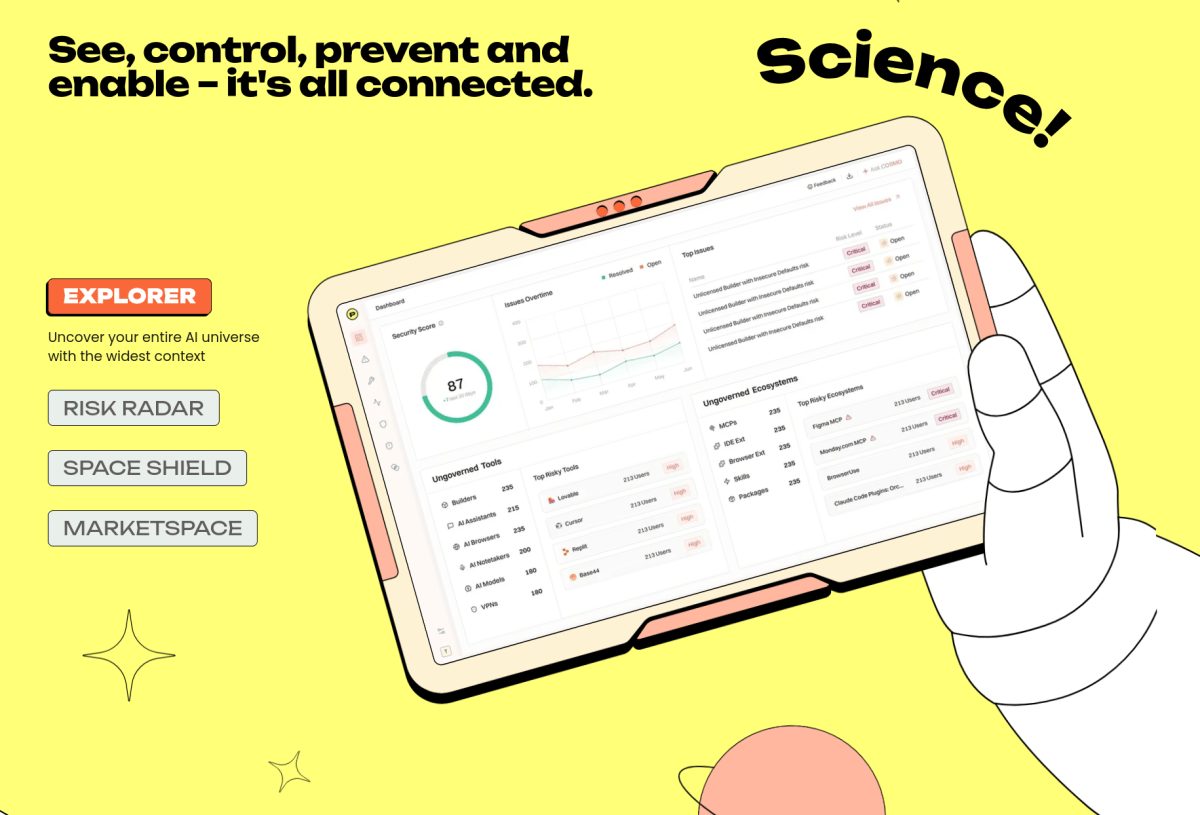
Pluto's software monitors the AI tools employees use, along with the skills, extensions, MCP servers, and other components those tools rely on, as well as the apps and agents being created. The company says it can identify risky components, spot potentially dangerous agent activity, and enforce security policies without stopping employees from using or making AI tools.
To do that, Pluto connects to endpoint security and device management systems and can deploy its own sensors through them or directly onto devices. It gathers information including prompts, commands, running processes, permissions, and users' previous activity, and uses its own lightweight models on endpoints to assess what an agent is trying to do. If an agent tries to gain permissions beyond what a user intended, the system can stop the action or inject instructions into the session that prompt the agent to ask for confirmation.
Traction and Funding
Pluto began selling in April and has already crossed $2 million in annual recurring revenue, with more than 30 enterprise customers including Oscar Health, Workato, Sixt, and AlphaSense. The funding spans an $8.5 million seed round led by TLV Partners, with cybersecurity firm Armis' founders also investing, and a $34 million Series A led by Jump Capital, with Skinos, the venture firm of Check Point co-founder Shlomo Kramer, Ansa Capital, and other angel investors participating.
Plutonium and the Road Ahead
In April, Pluto launched Plutonium, a free platform that lets anyone check risks associated with publicly available AI skills, connectors, and add-ons. It also includes an MCP scanner and a catalog of verified components. Bahat says thousands of security professionals use Plutonium and that 70% of Pluto's sales pipeline now comes from inbound interest. The company plans to invest the new capital in product development, security research, and growing its presence in the U.S. It has 40 employees in the U.S. and Israel.
Sources: Techcrunch · Techmeme
SiTech — AI-powered web development
We build fast, modern websites and bring AI into real business workflows. Have a project or a question? We'd love to help.