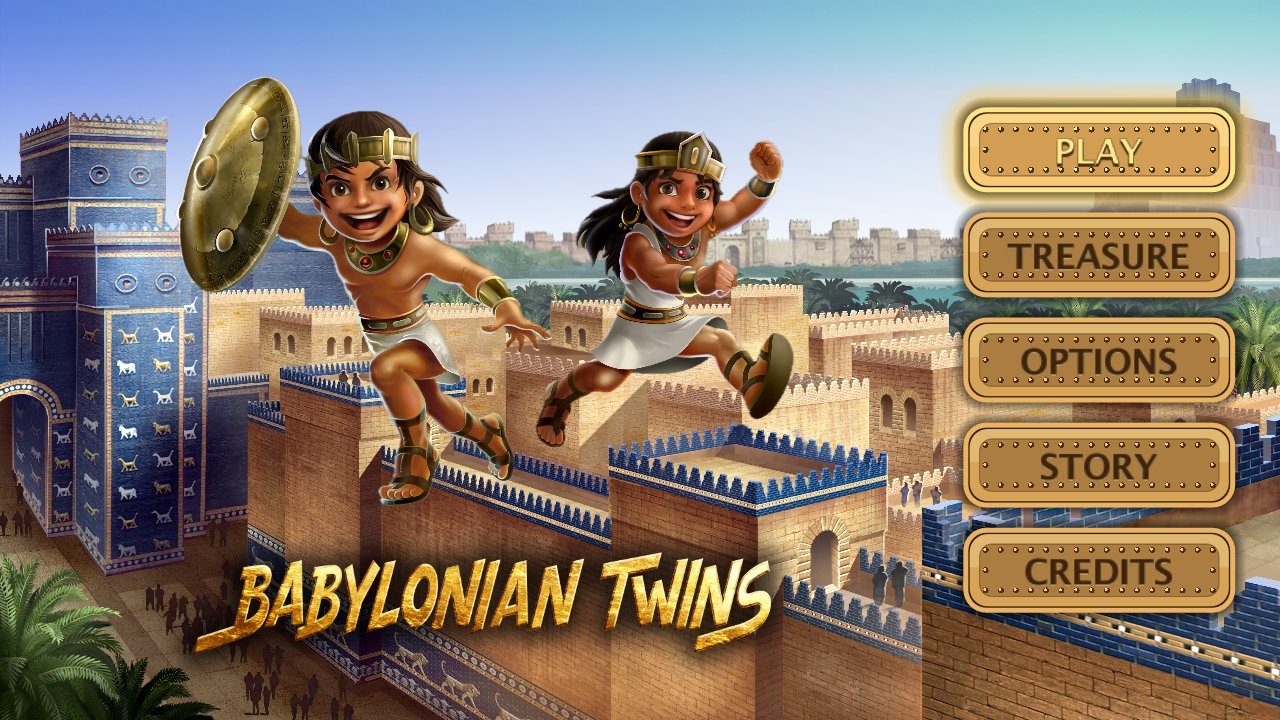
A 1993 Amiga game rebuilt in Godot, with an LLM reading 72,758 lines of 68000 assembly
Rabah Shihab's Babylonian Twins, written in Baghdad in 1993 for the Amiga 500, has been ported to Godot 4 by an AI agent working from the original assembly sources. He documents what the model got right and where it was wrong for weeks.
A game from Baghdad, rebuilt
In 1993, in Baghdad, Rabah Shihab built Babylonian Twins on an Amiga 500: 512 KB of RAM, no hard drive, pure 68000 assembly written by hand, with art by Murtadha Salman and music by Mahir AlSalman. Under sanctions, with electricity for a few hours a day, the team programmed the hardware directly from a single copy of the Amiga Hardware Reference Manual. The game became the first commercial title made in Iraq, but Commodore collapsed and publishers stayed away; an Amiga forum found it on a shelf in 2008, after his brother posted videos on YouTube. A hand port to the iPhone in 2010, 34,000 lines of C++ written from scratch, passed two million downloads.
Three conditional asks
In a post published on September 1, Shihab writes that he did not do the new port to Godot 4: he asked for it, played it every night, and made the decisions that needed somebody who had been there in 1993. The reading was done by a model running in Claude Code, with a terminal and access to his files. The first ask, the safe one, was his own 2010 engine moved into Godot 4. Twenty-one minutes passed between an empty project and a playable character; by 02:15 that project was exporting to macOS, iOS and Android. Making the movement feel right took about three more days.
The second ask was the original 72,758 lines of 68000 assembly across 26 files, written for a machine long out of production, with almost no comments. Before porting anything, the model made those sources assemble again with vasm and kept going until the output matched the shipped binaries byte for byte, fifteen minutes after the import. The level format came out this time in a single pass without hints, and the re-rendered levels matched the author's 2020 captures with zero differing pixels. The third ask — running the 1993 game inside the modern one, with the engine switching to 50 Hz for the retro build — took one evening.
Where it was wrong, and what is out now
Not everything held. On level two, players took hits from an enemy thirteen tiles above them, with solid rock in between: the port kept the lower bound of the guard's vertical-range check and dropped the upper one, so a shove meant for three rows ran the whole map column, through the floor. Elsewhere, rendering a hidden tile layer left every secret passage open, and updating enemies before players doubled a trampoline jump. The model flagged an ambiguity in the Amiga's planar sprite sheets and asked instead of guessing. A one-star review it surfaced — a door opens but the level does not end — described a real defect, fixed in version 2.0.3.
The original 1993 disks are free on itch.io; the Definitive Edition is on iOS and Android, with a free demo on Steam and the full Windows, Mac and Linux release due this fall, the 1993 game included as a second launch option. Shihab also notes that the post was drafted from his notes and edited by hand over a week, and that he has not himself checked the model's explanation of 108 stubborn bytes in the shipped binaries.
SiTech — AI-powered web development
We build fast, modern websites and bring AI into real business workflows. Have a project or a question? We'd love to help.