Qwen3.6 27B: A Practical Sweet Spot for Local Development
A blog post on the Quesma site argues that the dense 27B model runs well on a laptop, beats the faster mixture-of-experts variant on real coding tasks, and reaches mid-2025 frontier benchmark levels.
Local language models have rarely felt like a serious option for everyday work, but a blog post on the Quesma site argues that Qwen3.6 27B is the first one worth running as a general tool. The model ships in two forms: a mixture-of-experts Qwen3.6 35B A3B, which is faster, and a dense Qwen3.6 27B — slower, more capable, and the variant the author recommends.
What the author tested
Beyond the usual creative-writing checks, the model was asked to build a hexagonal minesweeper through OpenCode using pnpm. It produced a working project with a proper Node package from a single prompt, on the first attempt. The faster 35B A3B was quicker but ignored the instruction to create a package, putting everything in a single index.html file. A longer prompt for a candle-shop landing page ran for a few minutes and returned a responsive page with sensible defaults. The verdict: unremarkable by frontier standards, but already a practical job.
Running it locally
The setup relies on llama.cpp rather than Ollama, using an 8-bit quantization from Hugging Face: unsloth's Qwen3.6-27B-MTP-GGUF in Q8_0, which supports multi-token prediction. One llama-server command launches it with MTP drafting, all layers on the GPU, flash attention on, a 64k context and a pinned port; the model's native context is 256k. The 8-bit quantization halves the footprint of the BF16 release with almost no quality loss, and a 4-bit version fits under 18 GB — small enough for a 32 GB machine.
Performance and placement
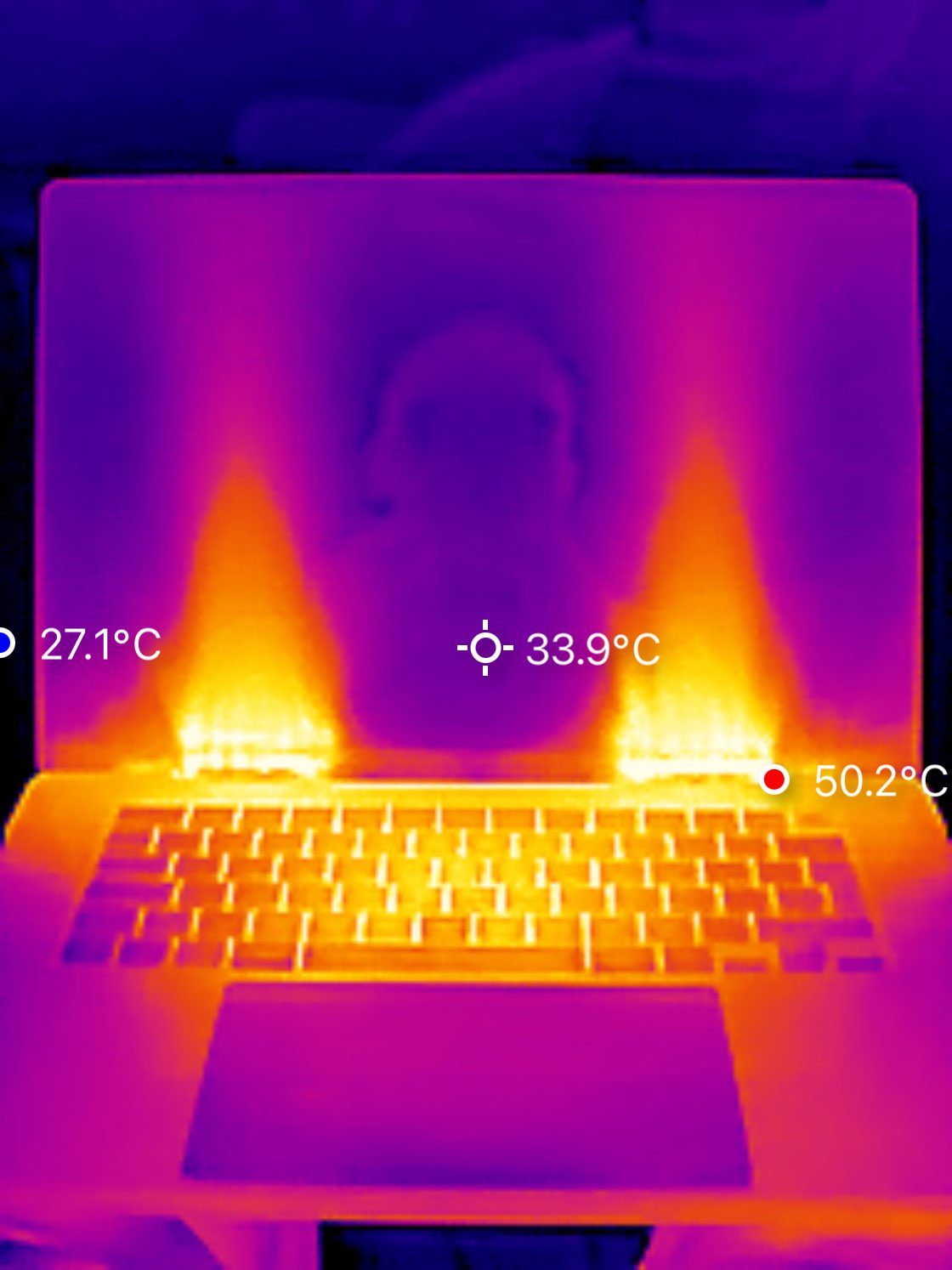
On a MacBook M5 Max with 128 GB of unified memory, the model runs at roughly 30 tokens per second, within typical frontier API range, while using about 95 percent of the GPU. llama.cpp outpaced mlx-lm despite the latter being tuned for Apple silicon, and both Qwen3.6 variants stay within 48 GB of memory. On a consumer Nvidia RTX 5090, one Hacker News commenter reported about 50 tokens per second at a 123k context with a Q6_K quantization and a Q4_0 KV cache. On the Artificial Analysis intelligence index the 27B scores 37, which the post maps to roughly mid-2025 frontier quality — ahead of the 35B A3B at 32 and Gemma 4 31B at 29. The author still prefers the 27B: a third as much code, but of higher quality. The wider argument is that local models can be fine-tuned, cannot be withdrawn, and suit sensitive data.
SiTech — AI-powered web development
We build fast, modern websites and bring AI into real business workflows. Have a project or a question? We'd love to help.