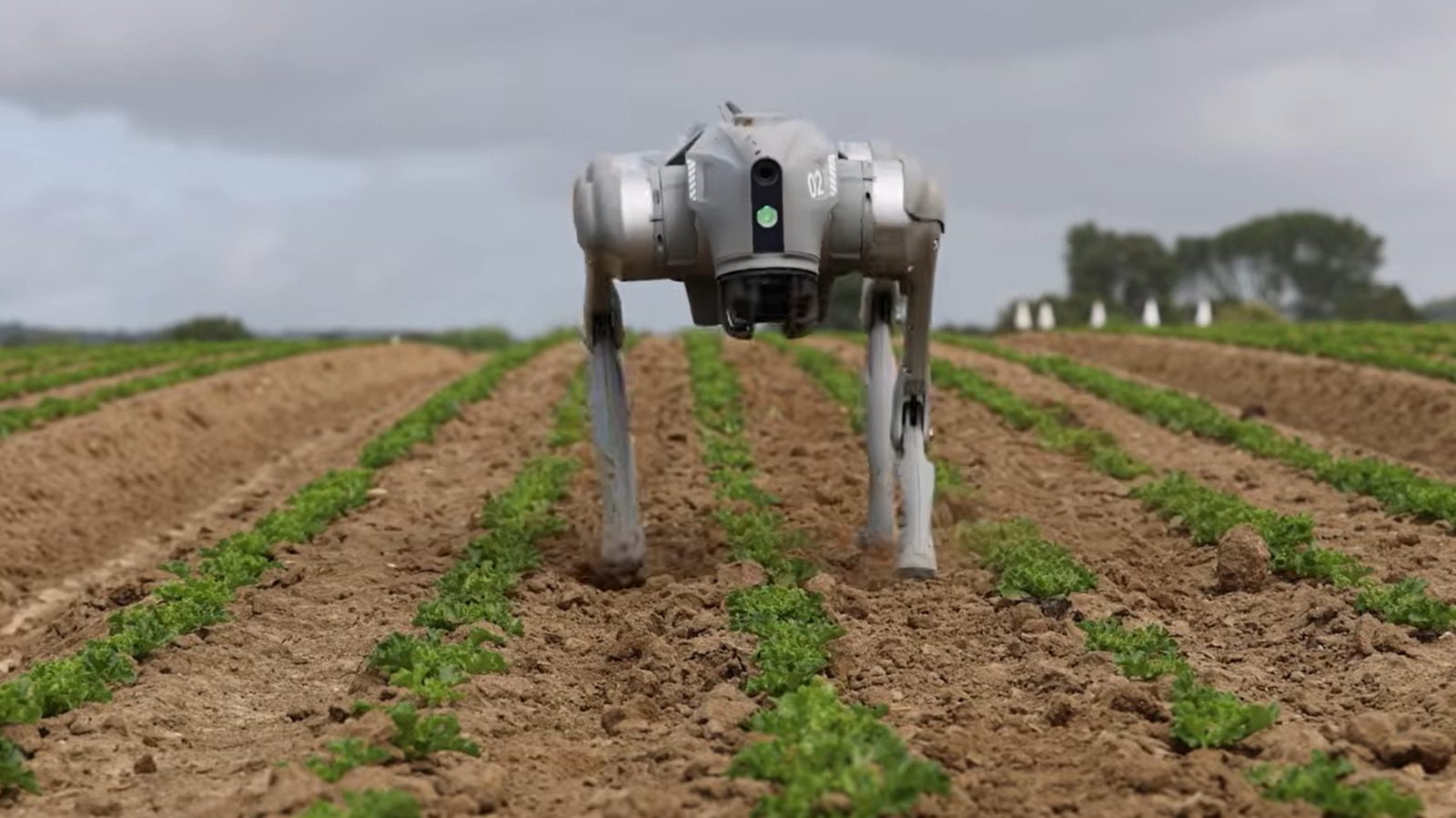
Robot dogs on farms take on crop scouting, not just guarding
Equipped with LiDAR scanners and onboard AI vision models, four-legged robots are moving from border patrol and crop guarding into weed, pest and disease detection in fields and greenhouses.
Four-legged robots are appearing in fields and greenhouses, and their job is no longer limited to guarding. American farmers already deploy them, with thermal and electro-optical cameras, to protect high-value crops: the machines spot threats, record incidents and alert staff in real time. Developers argue they are more useful as data collectors than as watch dogs.
Filling a gap in farm data
Growers have long relied on satellites, drones and manual inspections to estimate yields, follow trends and catch diseases. Those methods are resource intensive, drones are impractical for greenhouse crops, and wheeled rovers lack the dexterity to cross uneven terrain without damaging plants. Quadrupeds can walk over wet, muddy ground and get close to crops without harming them.
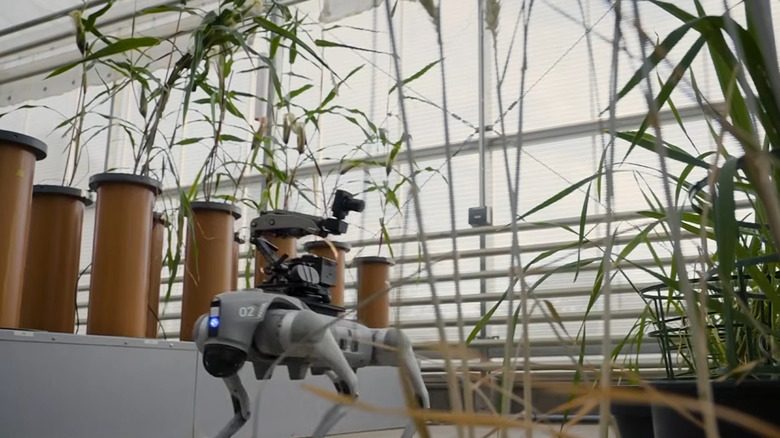
The result is a new stream of ground-level data: high-resolution images pass through AI vision models and build datasets farmers can act on.
Syngenta's robodog
Swiss company Syngenta, working with the University of Nottingham, has built a robodog aimed at farming's most labour-intensive problems. It carries several cameras, including spinning LiDAR scanners that use laser pulses to build 3D models of the field, plus a GPU that runs the company's computer vision models on board. Its creators say it detects weeds, flags possible diseases and helps find pests.
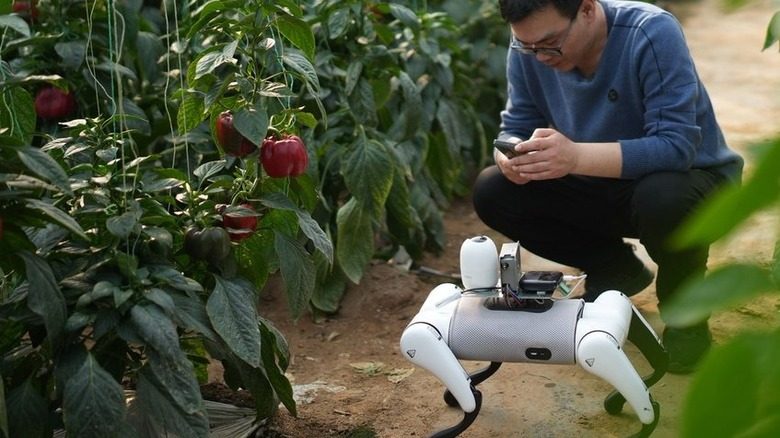
Rob Lind, a computer vision and AI fellow at Syngenta, says the robot's main strength is reading information crops already emit. "Plants speak to us in the language of the light," he said in a company release, "and robodogs are ideally placed to see these messages to allow us to act upon them." The dog is one more imaging platform alongside satellites, drones and phones, he added.
70 percent less manual work
DEEP Robotics announced in August 2026 that its robot dog cut the manual workload of grape growers in China's Turpan region by 70 percent. Universities including the University of Minnesota, North Carolina A&T and Purdue are developing their own versions; robot dogs have cleaned beaches in Italy, and AI-enabled quadrupeds have hunted invasive fire ant populations in China.
Robots able to work around the clock could reduce the number of people needed for inspections, so productivity gains will have to be weighed against workers' rights. Lind is confident about the direction: "Think of the early days of drones and look where they are now. Give it five to 10 years, and it'll probably be unrecognizable."
SiTech — AI-powered web development
We build fast, modern websites and bring AI into real business workflows. Have a project or a question? We'd love to help.