OpenAI Math Breakthroughs Spark Cryptography Fears and Mathematician Backlash
OpenAI's internal model produced hundreds of new mathematical results from a single prompt, triggering warnings that AI-accelerated math could threaten cryptocurrency cryptography and drawing a backlash from mathematicians.
OpenAI Releases Hundreds of AI-Produced Math Results
OpenAI says its internal model produced 372 mathematical breakthroughs, nearly all from a single prompt handed to a single AI agent, though some results may have taken multiple attempts. The company published mathematical manuscripts and supporting proof artifacts in a GitHub repository, and later withdrew three of the results.
Among the announced results, the exponent for matrix multiplication is now no more than 2.25, down from a previous world record of about 2.37, which Steven Strogatz compared to Bob Beamon's long jump. The model also found a way to perform integer multiplication faster than n log n, and produced a proof of the Unique Games Conjecture that commentator Andrew Curran described as using a completely new and bizarre code construction.
Cryptography Fears and the Bunker Mode Debate
The releases intensified concerns that AI-accelerated mathematics could undermine cryptographic systems. Scott Aaronson, computer science chair at the University of Texas at Austin, wrote that AI companies have quietly started investigating whether their latest internal models can break important cryptographic protocols and primitives. He noted that cryptography is conspicuous by its absence from OpenAI's list of 376 papers.
Justin Drake, a researcher at the Ethereum Foundation, called on the blockchain industry to calmly begin planning for bunker mode. Vitalik Buterin responded that the industry should take the risks to cryptography from AI-accelerated math seriously and minimize exposure to both quantum-vulnerable and potentially AI-vulnerable cryptography, while cautioning against scrambling to move funds to new wallets. Buterin said he has personally lost more money in botched migrations than in all hacks combined, and suggested that users for whom it is not difficult can keep funds in addresses that have not yet been used to make a transaction.
Not everyone agrees with the alarm. Yehuda Lindell said there is no evidence pointing to a break of decades-old hardness assumptions such as elliptic curve cryptography. Dankrad Feist and commentator Tay argued that if elliptic curves were broken by financially motivated attackers, assets would lose value regardless of wallet strategy. Nic Carter predicted that AGI and the day quantum error correction is achieved will probably take place in the same year.
Mathematicians Push Back
The Association for Human Mathematics said OpenAI's new math documents show power rather than scholarship, and urged mathematicians to stop working with the company. Fields Medalist Terence Tao reposted the statement, which says mathematicians did not ask for this work to be done and accuses OpenAI of a total disregard for the norms of scientific research. OpenAI is currently defending lawsuits against accusations of illegal plagiarism.
The statement drew sharp criticism on social media, with commentators describing it as gatekeeping and comparing mathematicians to a medieval guild or a priesthood. Others argued that mathematics belongs to all humanity and that the release represents an incredible moment in math history rather than a reason for skepticism.
Compute Capacity Race
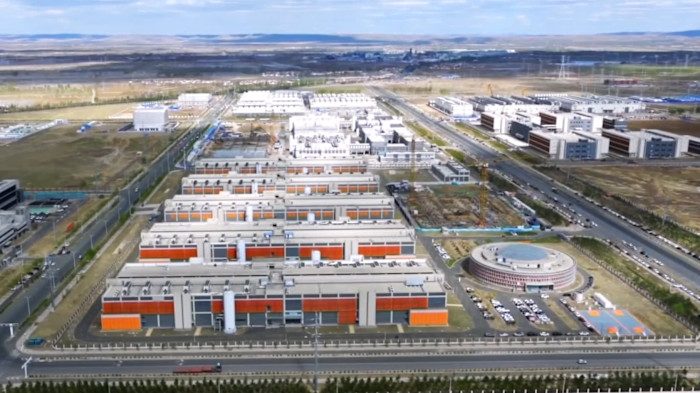
Separately, SemiAnalysis reports that China has 24 gigawatts of operational compute capacity with another 50 gigawatts planned or under construction, compared with 56 gigawatts operational in the United States, according to the Financial Times.
Sources: Techmeme
SiTech — AI-powered web development
We build fast, modern websites and bring AI into real business workflows. Have a project or a question? We'd love to help.