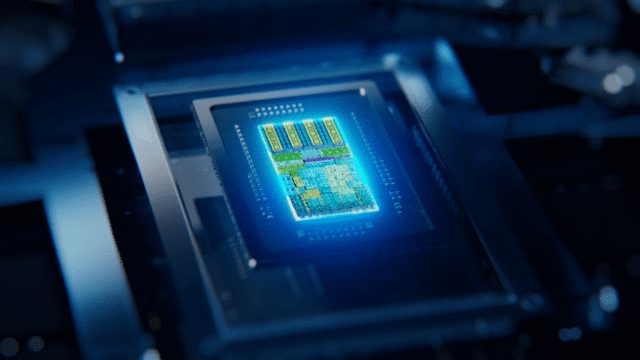
Nvidia to Fill Only About 1% of Chinese RTX Pro 5500 Orders
Nvidia will supply only about 60,000 RTX Pro 5500 chips, roughly 1% of 6 million units ordered by Chinese AI and cloud firms, as U.S. export limits and tight global capacity reshape supply.
Nvidia will supply only about 60,000 RTX Pro 5500 chips, roughly 1% of the 6 million units ordered over four months by Chinese artificial intelligence and cloud companies including Alibaba, Tencent and ByteDance, as Bloomberg reported on the 4th. At more than $11,000 apiece, the orders are estimated at about $70 billion, but the volume Chinese buyers will actually receive is minimal. Chinese companies had expected to receive about 700,000 chips by the end of 2027, an expectation that has now been dashed.
Why Nvidia Is Limiting Supply
Nvidia is limiting supply because of U.S. sanctions on China. Washington bars Nvidia from selling its most advanced chips to China, but the RTX Pro 5500 is not powerful enough to fall under those restrictions. Even so, it ranks among the best AI chips available in China.
Nvidia has spent years lobbying the U.S. government to allow it to sell more chips to Chinese customers. With global production capacity tight, however, the company is prioritizing the higher-performance, higher-margin semiconductors used by customers such as OpenAI and Anthropic.
Nvidia said, "U.S. companies remain constrained by outdated American export controls that cover even gaming products nearly five years old, compounded by China's own restrictions on U.S. imports." The company has told customers that its supply capacity will be limited for the time being because of conflicts in its production schedule.
Production Pressure Ahead
As Nvidia and TSMC allocate more capacity to next-generation products such as Rubin, supply of the RTX Pro 5500 is expected to remain tight. The scale of the orders underscores how severe the shortage of AI computing power is within China.
Impact on Chinese AI Firms
The shortage also exposes the limits of domestic hardware makers such as Huawei and Alibaba, which despite technological progress have been unable to match the manufacturing and engineering capabilities of their U.S. rivals. Tight chip supply makes it even harder for Chinese AI companies to close the gap with U.S. leaders.
If the shortage persists, Chinese companies are likely to keep relying on domestic alternatives such as Huawei, Cambricon and T-Head for inference chips. But U.S. restrictions on advanced equipment and services, along with a prolonged shortage of high-bandwidth memory, are capping Chinese manufacturers' output and driving prices higher.
Cambricon flagged production constraints in its latest earnings, and Huawei, China's largest AI chip supplier, raised prices on its top-tier accelerators by 60% in September.
Sources: Seoul Economic Daily · Bloomberg · The Standard
SiTech — AI-powered web development
We build fast, modern websites and bring AI into real business workflows. Have a project or a question? We'd love to help.