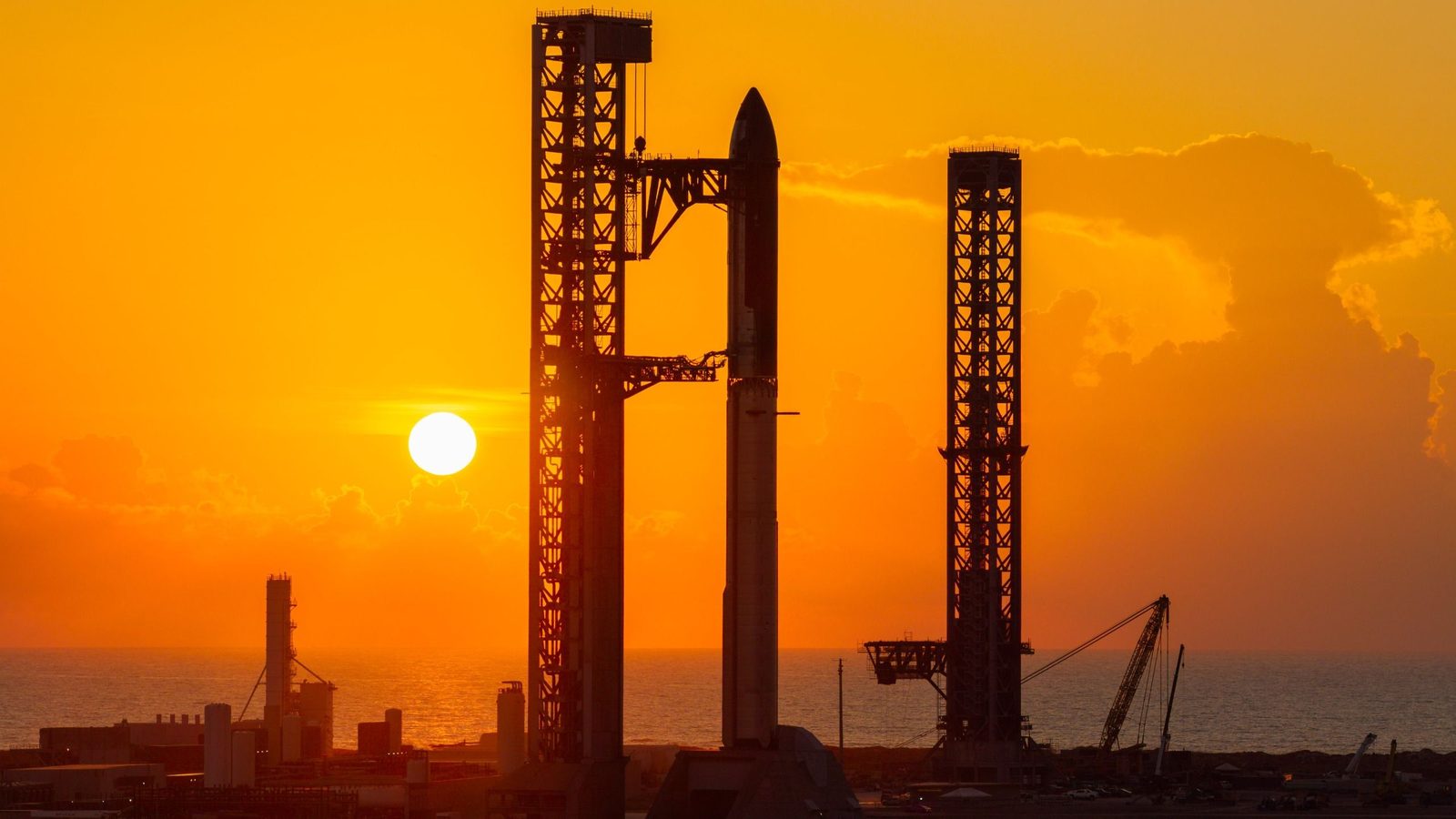
SpaceX's Starship reaches orbit for the first time, deploys 26 Starlink V3 satellites
SpaceX's Starship reached Earth orbit for the first time on Sept. 28 and released 26 Starlink V3 satellites. One Raptor 3 engine shut down in space and the orbital insertion was nearly called off, but controllers reversed the decision minutes before the burn.
SpaceX flew the 14th integrated test flight of its Starship megarocket on Sept. 28, and the vehicle reached Earth orbit for the first time. Liftoff from the company's Starbase site in South Texas came at 12:49 UTC, inside a 75-minute window that opened at 7:15 a.m. local time.
The first orbital flight
The program debuted in April 2023, and the 13 flights since then all flew suborbital trajectories, lasting no more than 65 minutes. A fully stacked Starship stands 124 meters tall, with the upper-stage Ship accounting for 52 meters of that height. Both stages are designed to be fully and rapidly reusable.
An engine shuts down in space
The flight was not flawless. One of Ship 41's Raptor 3 engines shut down early after the upper stage reached space. SpaceX said the vehicle carried on with its remaining engines, but the company initially did not rule out dropping the orbital insertion. Roughly three minutes before the scheduled burn, controllers reversed course and cleared the ship to go for orbit. The insertion burn succeeded, placing Starship in an orbit about 275 kilometers high.
26 Starlink V3 satellites in orbit
Once in orbit, the ship released 26 Starlink Version 3 satellites, the first operational members of SpaceX's next-generation megaconstellation. According to SpaceX, each V3 satellite adds about 1 terabit per second of capacity, or 26 Tbps on this mission alone, roughly 10 times what a single Falcon 9 launch of Starlink V2 minis provides. The satellites are built in Redmond, Washington, are larger than earlier models and carry solar arrays that generate twice the power.
What is left, and why it matters
Super Heavy separated from the ship about 2 minutes and 34 seconds after liftoff and, as on previous flights, splashed down in the Gulf of Mexico. The ship still had to perform its deorbit burn, re-enter the atmosphere and splash down in the Pacific Ocean off Chile, nearly 10 hours after launch. Earlier missions ended in the Indian Ocean off Western Australia.
The FAA issued license authorization for the launch and reentry operations on Sept. 26, with backup days set from Sept. 29 to Oct. 4. Confirming the orbital architecture matters for SpaceX, which wants both stages flying again quickly; the launch tower has caught Super Heavy three times but has never caught the ship. Starship is also central to NASA's lunar plans.
SiTech — AI-powered web development
We build fast, modern websites and bring AI into real business workflows. Have a project or a question? We'd love to help.