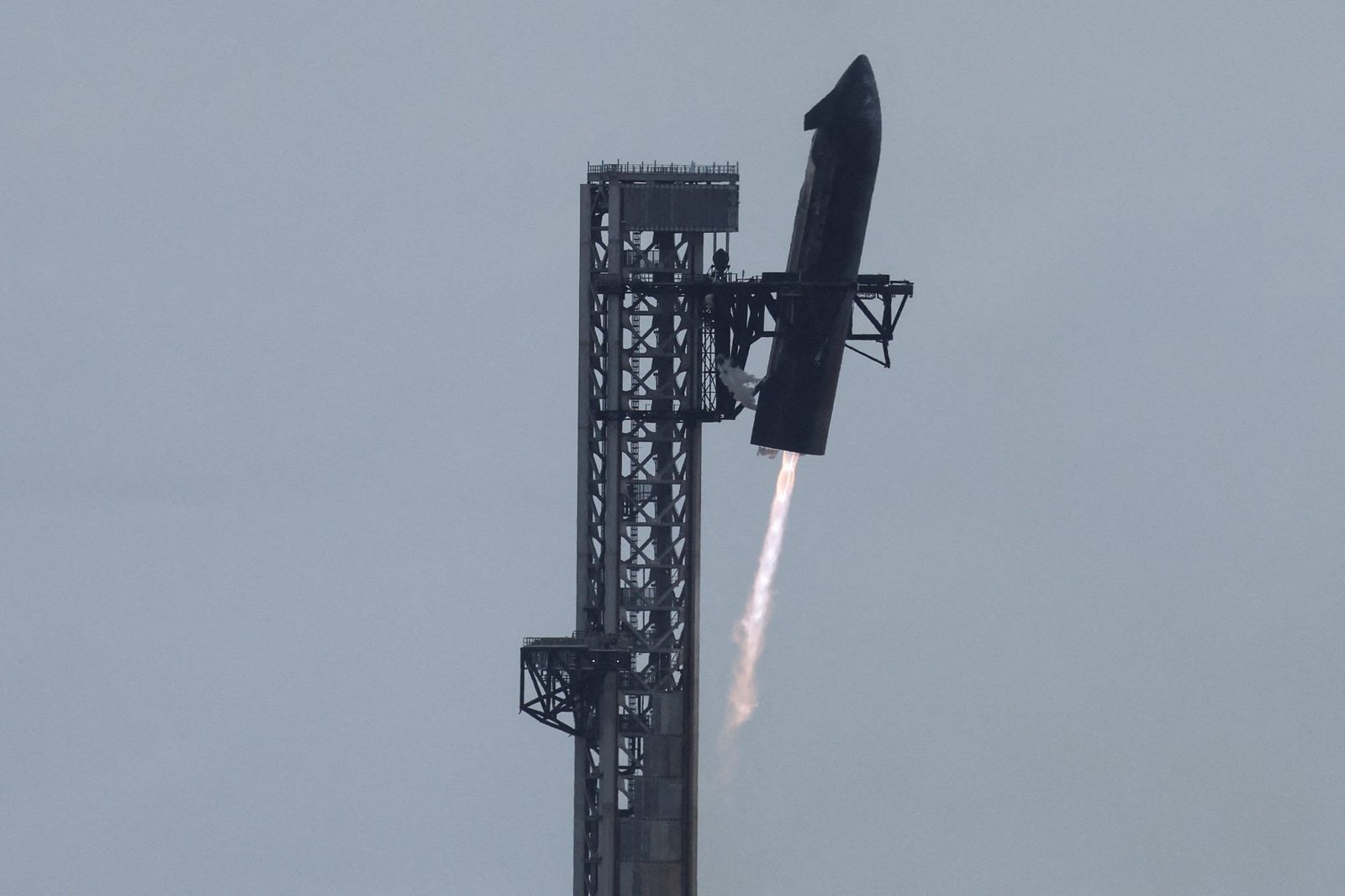
SpaceX catches Starship upper stage from orbit in historic first
SpaceX used launch tower mechanical arms to catch Starship's upper stage after Test Flight 15, while the booster splashed down and exploded in the Gulf of Mexico during the flight's first phase.
SpaceX caught the upper stage, or spacecraft, portion of its Starship rocket from orbit on Saturday, using mechanical arms on a launch tower at Starbase, Texas. The milestone came during Test Flight 15, after the rocket's booster failed to be caught on Friday and splashed down in the Gulf of Mexico. The upper stage then continued into orbit and flew around Earth 14 times before landing on the tower.
Historic catch follows booster loss
SpaceX made the historic catch using its "chopsticks," mechanical arms attached to a launch tower, at its Starbase, Texas, facility. Test Flight 15 was the most ambitious Starship test yet and marked the first time the company attempted to catch both the rocket's booster and upper stage. During the first phase of the test flight on Friday, SpaceX failed to catch and recover the booster, instead diverting it to an offshore splashdown in the Gulf of Mexico where it exploded before hitting the water. Elon Musk posted a video on X inspecting the upper stage craft after completing the capture.
Orbit, landing and disruptions
The rocket's upper stage continued into orbit and flew around the Earth 14 times before successfully landing on SpaceX's launch tower, nicknamed Mechazilla. The Hawaii Department of Transportation issued a temporary pause on some West Coast flights Friday, due to debris risk from the flight. Separately, the FAA issued a rare, nationwide ground stop due to telecommunications system failures. Both of those orders have since been lifted.
Goals and payload
Making Starship a reliable and fully reusable rocket is critical to SpaceX's ambitions. In the near term, the company needs Starship to send more satellites into orbit to expand its Starlink satellite internet service, which is currently the company's profit center. SpaceX is also expected to use Starship to bring astronauts and cargo from lunar orbit to the Moon's surface and back for NASA. Musk also has a grand vision to use Starship to "colonize Mars" and "make humanity multi-planetary." During Test Flight 15 on Friday, SpaceX released another 26 of its newest Starlink v3 satellites into orbit, growing its commercial satellite internet network. The company's constellation already included over 11,000 satellites in low Earth orbit. One Starship rocket can carry up to 60 Starlink v3 satellites, the company has said.
Earlier coverage: Starship flight 15 reaches orbit, setting up possible Saturday catch
Sources: CNBC · AFP · Aerospace America · Engadget
SiTech — AI-powered web development
We build fast, modern websites and bring AI into real business workflows. Have a project or a question? We'd love to help.