“Spymarks, not Watermarks”: essay proposes a new name for hidden tracking signals
In an essay on brand.io, Brandon Thomas argues that hidden signals such as Google’s SynthID are not simple authenticity marks but tools that make media traceable without users’ knowledge or consent; he proposes the term “spymark”.
An essay on brand.io, “Spymarks, not Watermarks”, proposes a new term for hidden media marking. Its author, Brandon Thomas, defines a spymark as a hidden signal that makes a work traceable without the user’s knowledge or consent.
The essay separates two ideas: a watermark is a visible mark embedded in a medium to verify authenticity or assert ownership, while a spymark is an invisible signal built for tracing. Treating both under one word obscures the privacy risk, the author argues.
SynthID and the numbers
The essay’s central example is Google’s SynthID, which, in the company’s own words, embeds signals “imperceptible to humans” into images, audio, text and video. The signal can encode database identifiers linked to a user’s records: full name, IP addresses, date of birth, physical addresses and political party affiliation.
The SynthID-Image paper cited in the essay reports that its SynthID-O variant can carry a 136-bit payload in a 512×512-pixel image — enough for a 64-bit database identifier, with 72 bits left for error correction.

The essay notes SynthID was neither the first such system nor the only one: OpenAI and many other tech companies are building comparable systems at scale. Companies say the signals help identify AI-generated content; the essay argues they go beyond simple watermarking into tracking. One early example is the open-source audiowmark tool, which hides 128-bit payloads in audio under a secret AES key.
Why a new name
The essay argues “watermark” has become a catchall for banknote security features, copyright overlays and hidden tracking signals alike, blurring that privacy cost. It quotes Ursula K. Le Guin — “To speak the name is to control the thing” — and calls “spymark” a privacy Rumpelstiltskin.
Metadata and risks
The essay draws a line between spymarks and standard metadata: EXIF fields in photos and ID3 tags in MP3 files are documented, inspectable and editable, while a signal embedded in pixels or word choices stays invisible and survives metadata removal. Printer tracking dots, known since the 1980s, encode time, date and printer serial number — an early spymark, the essay says.
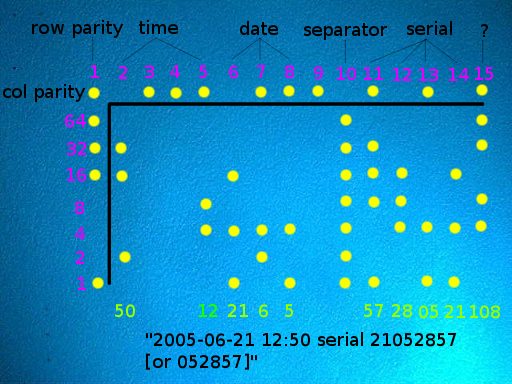
The author’s central worry is how easily people could be found: identifiers combined with account records and observations of where copies surface can reconstruct how content spreads. A future where every device is attested and every post carries an account-linked spymark, he writes, “lies halfway between now and 1984”.
SiTech — AI-powered web development
We build fast, modern websites and bring AI into real business workflows. Have a project or a question? We'd love to help.