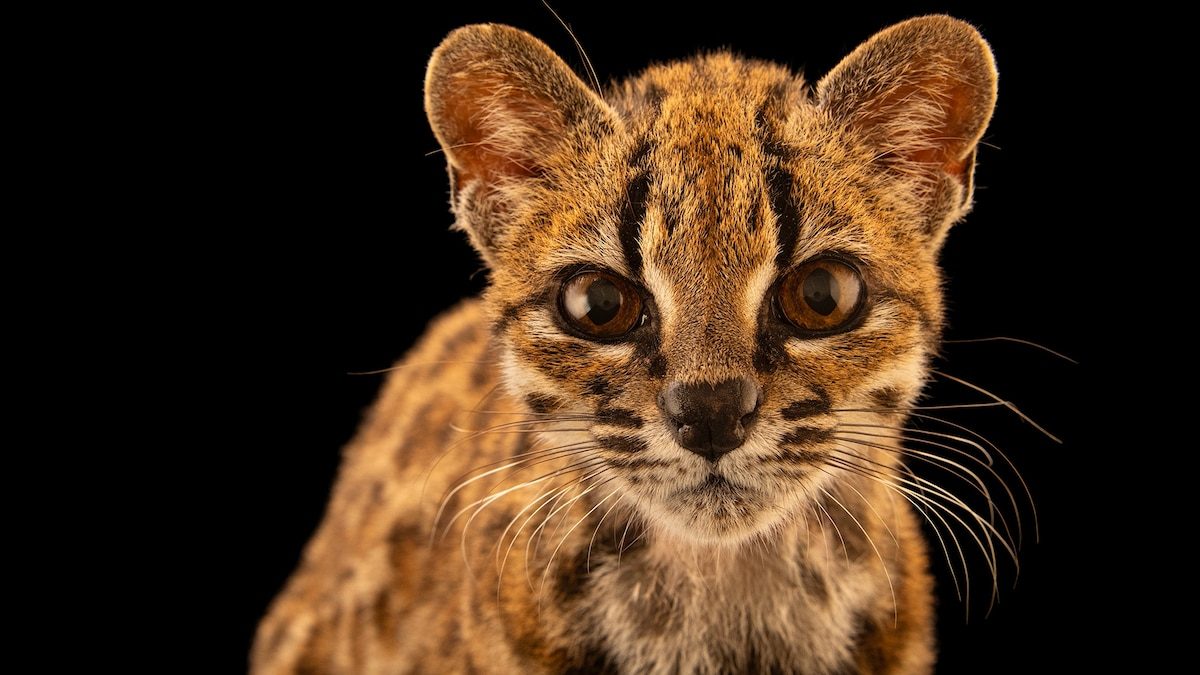
Leopardus tilcayo: the first new cat species described in more than 100 years
A small spotted wild cat living in Bolivia's Yungas forests has been named Leopardus tilcayo, the first new felid species recognised by science since 1923 and a relative of the tiger cats.
A small, spotted wild cat from Bolivia has been described as a species new to science, the first addition to the cat family in more than a century. The study was published in the journal Current Biology on September 17, 2026.
The story began almost a decade earlier, when Paola Nogales-Ascarrunz, a biologist and National Geographic Explorer working in Bolivia, took a call from a local wildlife sanctuary that had been handed what staff described as "a weird cat". A local man had found the animal as a kitten on a road near a forest and took it home, believing it to be a domestic breed; after about a year with the clearly wild animal, he decided a sanctuary would be better for it. Nogales-Ascarrunz, founder and lead scientist of the Bolivian Felids Research Program, went to see the cat at the Senda Verde refuge on the subtropical flank of the Bolivian Andes and photographed it extensively.
From a "weird cat" to a new species
The authors propose the name Leopardus tilcayo, after the word local people use for the animal. Asked what the name means, residents told the researchers that they did not know: their grandfathers used it, so they do. The name appears to carry no particular meaning in Spanish or in the Quechua spoken in Bolivia. The described male, now about ten years old, lives at the Senda Verde refuge; he measures roughly 18 inches from head to the end of his body and weighs about three pounds, making him smaller than the average domestic cat.
Genomes redraw the cat family tree
Genomic analysis proved decisive. The researchers compared complete genomes from 38 individuals across the genus Leopardus and found that L. tilcayo not only differs from the other tiger cats but diverged from them around 1.4 million years ago, an evolutionary distance comparable to that between modern lions and extinct cave lions. The last new cat species, the pampas cat, was described in 1923; after findings in 2013 and 2024, the paper brings the number of tiger cat species to five. It also provides evidence for a new subspecies in Peru, Leopardus tigrinus antisuyo.
What the discovery means for conservation
Small wild cats are far less studied than big ones and are exceptionally good at staying out of sight, so conservation status depends heavily on how many species are recognised within a given range. "If you think it is a single thing from southern Brazil all the way to Costa Rica, you're going to find it's not endangered," Eizirik says. "But if we find that it's not a single thing, but actually five things, each of them must be assessed separately." Sanderson adds that once three species become five, each population is smaller and protection efforts may need to increase urgently. How many tilcayos survive in the wild is unknown, as is much of their basic biology: what they eat, what eats them and how they reproduce.
SiTech — AI-powered web development
We build fast, modern websites and bring AI into real business workflows. Have a project or a question? We'd love to help.