Geocodio on internal tools: from bash scripts to full internal apps
The two-person geocoding company Geocodio has described how AI models let it move from one-off bash scripts to full internal applications, and how it keeps them maintainable.
Geocodio, the geocoding company that ran with a team of just two people for almost ten years, has described on its engineering blog Code and Coordinates how it moved from scattered scripts to full internal applications. "The year of internal tools" is by Mathias Hansen, September 2026.
Automation is what made two people enough: early tooling was local bash scripts for development environments and Laravel artisan commands.
From scripts to full internal apps
Well before the AI era, Geocodio built its own deployment tool. It visualizes the process, and a change can be rolled back if something goes wrong.
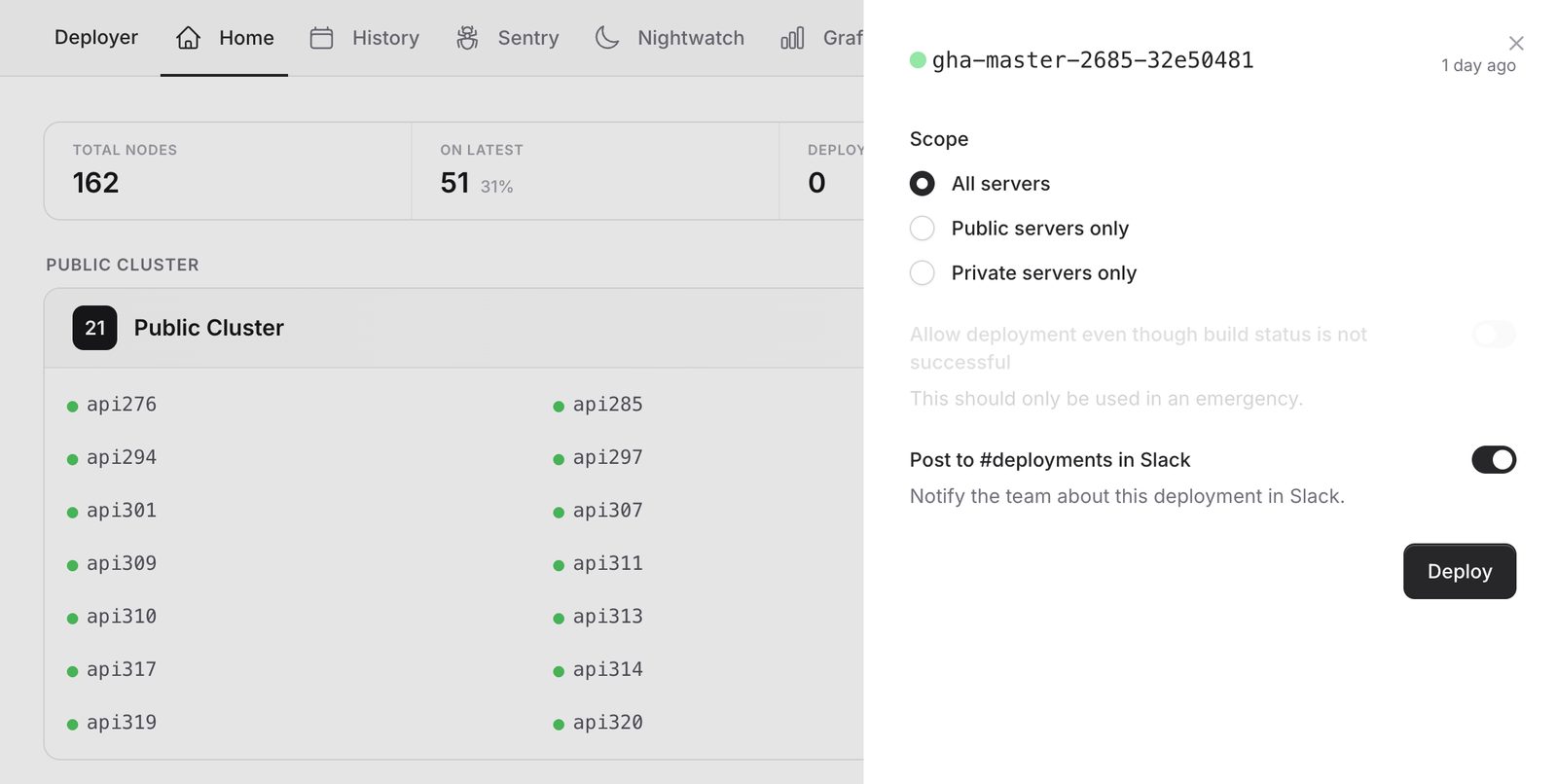
What changed in 2026 is the ambition. Instead of one-off scripts, the team now builds full-fledged internal apps: mobile friendly, with good UX and test coverage, enabled by AI and frontier models. Hansen says the hard part was never building; the obstacle was maintaining what you build, and AI also solved that side.
A system for building and maintaining
New tools start from shared scaffolding: a console-ui package with Tailwind CSS tokens and React components. Projects begin with engineering spikes and "Grill Me" sessions, based on Matt Pocock's skill, which interrogates a plan until its weak parts fall out. Planning takes weeks; implementation takes hours or days.
Every tool also ships with a documentation subsite, and each repository has a CLAUDE.md rule: a change affecting the documentation must update it in the same change.
What they build, and what they buy
The portfolio includes Atlas, Bullpen for planning sprints, the deployment tool, the open source Treehouse, and Yak, a coding agent that picks up small tasks from Slack, Linear and GitHub and returns a pull request.
Not everything is built in-house: email stays with Bento, communications with Twilio. Two questions decide it: does the team have real experience in the domain, and would an off-the-shelf product do the job just as well.
Uptime, access and starting small
Every system is also a responsibility. Geocodio runs these apps without staging environments on purpose: changes go to production, with local QA, test coverage and CI carrying the weight. Its internal ETL tool for address data went down for a day after a large upgrade.
Access matters too: Atlas can see customer accounts and billing, so hosting the tools inside a private network is a major benefit. Hansen's advice is to start small: find the process where you already work around the gap between two tools by hand every week, and build the thing that closes it.
SiTech — AI-powered web development
We build fast, modern websites and bring AI into real business workflows. Have a project or a question? We'd love to help.