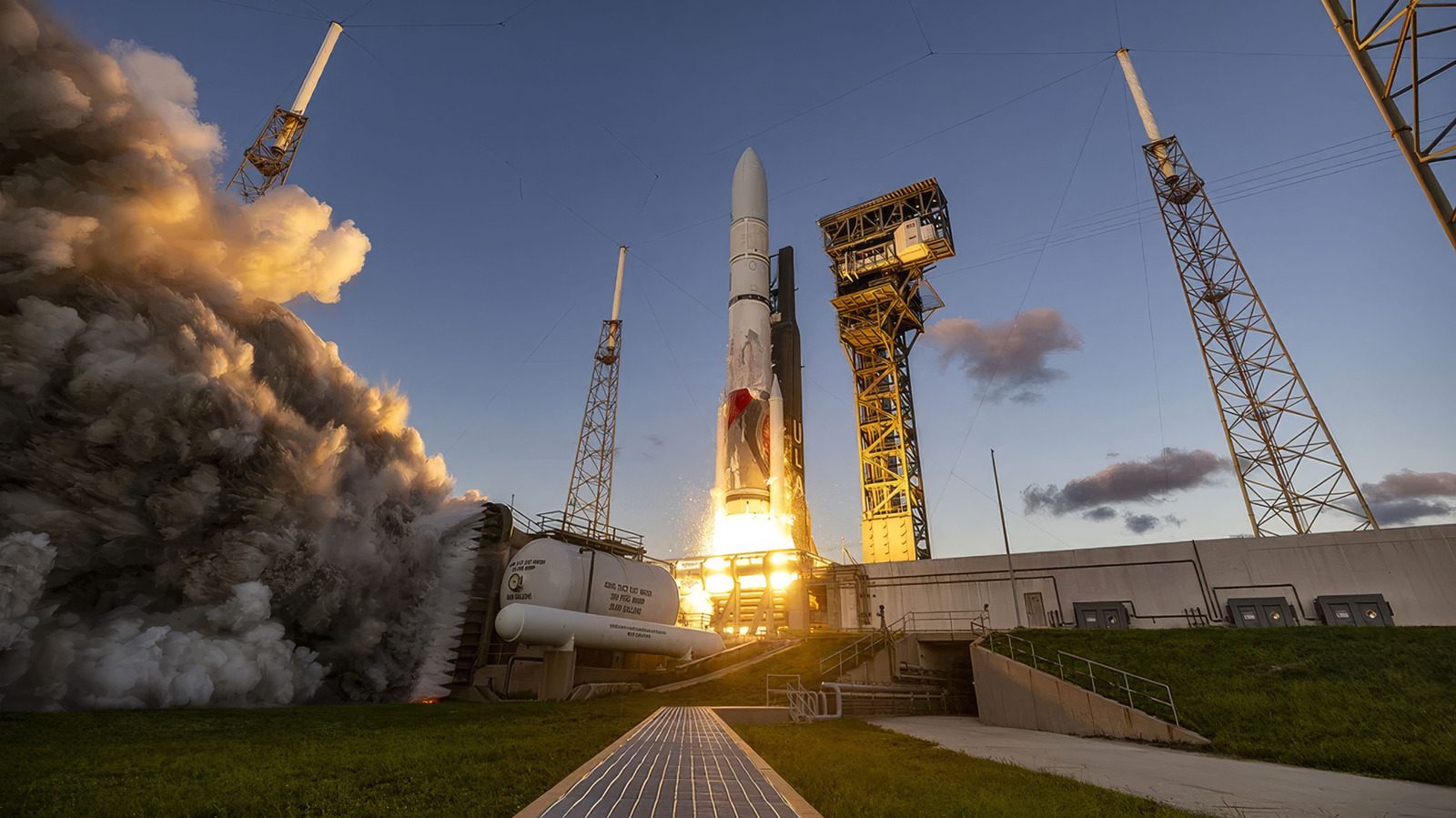
ULA Vulcan Rocket Failure Destroys 40 Amazon Leo Satellites
United Launch Alliance's Vulcan rocket failed 10 minutes into a November 15 flight, destroying 40 Amazon Leo satellites in the company's first launch failure since 2006.
United Launch Alliance said its Vulcan rocket suffered an anomaly 10 minutes into a flight on November 15 and failed to deliver 40 Amazon Leo internet satellites to orbit, destroying the payload. The company said it was its first launch failure since forming in 2006, and it will investigate the cause with its customer and other organizations. The failed launch adds to scheduling pressure on Amazon's satellite internet program, which already faced delays from other launch providers.
What Happened During the Flight
Following a refuelling issue that scrubbed a Friday launch, the mission was rescheduled for Sunday, November 15 at around noon ET. Controllers called a hold at T-minus 20 seconds because of an unknown technical issue, but the problem was resolved before the end of the launch window and the rocket lifted off at 12:40 PM ET. The solid boosters, which had caused problems on two earlier flights, appeared to work normally. However, the first-stage methane engines fired longer than expected based on ULA's estimated timeline, according to Spaceflight Now. After the first stage separated, the hydrogen-powered Centaur upper stage engines began a planned 12.25-minute burn, and ULA said on its website that the anomaly apparently occurred during that phase.
Impact on Amazon Leo
The failure is a setback for Amazon Leo, which is intended to rival SpaceX's Starlink network. Leo has 38 Vulcan flights booked to launch its satellites, following eight successful Atlas V missions, and many of those are now likely to be delayed. Amazon's other launch provider, Jeff Bezos' Blue Origin, suffered its own setback in May when its New Glenn rocket exploded on the launchpad. The company has 24 flights booked on that rocket. The Federal Communications Commission required Amazon Leo to have 1,600 satellites in orbit by July 31, 2026, but so far it has only around 390 in service. Amazon still planned to have 3,232 satellites in orbit by July 2029, but that goal may now be harder to obtain. In July, the company said, "No operator could have predicted that all three core heavy-lift launch programs... would experience repeated, concurrent scheduling slips severe enough to exhaust the buffers Amazon Leo had built in."
Investigation and Next Steps
United Launch Alliance said in a post on X that the Vulcan vehicle launched from Space Launch Complex 41 suffered an anomaly 10 minutes into the flight and failed to deliver the Amazon mission to orbit. The company said it will work closely with its customer and other appropriate organizations to find the cause, determine the appropriate corrective action, and return to flight as quickly as possible. ULA also said every flight generates data and every flight teaches something, but because the anomaly just occurred, it did not yet have specific data to understand what occurred. The company said it is committed to full transparency with its customers and that they will have visibility into an investigation process that uses rigorous methodology and corrective action. Since the company formed in 2006 as a partnership between Boeing and Lockheed Martin, its Atlas V rocket has been famously dependable. Now, ULA's more powerful and more complex Vulcan will be under review by engineers and is facing a possible grounding.
Sources: Engadget · Ars Technica · The Register
SiTech — AI-powered web development
We build fast, modern websites and bring AI into real business workflows. Have a project or a question? We'd love to help.