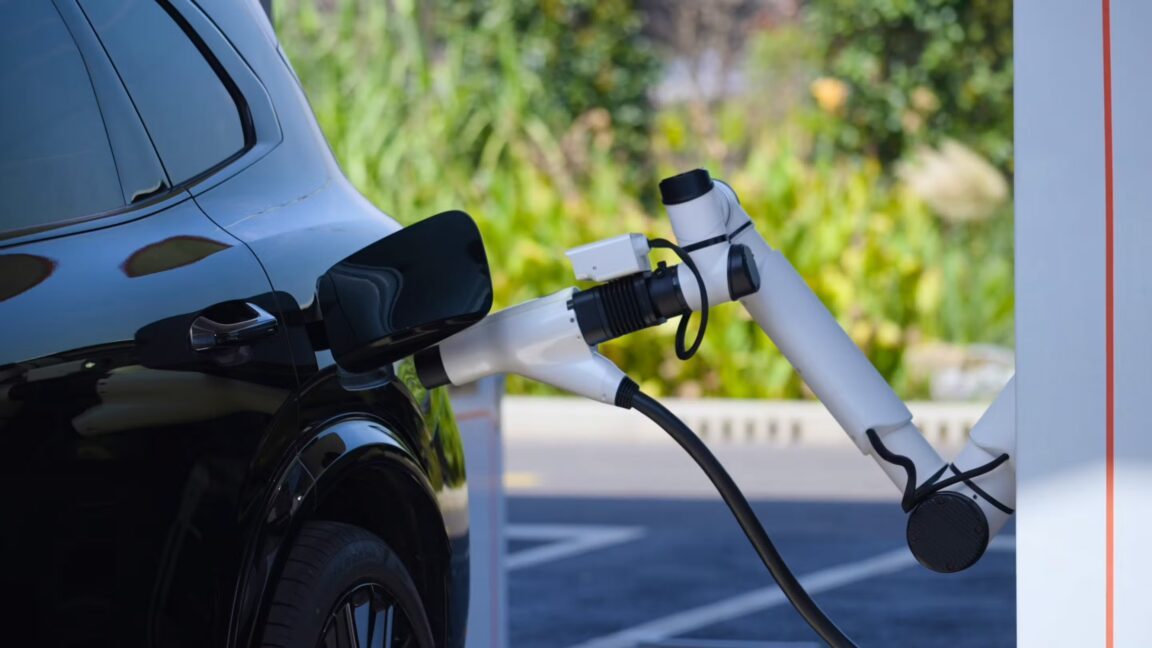
Geely's new battery charges to 70% in 4.5 minutes, leaving US chargers behind
Geely has unveiled an LFP battery that charges from 10 to 70 percent in 4.5 minutes at up to 2.2 MW. The fastest public chargers in the United States deliver only a fraction of that power, Ars Technica reports.
Chinese automaker Geely has unveiled a new battery that can charge at up to 2.2 MW, enough to go from 10 to 70 percent in just 4.5 minutes, according to Ars Technica. A 10 to 98 percent charge takes 8 minutes and 40 seconds. Geely says predictive thermal management run by AI keeps the pack at an average of 55 degrees Celsius, with a peak of 65 degrees during charging.
Fast charging without wearing out the pack
Geely says the system applies micro pulses of current to “reactivate” lithium ions that build up on the negative electrodes during repeated fast charging. According to the company, this extends battery life by 20 percent. The pack has been tested in the Zeekr 001 and the Lynk and Co 10, and Ars Technica suggests the same technology could show up in a Volvo or Lotus model someday.
The figures top those of BYD, which showed a product in March that charges from 10 to 70 percent in 5 minutes and from 10 to 97 percent in 9 minutes. CATL still leads on paper: in April it announced an LFP battery that reaches 80 percent in 3 minutes 44 seconds, or 98 percent in 6 minutes and 27 seconds.
US chargers are far behind
In the United States, the most powerful public chargers deliver only a fraction of those megawatt outputs. All but the newest Tesla Superchargers top out at 250 kW and 400 V. Electrify America maxes out at 350 kW, IONNA's new machines are rated for 400 kW, and ChargePoint sells a 600 kW charger.
The cars lag too. Hyundai and Kia's 800 V models, including the Ioniq 5 and EV6, peak at around 240 kW, and the Porsche Taycan accepts up to 320 kW. Newer German 800 V electric vehicles such as the BMW iX3 and Porsche Cayenne are arriving with 400 kW DC charging.
Megawatt charging stays in the truck lane
In the US, megawatt charging remains limited to heavy-duty vehicles such as buses and semi trucks. ChargePoint CEO Rick Wilmer told Ars Technica that two of its 600 kW Express Solo chargers joined on a common DC bus can deliver 1.2 megawatts through a single port. A standard NACS or CCS1 connector cannot carry that much power, he said, but the larger MCS connector can.
Geely's claim points to a future in which recharging takes about as long as refueling. Chinese manufacturers keep widening the limits of lithium iron phosphate chemistry, a cheaper and safer formula that until recently was considered unsuitable for very fast charging.
SiTech — AI-powered web development
We build fast, modern websites and bring AI into real business workflows. Have a project or a question? We'd love to help.