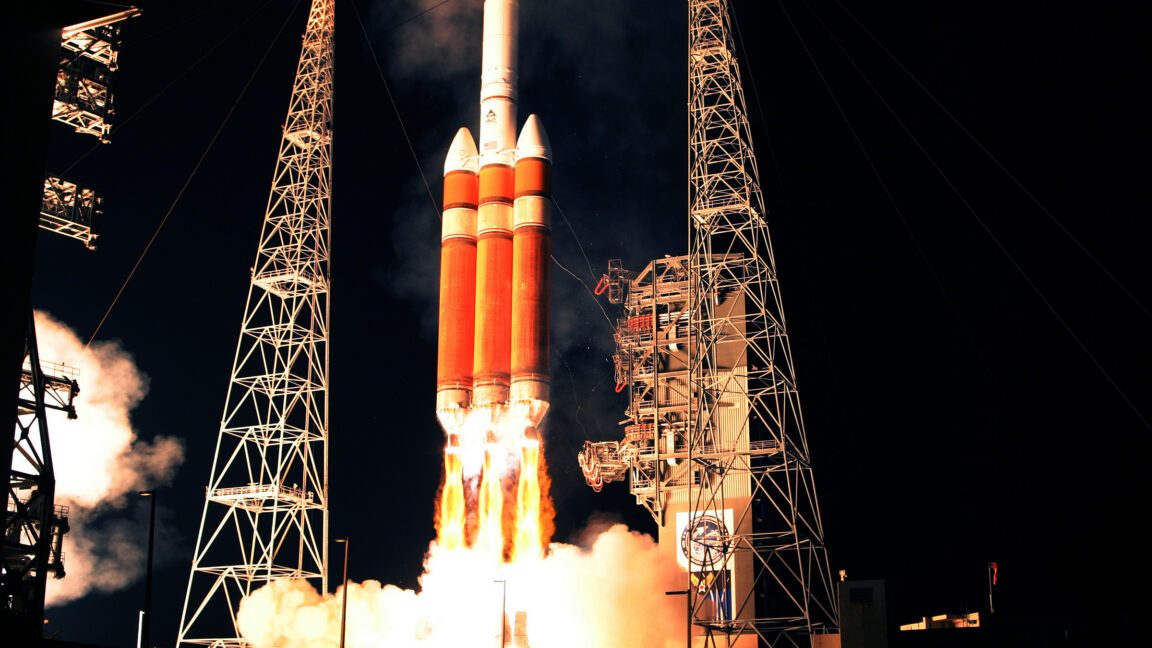
US Space Force retires DSP, the satellite network built to watch for missile launches
The US Space Force has retired the Defense Support Program, the infrared satellite network that spent over half a century watching for nuclear missile launches. Successor systems have flown since 2011, and the next generation could launch within a year.
For more than 55 years, a handful of US military satellites circled Earth as silent sentinels, watching for the heat signature of a missile launch. That era ended last month: the US Space Force confirmed the official retirement of the Defense Support Program, or DSP, the infrared early-warning network that was one of the pillars of American military space power during the Cold War.
From a top-secret payload to a Cold War sentinel
The program began in late 1970, when a Titan IIIC rocket lifted off from Space Launch Complex 40 at what was then Cape Canaveral Air Force Station with a classified payload. The US government later disclosed it was a Defense Support Program satellite. The first block of these spacecraft, launched from 1970 to 1973, weighed about 1 metric ton each and carried roughly 2,000 infrared detectors. They were, in effect, very sensitive telescopes in geosynchronous orbit, built to detect the launch of a nuclear warhead against the United States.
Initially designed to identify Soviet ICBMs, the satellites were essential to nuclear deterrence; later they also proved useful in conventional warfare, such as detecting Iraqi Scud missile launches. Over time each spacecraft grew to more than 6,000 infrared detectors and a mass of about 2.5 tons. The final DSP satellite reached orbit in 2007, and one of them, DSP-16, launched aboard the space shuttle Atlantis in 1991.
The final two satellites
The end came during US Space Command's Apollo Maneuvers 2026 exercise in September, when the 2nd Space Warning Squadron demonstrated on-orbit maneuvers with two DSP satellites ahead of a planned decommissioning into a supersynchronous orbit. Independent orbital tracking showed both satellites, presumably DSP-20 and DSP-22, raised their orbits by a few hundred kilometers, a move typically associated with disposal into graveyard orbits above geostationary space.
"The DSP constellation was foundational to the defense of our nation," said US Space Force Col. Brandon Davenport, Mission Delta 4 Commander. "These last two satellites were the culminating end to over a half century of space-based early warning."
What comes next
Washington is not flying blind. In 2011, the military began launching a new generation of infrared satellites known as the Space Based Infrared System, or SBIRS; with better sensors, they can detect dimmer events and provide longer warning times. Mission Delta 4 is now preparing to integrate the Next-Generation Overhead Persistent Infrared Geosynchronous Earth Orbit, or NGG, system, and the first satellite of the next generation could launch within 12 months on a Vulcan rocket.
SiTech — AI-powered web development
We build fast, modern websites and bring AI into real business workflows. Have a project or a question? We'd love to help.