Valve Advises Developers on AI Clones, Next Fest, and Wishlists at Steam Indie Connect
At Steam Indie Connect, Valve told Korean developers to build community and keep updating games to counter AI clones, while clarifying Next Fest exposure and wishlist visibility.
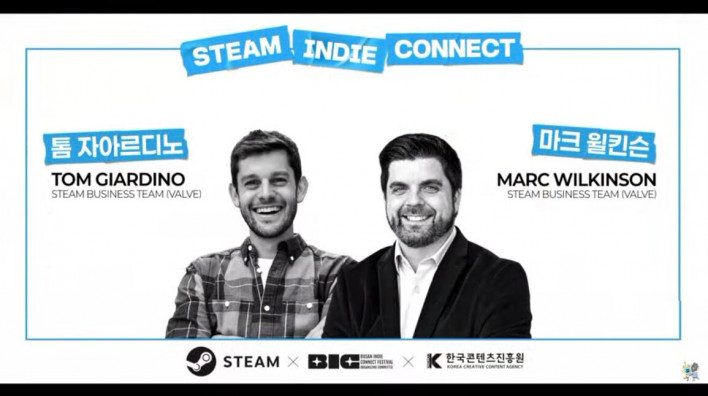
Valve's Steam Business Team told developers at the Steam Indie Connect event on October 27 that trust built with players and steady updates are the strongest defenses against AI clone games. Tom Giardino and Marc Wilkinson said making the genuine version the best version remains Valve's core principle, while warning that AI has only accelerated cloning trends that existed before it. They also used the event to clarify Steam visibility, Next Fest exposure, wishlists, and other developer concerns.
AI Clones and Extortion Threats
One developer said indie developers have received extortion emails threatening to clone a game with AI and release it first. Giardino said this was the first time he had heard of such cases and called it closer to a law enforcement issue, though Steam wants to look into reports and help where possible. He said Valve does not want to be a gatekeeper over which tools developers use, including AI, and noted that clone games existed before AI. He framed the response as two challenges: building community and identity with players, and continuing to improve the game with features, personality, and creativity that cannot be copied as easily as one mechanic. Valve compared this to its anti-piracy view that the legitimate version should be the best version.
Next Fest and AI Slop Concerns
Asked about low-quality AI-made games in Next Fest, Wilkinson explained that games are shown on a virtually random basis for the first two days, then personalized recommendations take over. He said the random start prevents early visibility gaming and gives every game fair exposure, while acknowledging that some low-quality games get exposed. Giardino said participation has grown from 50 or 100 games to thousands, and that success benchmarks differ by game. He also said Valve has repeatedly chosen to improve the shopping experience rather than turn developers away or pre-filter games.
Wishlists and the Personal Calendar
Wilkinson corrected the idea that wishlists affect visibility, saying visibility is driven by people buying and playing the game. He cited games with millions of wishlists that fell after poor user experience and games with almost no wishlists that succeeded. Giardino said wishlists should be treated as a thermometer for marketing effectiveness, not a magic number. He said the Personal Calendar, now an official feature, is dedicated to brand-new releases and gives exposure for about one to two weeks after launch, with Valve continuing to refine it so games can reach likely players even if they are not top sellers.
Other Developer Questions
Giardino said tags and single-player options are design choices, not business choices, and cited co-op-only success such as It Takes Two. On overseas sales, he said breaking out of a home fanbase is difficult and advised finding local champions such as streamers, journalists, and reviewers. He also said features for sharing sales data viewing permissions and App ID access permissions already exist in Steamworks. On VR, he said Valve still believes in virtual reality, views Steam Frame as one part of the ecosystem, and acknowledged that rising component costs affected hardware pricing.
Sources: invenglobal.com
SiTech — AI-powered web development
We build fast, modern websites and bring AI into real business workflows. Have a project or a question? We'd love to help.