Vibecoding Frontloads the Fun of Building Software, Essay Argues
A developer argues that AI-assisted vibecoding delivers instant dopamine but skips the deeper satisfaction of hand-written code, from hard-won accomplishment to learning.
A developer writing under the banner of The Autodidacts argues that AI assisted coding, often called vibecoding, is less fun than writing code by hand, even though it can be productive. The essay, outlined in blue ink by candlelight, says the author was not even allowed to let AI correct the typos.
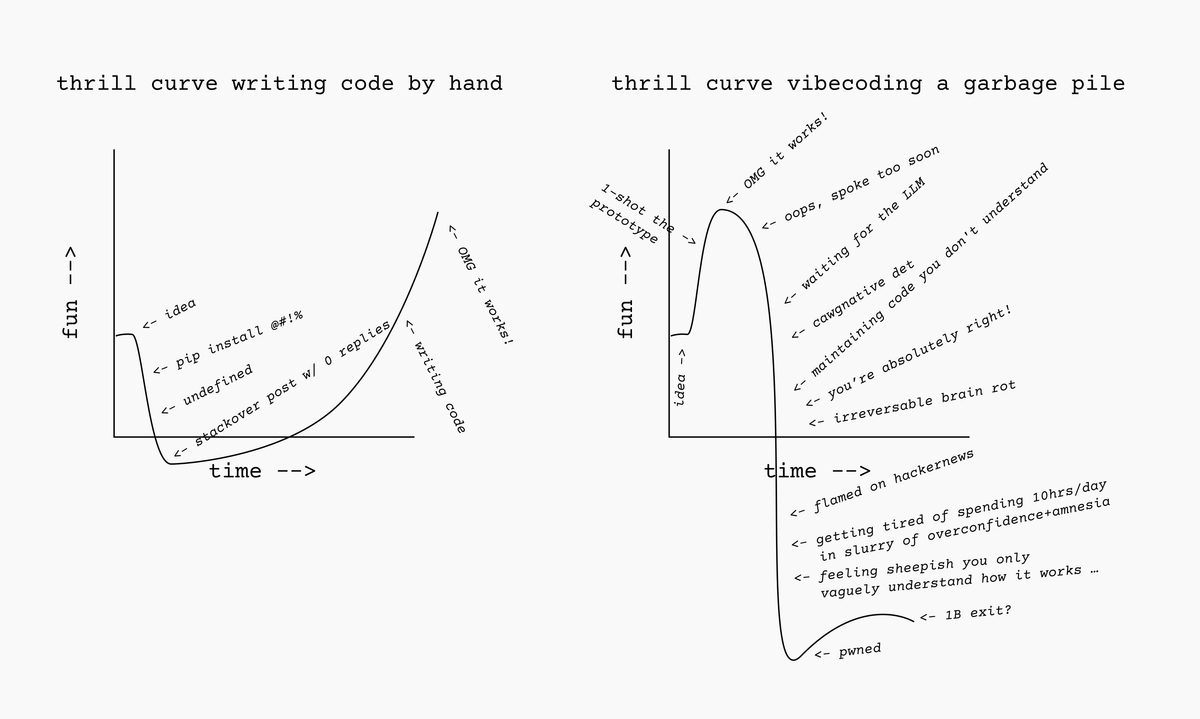
The Vibecoding Thrill Curve
The author describes a long standing love of building things, and says software has been the easiest way to create something useful out of nothing. Two recent hobby projects, basic Python scrapers, gave the most fun programming in years. Then AI arrived, and with it a shift in how coding feels.
The essay argues that vibecoding frontloads the fun. A working prototype can appear in minutes with very little effort, and someone with no coding experience can produce a working app. The author lists several distinct sources of satisfaction in building: the thrill of the idea, making the idea real, hard-won accomplishment, a job well done, learning, and solving a personal problem. Vibecoding, the essay says, can deliver the first, second and sixth, but the others are not a natural consequence of it.
What AI Made Possible
The author concedes that vibecoding enabled projects that would never have been built by hand. Examples include a Hackernews bookmarklet, a prediction market simulator party game used live during a lecture, a browser based Kobo database migration assistant for people unfamiliar with SQLite, and a realtime pitch training app the author had planned for about a decade.
In one case, the author used the free plan of Lumo over two afternoon sessions to build a functional Pyronear based wildfire early warning system that ran in realtime on a live feed and detected the first frame of smoke in ignition footage. The author also describes trying local models running in llama-server, free no sign-up services such as Phind and Lumo, and a remote server plan with custom auto-approval hooks for developing algorithmic trading models.
The Dopamine Problem
The essay compares vibecoding to a series of first dates: the thrill fades with repetition, and no attachment forms with the project. The author says the process makes them feel dumb and superfluous without earning respect, and describes vibecoding as introducing a layer between the developer and reality, like running a company that is barely under control. Handwritten development is not always fun either, the author admits, citing a deadline driven Golang project and early battles with the Rust compiler, but those struggles produced a lasting sense of accomplishment.
Sources: autodidacts.io
SiTech — AI-powered web development
We build fast, modern websites and bring AI into real business workflows. Have a project or a question? We'd love to help.