Video Game Reverse Engineering Community Shuts Down as AI Makes Decompilation Too Easy
The website decomp.dev is shutting down, saying AI has broken the community aspect of reverse engineering. Projects that once took years of human collaboration can now be done trivially with AI models.
Decomp.dev Closes After AI Overtakes Human Effort
The website decomp.dev, a collaborative platform hosting file libraries and tools for reverse engineering, re-coding, and decompiling existing video games, announced on Thursday that it is shutting down. Decompiling means taking an existing game and recreating its source code. Speed runners do it to find glitches, hobbyists to port or emulate games, modders to modify them, and archivists to recreate code that may be lost. The pseudonymous administrator, who goes by Encounter, said the "community aspect of decompilation has been broken" by AI. Projects that once required intense collaboration between people with different skills can now be done trivially with AI, he wrote.
AI Models Make Decompilation Trivial
"Historically, matching decompilation has been a brutally difficult, time consuming task, on the scale of years for any moderately-sized game with a number of active contributors," Encounter wrote. He said recent frontier AI models like GPT-6-Astra are significantly better at following complex directions, cross-referencing resources for symbols or debug information, and writing natural code with enough guidance. With the right human input and code reviews, AI can now expedite the decompilation process in a significant way.
Hostile Forks and a Broken Community
Encounter said it has become impossible to keep track of which projects are primarily human-led and which are done by AI. People using AI have taken existing, human-led open-source projects and created "hostile forks," where human-written code is taken and "finished" by AI. "These kinds of hostile forks put little to no effort into meaningfully contributing to existing projects, tearing apart our community fabric," he wrote. He added that "anyone with an AI subscription can manage to create a port or static recompilation that functions at a basic level," while community members put in the effort to decompile a game, opportunists have frequently raced to release a half-baked, barely-functional port from it.
A Hollow Numbers Game
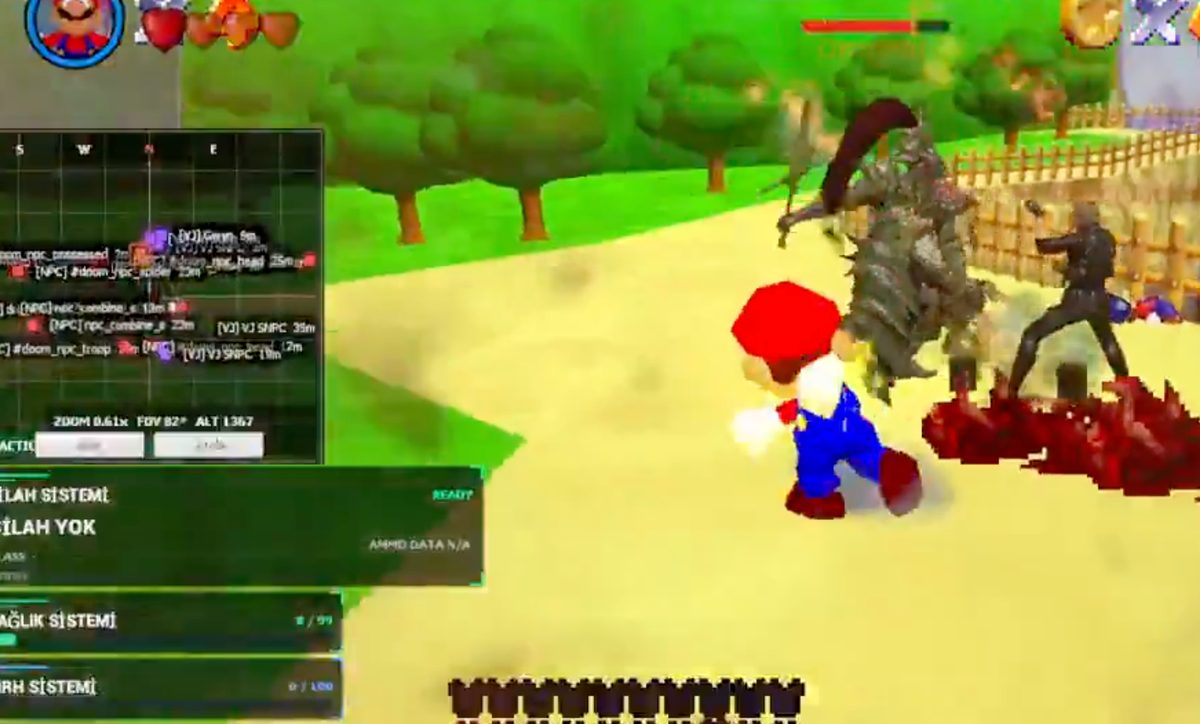
"Decomp.dev was originally designed to gamify decompilation: watching the progress go up was a fun way to stay motivated when every fraction of a percent took real human effort," Encounter wrote. "Today, that same idea has warped decompilation into a hollow numbers game, exacerbated by folks who just want to burn tokens to make number go up." The shutdown comes as AI-powered video game decomps and recomps are everywhere, from putting Mario into Elden Ring to tools like decomp.wtf that promise to turn a game back into C, one function at a time, and check every function byte for byte against the original. The closure reflects a broader trend: functional AI-coded clones of software like Adobe's Creative Cloud and Microsoft Office have gone viral, and small video game developers say their projects are regularly stolen by "clean room" AI clones of their games, in which the original code of a piece of software is never looked at.
Sources: 404 Media
SiTech — AI-powered web development
We build fast, modern websites and bring AI into real business workflows. Have a project or a question? We'd love to help.