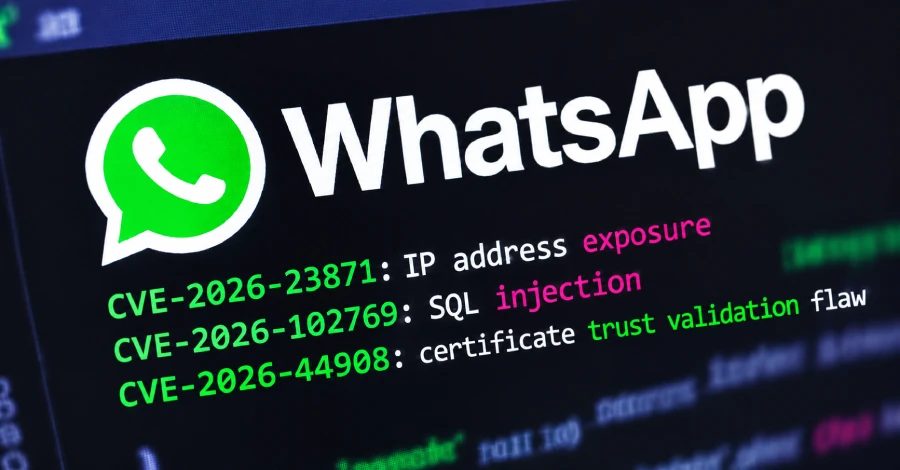
WhatsApp Patches Three Security Flaws, Including Android Bug Suspected in Scams
Meta-owned WhatsApp fixed three vulnerabilities, including an Android issue it suspects may have been used with scam messages. The flaws affect message handling, local files, and Meta AI infrastructure certificate verification.
Meta-owned WhatsApp has patched three security vulnerabilities, including an Android bug it suspects may have been exploited in connection with scam messages. The fixes cover message handling, local file deletion risk, and certificate verification for Meta AI confidential computing infrastructure. WhatsApp is advising users to keep their apps and devices up to date.
Android ad-reply vulnerability
CVE-2026-23871 affected WhatsApp for Android and WhatsApp Business for Android before 2.26.17.4. It involved incomplete validation of external ad-reply URLs and could have caused a target device to reveal IP information if an attacker sent media from an attacker-controlled URL when a crafted Click to WhatsApp ad-reply message was rendered and displayed. WhatsApp said it may have been abused with specific spam messages and that internal researchers found the issue while disrupting a scam campaign. A spokesperson said a scammer may have used it to make a scam message seem more credible. WhatsApp did not disclose the scale or whether the efforts succeeded.
SQL injection and side channel
CVE-2026-102769 affected WhatsApp for Android before 2.26.35.74. It was an SQL injection vulnerability that occurred when a recipient tapped a specially crafted order details message sent from an unofficial client, causing locally stored WhatsApp files to be deleted. It could also leak one bit of information through a timing-based side channel if the user was online when the malicious message arrived. WhatsApp said there is no evidence the vulnerability was exploited in the wild.
Certificate verification issue
CVE-2026-44908 affected certificate verification for Meta AI confidential computing infrastructure. It impacted WhatsApp for iOS before 2.26.24.72, WhatsApp Business for iOS and WhatsApp for Mac Desktop before v2.26.23.72, WhatsApp for Android before v2.26.23.74, and WhatsApp Business for Android before v2.26.23.70. Successful exploitation could have allowed a bad actor positioned within Meta infrastructure to bypass the hardware root of trust using a VCEK certificate not signed by the hardware manufacturer's key. WhatsApp said any such certificate would first need publication to the third-party binary transparency ledger used by WhatsApp Private Processing, and that the ledger shows published certificates chain to the hardware root of trust, confirming no exploitation.
Updates and protections
WhatsApp is advising users to keep their apps and devices up to date to ensure optimal protection. The company also said it continuously works to strengthen its systems and acknowledged the bug bounty community's contributions towards keeping the platform secure.
Sources: The Hacker News
SiTech — AI-powered web development
We build fast, modern websites and bring AI into real business workflows. Have a project or a question? We'd love to help.