Google approved a dodgy ad twice, while its own Gemini rejected it
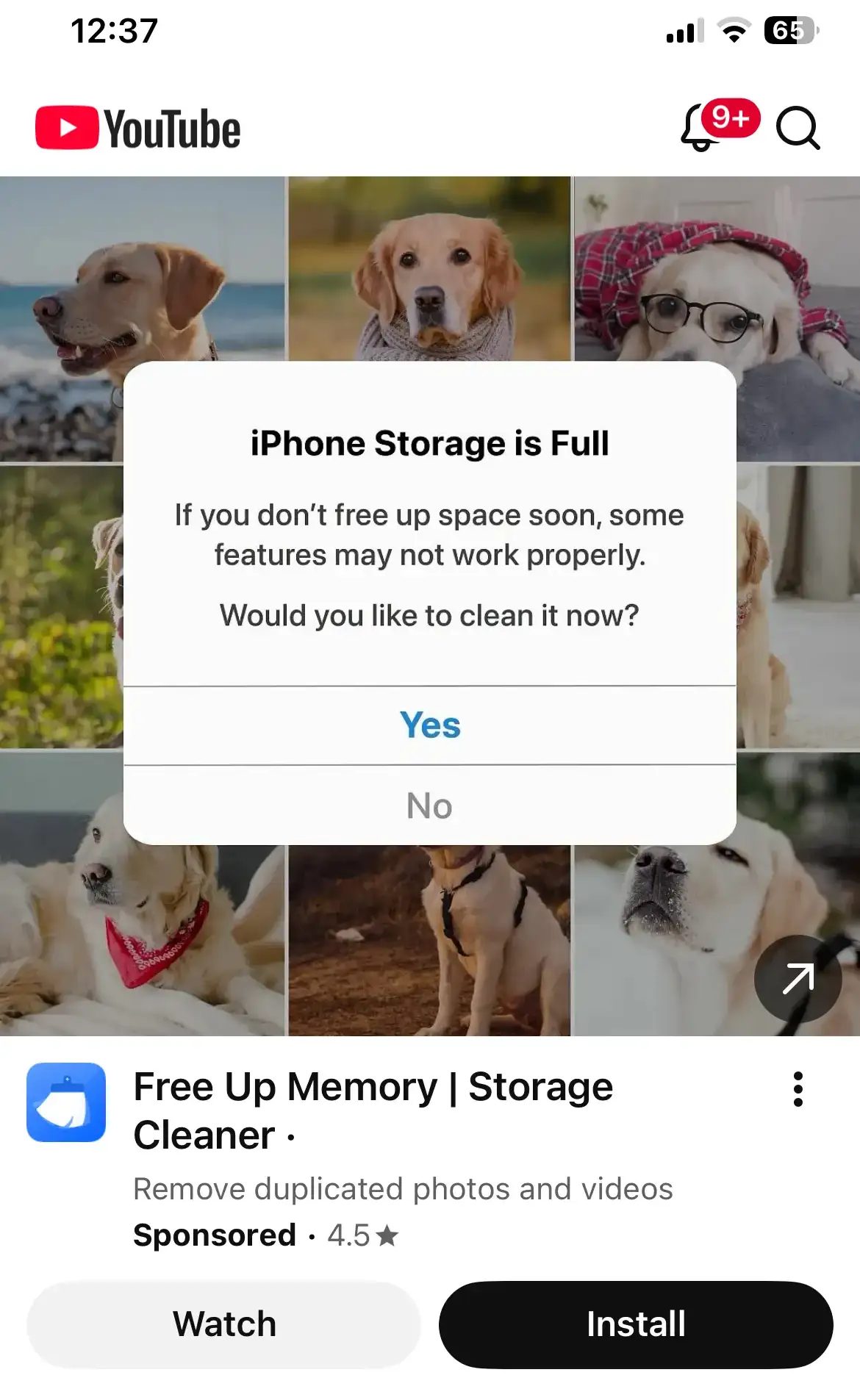
Developer Chris Greening documented an advert in the YouTube app that mimicked an iPhone system alert. Google’s review team told him it breaks no policies; the company’s own Gemini model rejected the same creative in seconds.
The developer and hardware blogger Chris Greening, who writes at atomic14, has documented a deceptive advert that appeared in the YouTube app and mimicked an iPhone system alert — and Google’s ad review told him it does not break the company’s policies. The post is notable because Google’s own Gemini model, asked to classify the same creative, rejected it in seconds with a detailed list of violations.
A warning that was not a warning
Greening says he noticed the ad because he clicked it: he knew his iPhone was low on storage, and a moment of lost concentration was enough. The banner was built to look like an iOS modal saying that storage is full, complete with system-style lettering and “Yes” and “No” buttons, and the tap sent him to a store listing. He reported it.
The reply said the ad complied with Google’s rules. He reported it again and got the same answer. The text he quotes states that the ad does not go against policies prohibiting content and practices believed to be harmful to users and the wider online ecosystem, and he notes that other people who reported the same creative received an identical response.
What Gemini said
Greening then asked Gemini to review the advert. The model classified it as DISAPPROVED, citing misrepresentation — misleading ad design and unreliable or deceptive claims — and set out three findings. The banner imitates an operating system dialog, which Google Ads policy forbids. The “Yes” and “No” options are static graphics rather than controls: any tap anywhere on the banner opens a store or landing page. And the warning that features may stop working if space is not freed fabricates an urgent failure state on the user’s own device in order to push app installs.
The model’s required action was to disapprove the creative immediately and flag the advertiser account, adding that repeated violations of this kind can end in a full account suspension.
Why it matters
Greening frames the discrepancy with Hanlon’s razor — never attribute to malice what is adequately explained by stupidity. Human reviewers cannot examine everything, so some ads slip through manual checks. He also notes the less charitable reading, that adverts which collect clicks are profitable and therefore not a priority to remove. His conclusion is that the detection problem is already solved in principle: Google’s own model rejected the advert in seconds, while its review process approved it twice.
SiTech — AI-powered web development
We build fast, modern websites and bring AI into real business workflows. Have a project or a question? We'd love to help.